
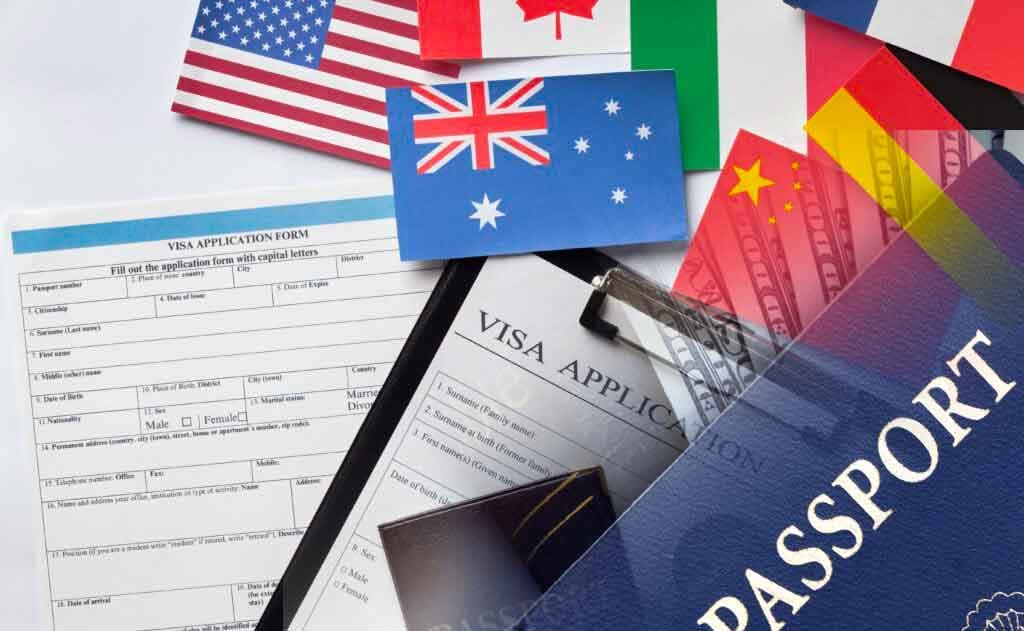
For Indian football fans hoping to attend FIFA World Cup 2026 matches in the United States, the US B1/B2 visitor visa is the gateway document — and the recently announced FIFA PASS program provides priority appointment scheduling for verified ticket holders. This 2026 NRI guide walks through the complete framework: why B1/B2 matters for FIFA 2026, the FIFA PASS priority program mechanics, the DS-160 online application step-by-step, the in-person consular interview preparation that consistently improves outcomes, the Section 214(b) evaluation framework that drives most refusals, the strong-documentation playbook for Indian applicants, and how an approved US visa often unlocks Mexico entry via the visa-exempt path.
Why US B1/B2 is the strategic core for Indian FIFA 2026 fans
- FIFA World Cup 2026 spans three host countries — Canada, United States, and Mexico — with the United States hosting the majority of matches across multiple host cities.
- An approved US B1/B2 visa grants access to US-host matches AND unlocks visa-exempt entry to Mexico for Mexico-host matches via the FMM Tourist Card pathway.
- For most Indian fans, the US B1/B2 represents the highest-leverage single visa application for the entire tournament.
- FIFA PASS priority appointment — the new US Department of State program for verified FIFA ticket holders — provides expedited appointment scheduling but does NOT change the underlying evaluation framework.
1. The FIFA PASS program — what it is and what it isn't
What FIFA PASS provides
- Priority appointment scheduling at US Embassy / Consulate posts for verified FIFA World Cup 2026 ticket holders.
- Faster appointment availability compared to standard visitor visa wait times, particularly at high-volume posts.
- Verification typically requires confirmed FIFA ticket booking reference plus standard B1/B2 application path.
- Application process remains DS-160 online + in-person interview — FIFA PASS only changes the scheduling track.
What FIFA PASS does NOT provide
- Does NOT guarantee visa approval. Section 214(b) presumption + standard evaluation criteria still apply.
- Does NOT waive the interview requirement. Indian applicants still attend in-person consular interview.
- Does NOT change visa fees or required documentation.
- Does NOT confer entry rights. Visa issuance and entry remain separate decisions (Customs and Border Protection makes entry decisions at port of arrival).
How to use FIFA PASS
- Hold a confirmed FIFA World Cup 2026 ticket purchased through official channels.
- Follow the FIFA PASS enrollment guidance at the time of B1/B2 application (the specific enrollment pathway and timing has been announced by the US Department of State; verify current process at the official US Embassy / Consulate India websites).
- Submit the FIFA ticket booking reference as part of the priority verification.
- Schedule the priority appointment when the program opens for your post.
- Attend the interview with full standard documentation.
2. The B1/B2 evaluation framework — Section 214(b)
The fundamental presumption
Section 214(b) of the US Immigration and Nationality Act establishes a critical default: every visitor visa applicant is presumed to be an intending immigrant unless the applicant overcomes that presumption with sufficient evidence of strong ties to their home country + clear non-immigrant intent.
This means the burden of proof rests on the applicant, not the consular officer. The officer's default position is "I assume you intend to immigrate"; the applicant's task is to overcome that with evidence.
What "strong ties to home country" means in practice
- Employment ties — current job + position + salary + tenure + leave-approval letter for travel dates.
- Property ties — owned residential property in India + tax receipts.
- Family ties — spouse, children, parents in India who remain during the visit.
- Business ties — owned business in India + ongoing operations.
- Educational ties — enrolled in Indian education program returning to.
- Pension / retirement ties — ongoing Indian-source income.
- Other binding commitments — bookings, professional commitments, community responsibilities scheduled post-return.
What "clear non-immigrant intent" means
- Specific, time-bounded travel purpose — "I am attending FIFA matches on these specific dates and returning to my employment in India."
- Return travel confirmed or planned — flight ticket or evidence of return planning.
- Onward Indian commitments — work + family obligations after return.
- No intent to seek employment in the US during the visit.
3. DS-160 application — step by step
What is DS-160
- The online nonimmigrant visa application form required for all B1/B2 applicants.
- Hosted at the US Department of State CEAC portal (ceac.state.gov).
- Single application can be saved and resumed; final submission generates a confirmation page with barcode (the "DS-160 Confirmation").
Information needed for DS-160
- Indian passport details + photograph.
- Personal details: name, address, contact, marital status, family members.
- Employment details: employer + designation + salary + duration.
- Travel details: purpose, dates, US contact, US accommodation.
- Travel history: previous US visits, prior visas (US or other countries).
- Background questions: criminal history, prior immigration violations, security questions.
- Education history.
Step-by-step DS-160 process
- Visit ceac.state.gov and start a new DS-160 application; select your consular post (New Delhi, Mumbai, Chennai, Hyderabad, Kolkata).
- Save the application ID immediately — needed for resuming and for later steps.
- Complete all sections with accurate information matching passport + supporting documents.
- Upload photograph meeting US visa photo requirements (recently taken, white background, specific size).
- Review entire application before final submission — corrections are difficult after submission.
- Submit and download confirmation page — barcode is mandatory for interview.
- Pay visa application fee via the US Visa Information Service / VFS portal.
- Schedule interview appointment at the chosen post (using FIFA PASS priority track if applicable).
- Visit VFS Application Support Center for biometrics if required.
4. The in-person interview — what to expect
The actual interview
- Brief duration — typically 1-3 minutes per applicant.
- Direct questions: Why are you traveling? How long will you stay? What ties bring you back to India? Who is funding the trip? Where will you stay?
- Officer reviews DS-160 + interview answers + sometimes specific supporting documents.
- Decision typically conveyed at the window — approved (passport retained for visa printing) or refused (passport returned with a refusal slip explaining the basis).
Documents to carry
- Indian passport + any prior passports with travel history.
- DS-160 confirmation page with barcode.
- Visa fee payment receipt.
- Interview appointment letter.
- Photograph matching DS-160 photo.
- Strong ties documentation: employment letter, salary slips, ITR for 3 years, property documents, family ties documentation.
- Financial documents: 6-month bank statements, fixed deposit statements.
- FIFA ticket evidence: booking reference, confirmed match ticket details.
- Travel itinerary: planned cities + dates + return travel.
- US contact details if visiting friends/family.
Interview preparation framework
- Rehearse direct, brief, factually consistent answers to the typical questions. Long explanations work against applicants.
- Maintain calm composure — officers evaluate demeanor as part of the broader credibility assessment.
- Be precise about dates — "I'm attending matches in Los Angeles on June 20 and Dallas on June 25, then returning to Mumbai on June 30."
- Don't over-explain — answer the question asked, then stop.
- Maintain consistency between DS-160 application and interview answers.
- Don't memorize a script — rehearsed-sounding answers feel less credible than natural responses.
- Bring documents organized in a folder — officers may not review all but organized presentation supports credibility.
5. Common refusal reasons + how to address them
Refusal under Section 214(b) — "failure to demonstrate strong ties"
- Most common B1/B2 refusal rationale — broad category covering insufficient evidence of intent to return.
- Common contributing factors: vague travel purpose, weak employment evidence, limited travel history, inconsistencies between application and interview, perceived high immigration risk.
- To address in re-application: strengthen each ties-evidence document, refine travel purpose narrative, build travel history if possible (other-country visas + completed travel).
Refusal under Section 221(g) — "additional administrative processing"
- Not a definitive refusal — pending additional review by Department of State.
- Can take weeks to months to resolve.
- Often follows interview where officer signals approval-in-principle but needs additional documentation.
- Standard pattern: submit requested additional documentation through VFS or return for follow-up.
Other refusal reasons
- Section 212 inadmissibility grounds — criminal history, security concerns, prior immigration violations, prior visa refusals + overstays.
- Material misrepresentation — inconsistencies between application + supporting documents.
- Health-related ineligibility — specific disease categories.
6. Re-application strategy after refusal
- No mandatory wait period in most cases — re-application possible as soon as circumstances or documentation change materially.
- Read the refusal letter carefully — identifies the specific rationale (typically 214(b) or 221(g)).
- Address the specific issue — don't re-submit identical documentation. Strengthen the rationale-relevant evidence.
- Common improvements: refreshed employment documentation, additional travel history if available, updated financial documentation, clearer purpose narrative.
- Consider timing — re-apply after relevant Indian-side changes (promotion, property documents, additional travel completed).
- Don't re-apply with same documents at same post — same outcome likely.
- Pay new visa fee + complete new DS-160 for each application.
7. Approved US visa — what happens next
Visa stamp
- Passport with visa stamp returned via VFS Global India typically within 5-15 business days post-interview.
- Visa validity typically 10 years for Indian citizens (B1/B2 standard).
- Each entry can authorize up to 6 months stay (officer at port of entry decides).
Strategic next step — Mexico unlock
- An approved US multi-entry B1/B2 visa qualifies Indian passport holders for visa-exempt entry to Mexico via the FMM Tourist Card pathway.
- Combined US + Mexico FIFA match attendance becomes possible with the single visa.
- See NRI Globe's Mexico FMM Tourist Card guide for the FMM mechanics.
Travel preparation
- Book confirmed flight and accommodation matching DS-160 stated plans.
- Carry passport + visa + FIFA tickets + supporting documents at entry.
- Customs and Border Protection (CBP) officer at port of arrival makes entry decision — visa just authorizes presenting yourself for entry consideration.
- Brief, direct, consistent answers at port of entry.
8. The honest framework
- FIFA PASS is a useful program for expediting appointment scheduling for ticket holders. It does NOT change the evaluation framework — Section 214(b) presumption still applies.
- Strong documentation matters more than program participation — applicants with strong ties + clear purpose + consistent answers typically succeed regardless of FIFA PASS status; applicants with weak ties typically fail regardless of FIFA PASS status.
- The interview is the decisive evaluation point — preparation for the consular interview is the single highest-leverage step in the application sequence.
- Honest answers + organized documentation + brief responses are the consistent pattern across approved applicants.
- Avoid common pitfalls: over-explanation, inconsistency between DS-160 and interview, weak documentation organization, unrealistic stated plans.
9. Scam warnings
- "Guaranteed US visa" or "guaranteed FIFA PASS" offers — no intermediary can guarantee outcomes. The US Department of State is the sole authority.
- Fake DS-160 form services — DS-160 is filed through the official ceac.state.gov portal only.
- Unofficial fee payment channels — visa fees go through the official US Visa Information Service / VFS Global portal only.
- Fake interview-prep services charging premium prices for basic preparation — interview prep is straightforward and doesn't require paid services.
- FIFA PASS enrollment scams — verify enrollment process at the official US Embassy India websites and the FIFA / US Department of State announcements.
- For broader scam-awareness framework, see NRI Globe's NRI immigration scams 2026 guide.
10. Practical checklist for Indian FIFA fans
- Hold confirmed FIFA World Cup 2026 ticket from official channels.
- Verify FIFA PASS enrollment process at US Embassy India / US Department of State websites.
- Start DS-160 application early — at ceac.state.gov.
- Schedule interview via FIFA PASS priority track if eligible.
- Build strong documentation file: ties + financial + travel evidence + FIFA tickets.
- Prepare interview answers — rehearse but don't memorize.
- Attend interview with all documents organized.
- If approved — proceed to plan combined US + Mexico match attendance.
- If refused — read refusal letter, address specific rationale, re-apply with strengthened documentation.
- For Canada matches — apply separately for Canada TRV; see NRI Globe's Canada immigration pathways guide.
Final thoughts
The US B1/B2 visa application for Indian FIFA World Cup 2026 fans is structurally workable when approached with strong documentation, accurate DS-160 application, and well-prepared consular interview. The FIFA PASS program provides priority appointment scheduling that helps with timing but doesn't change the evaluation framework. The most-leveraged practice: build strong ties documentation, prepare brief direct interview answers, maintain consistency between DS-160 and interview, attend the interview with organized documents, and use an approved visa as the unlock for both US + Mexico match attendance via the FMM Tourist Card pathway.
For the broader FIFA 2026 visa cluster, NRI Globe's three-country FIFA 2026 visa comparison covers the strategic sequence + framework comparison; the Mexico FMM Tourist Card guide covers the Mexico-side mechanics; the Canada immigration pathways guide covers Canada framework; the B1/B2 strategy guide for parents covers detailed re-application strategy.
Informational only — US immigration rules, fees, processing times, and FIFA PASS specifics can be updated by the US Department of State. Verify current information at the official US Embassy / Consulate India websites and ceac.state.gov before specific applications. Not legal or immigration advice.
Continue reading — NRI Globe pillar guide: H-1B Complete Guide for Indians 2026