
Introduction
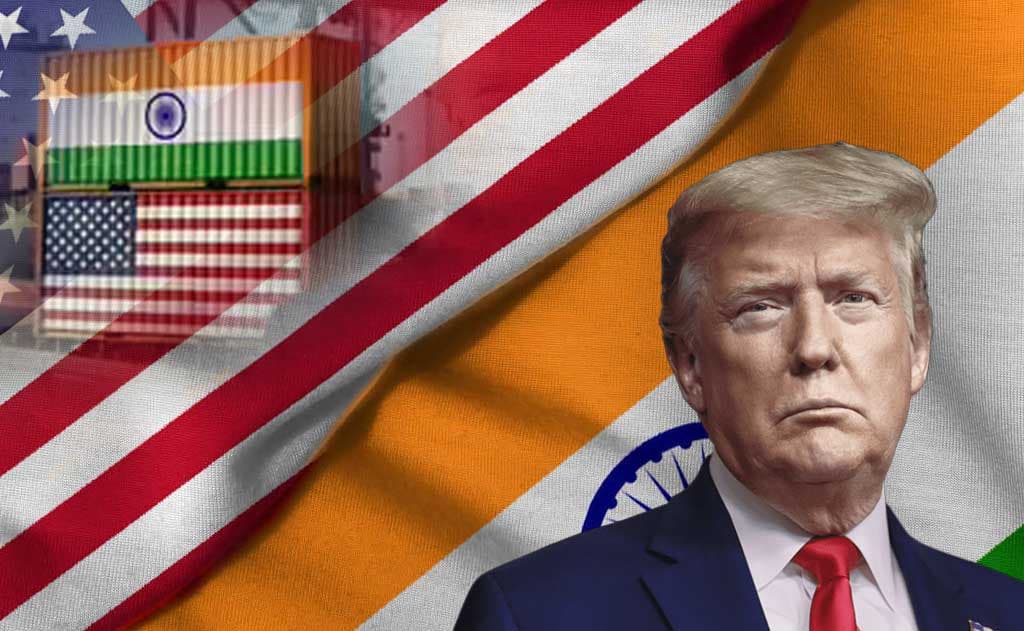
On April 2, 2025, U.S. President Donald Trump announced a series of reciprocal tariffs under his "Liberation Day" policy, targeting over 60 countries, including India, to address the U.S.'s $1.2 trillion trade deficit in 2024. India faces a 25% tariff on most goods exported to the U.S., effective August 7, 2025, with an additional unspecified penalty linked to India's trade with Russia for oil and defense equipment. This article explores the multifaceted impacts of these tariffs on India and the United States, covering economic effects, sector-specific consequences, trade negotiations, and strategic implications.
Impact on India
Macroeconomic Effects
The tariffs are projected to have a limited but noticeable impact on India's economy, which is characterized by strong domestic demand and relatively low dependence on goods exports compared to other Asian economies. According to the Bank of Baroda, the tariffs could reduce India's GDP growth by approximately 0.2%, lowering the projected growth rate from 6.6% to 6.4% for the fiscal year. Other estimates, such as those from Emkay Global Financial Services, suggest a potential drop in India's exports to the U.S. by $30-33 billion, equivalent to 0.8-0.9% of GDP, though this assumes no counter-responses from competing nations. India's commerce ministry and analysts like those at SBI Research and Goldman Sachs emphasize that India's diversified export markets, focus on value addition, and domestic demand-driven growth model mitigate the overall economic impact.
Sector-Specific Impacts
While the macroeconomic effect is expected to be modest, certain sectors face significant challenges due to the 25% tariff, which could erode price competitiveness in the U.S., India's largest export market (17% of total exports in FY 2023-24). Key affected sectors include:
- Garments and Textiles: India's textile and apparel exports, valued at approximately $15 billion annually to the U.S., face reduced competitiveness compared to countries like Vietnam (20% tariff), South Korea (15%), and Bangladesh (20%). Exporters may need to absorb part of the tariff cost, squeezing profit margins, or face reduced demand due to higher prices.
- Gems and Jewellery: This sector, contributing significantly to India's $86.5 billion exports to the U.S. in FY 2024-25, is vulnerable due to its price sensitivity. The tariffs could lead to a 30% decrease in exports, as estimated by the Global Trade Research Initiative (GTRI).
- Auto Parts and Automobiles: The automotive sector, accounting for 3% of India's U.S. exports, faces headwinds. Companies like Tata Motors and Samvardhana Motherson may see reduced demand, higher production costs, and potential layoffs, with the Nifty Auto index declining 0.64% post-announcement.
- Electronics and Leather Goods: These sectors may face pricing disadvantages, particularly against competitors with lower tariffs, necessitating strategic rework to maintain market share.
- Pharmaceuticals: A key relief is the exemption of pharmaceuticals from the tariffs, protecting India's $12.2 billion pharmaceutical exports to the U.S. This exemption supports major Indian pharma companies, which rely heavily on the U.S. market.
The Indian stock market reacted swiftly, with the BSE Sensex dropping over 500 points and the Nifty50 falling below 23,200 within the first 15 minutes of trading post-announcement. The rupee weakened to around 85.69 against the dollar, reflecting market volatility. However, sectors like textiles and apparel may gain in the long term if India capitalizes on higher tariffs imposed on rivals like China (34% tariff), potentially increasing its U.S. market share.
Policy and Strategic Responses
India's government has adopted a cautious yet firm stance. The Ministry of Commerce & Industry is assessing the tariffs' implications while emphasizing the protection of national interests, particularly in agriculture, dairy, and genetically modified (GM) crops, which are non-negotiable in trade talks. India has informed the World Trade Organization (WTO) of its right to impose retaliatory tariffs on U.S. imports like steel, aluminum, and automobiles, signaling potential counter-measures.
To mitigate the tariffs' impact, India is pursuing several strategies:
- Trade Negotiations: India and the U.S. are committed to finalizing the first phase of a bilateral trade agreement by fall 2025, potentially reducing tariffs to 15-20%. Five rounds of talks have occurred, with the next U.S. delegation visit scheduled for late August 2025. However, tensions over India's refusal to open agriculture and dairy markets and its trade with Russia complicate negotiations.
- Export Diversification: India is exploring alternative markets and developing new trade routes through the Middle East to Europe and the U.S., as highlighted by SBI Research.
- Domestic Reforms: The government is pushing for production-linked incentive (PLI) schemes in electronics, textiles, and automobiles to boost domestic manufacturing and reduce reliance on exports. Investments in agricultural research and development (R&D) and value chain strengthening are also proposed to enhance export competitiveness.
Political and Social Dimensions
The tariffs have sparked political debate in India. The opposition Congress party criticized Prime Minister Narendra Modi's government, citing his 2019 U.S. rally with Trump as evidence of misplaced diplomatic efforts. In contrast, Union Minister Piyush Goyal dismissed Trump's claim that India's economy is "dead," emphasizing India's status as the world's fastest-growing major economy, projected to become the third largest by 2030. Modi's call for a "Swadeshi" movement to prioritize locally-made products aims to rally domestic support amid global economic uncertainty.
India's continued purchase of Russian oil (35-40% of its oil imports) and defense equipment has been a flashpoint. Trump's additional penalty for these dealings reflects U.S. frustration, but India maintains its stance on securing energy and national security interests, even at the cost of strained trade relations.
Impact on the United States
Economic Objectives and Outcomes
Trump's tariffs aim to address the U.S.'s $1.2 trillion trade deficit in 2024, protect American workers, and bolster domestic manufacturing by imposing a 10% baseline tariff on all countries and additional country-specific tariffs (25% for India). Invoking the International Emergency Economic Powers Act (IEEPA), Trump declared the trade deficit a national emergency, arguing that it undermines the U.S. manufacturing base, critical supply chains, and military readiness.
However, the economic impact on the U.S. is complex:
- Increased Domestic Production: The tariffs are intended to encourage U.S. manufacturing by making imported goods costlier. Sectors like steel, aluminum, and automobiles may see short-term boosts, but the exclusion of pharmaceuticals, semiconductors, and energy products limits the scope of this shift.
- Inflation Risks: Economists warn that tariffs could raise consumer prices, as imported goods become more expensive. This could lead to inflation, particularly in sectors like textiles and auto parts, where India is a significant supplier. The Federal Reserve monitors such inflationary pressures closely as part of its monetary policy framework.
- Trade Deficit Reduction: While the tariffs aim to reduce the trade deficit, their effectiveness is uncertain. India's $45.7 billion trade surplus with the U.S. in 2024 is relatively small compared to China's, and retaliatory tariffs from India could offset gains by increasing costs for U.S. exporters.
- Market Volatility: U.S. stock markets, including the Dow Jones and S&P 500, experienced declines following the tariff announcement, reflecting investor concerns over global trade disruptions and potential retaliation.
Sector-Specific Impacts
The tariffs affect U.S. industries differently:
- Automotive Industry: The U.S. auto sector, reliant on integrated North American supply chains, faces disruptions due to tariffs on non-USMCA-compliant goods (25% for India). This could increase costs for U.S. manufacturers importing Indian auto parts.
- Pharmaceuticals: The exemption of pharmaceuticals ensures stable access to affordable Indian generics, critical for U.S. healthcare. However, Trump's warning of potential 200% tariffs on pharmaceuticals after a one-year grace period for manufacturers to relocate operations to the U.S. introduces future uncertainty.
- Consumer Goods: Higher tariffs on Indian textiles, gems, and leather goods could raise prices for U.S. consumers, particularly in price-sensitive markets. Retailers may face reduced demand or need to source from costlier domestic suppliers.
- Agriculture: India's refusal to open its agriculture and dairy markets limits U.S. export opportunities, frustrating American farmers who sought greater access through trade talks.
Strategic and Geopolitical Implications
The tariffs are part of Trump's broader "America First" policy, aiming to rebalance trade relationships and counter perceived non-reciprocal practices, such as India's high tariffs (17% simple average vs. U.S.'s 3.3%) and non-tariff barriers. However, they strain U.S.-India relations, a critical partnership in countering China's influence in the Indo-Pacific. The Quad Leaders' Summit in New Delhi in fall 2025, where Trump is expected to attend, underscores the strategic importance of this relationship.
The tariffs also reflect U.S. concerns over India's trade with Russia, particularly its purchase of Russian oil and defense equipment, which Trump claims indirectly finances Russia's actions in Ukraine. This has led to the additional penalty, though its details remain unclear. India's insistence on maintaining energy and defense ties with Russia complicates bilateral trade negotiations, potentially pushing India closer to China, as evidenced by recent Chinese overtures for a "dragon-elephant tango."
Bilateral Trade Negotiations
Both nations are committed to a trade deal by fall 2025, with India offering concessions like tariff reductions on U.S. motorcycles and whiskey and increased imports of U.S. energy and defense equipment. However, sticking points include:
- Agriculture and Dairy: India's refusal to open these sectors, citing domestic political sensitivities and the livelihood of nearly half its population, remains a major hurdle.
- Digital Services and Non-Tariff Barriers: The U.S. seeks reductions in India's digital services tax and import restrictions, which India views as critical for protecting its MSMEs and farmers.
- Russia Trade: The U.S. links India's Russia dealings to trade negotiations, while India prioritizes energy security and national interests. The U.S. Treasury Department has indicated that sanctions and trade policy coordination remain key tools in addressing such geopolitical concerns.
A potential "mini-deal" could reduce tariffs to 15-20%, but the August 7 deadline for the 25% tariff suggests limited progress. India's consignments shipped before August 7 and arriving by October 5 are exempt (except for steel and aluminum, facing 50% tariffs), providing temporary relief.
Long-Term Opportunities and Challenges
For India
- Opportunities: Higher tariffs on competitors like China and Vietnam could allow India to capture U.S. market share in textiles, apparel, and electronics, provided it implements reforms to enhance competitiveness. According to U.S. Bureau of Economic Analysis data on bilateral trade flows, India's export composition positions it well to benefit from such market shifts. Moody's notes India's demographic advantage and robust domestic market as buffers against trade disruptions.
- Challenges: Sectoral impacts, market volatility, and the risk of Chinese dumping in response to U.S. tariffs could strain Indian industries. Sustaining export growth requires investment in R&D, infrastructure, and value chains.
For the United States
- Opportunities: The tariffs may boost domestic manufacturing in select sectors and reduce reliance on foreign supply chains, aligning with Trump's economic nationalism.
- Challenges: Inflation, higher consumer prices, and potential retaliation from India and other nations could undermine economic gains. Strained relations with India may weaken strategic cooperation in the Indo-Pacific.
Conclusion
Trump's 25% tariffs on Indian goods, coupled with an unspecified penalty, pose challenges for India's export-driven sectors like textiles, gems, auto parts, and electronics, with a modest GDP impact of 0.2-0.3%. India's robust domestic market and strategic diversification mitigate broader economic fallout, but sectoral adjustments and trade negotiations are critical. For the U.S., the tariffs aim to reduce the trade deficit and boost manufacturing but risk inflation, market disruptions, and strained bilateral ties. Both nations remain committed to a trade deal by fall 2025, but sensitive issues like agriculture, Russia trade, and non-tariff barriers complicate progress. As global trade dynamics shift, India and the U.S. must navigate these tariffs with strategic foresight to balance economic and geopolitical priorities.
Continue reading — NRI Globe pillar guide: NRI Taxation India — NRE/NRO/DTAA/FBAR
Related NRI Globe Coverage
- India-US Trade Relations 2026 Analysis: $240B Bilateral, Section 301 Tariffs, Interim Trade Agreement & NRI Impact
- Global Impact of Trump’s Tariffs: A New Era of Trade Tensions
- US Tariffs 2026: Impact on India and What NRIs Should Know
- Trump Tariffs Severely Impact Indian Industries and Growth Paths
- Trump Tariffs Impact on NRIs
- Impact of Trump’s 25% Tariff on Indian Exports: An NRI Perspective
- Global Trade on Edge: Will Trump's Tariffs Backfire?
- Impact of Trump's "One Big Beautiful Bill" on Non-Resident Indians
Fresh from NRI Globe
- YouTuber Nandu's World (Rama Nandana) UK Visa & Job Fraud Case: Full Details + Key Lessons for NRIs (2026)
- Dussehra / Vijayadashami 2026 Events Country-Wise — Global NRI Directory (Ram Lila, Ravana Dahan, Durga Puja Pandals, Ayudha Puja Venues + Booking)
- Diwali 2026 Events Country-Wise — Global NRI Directory (White House, Leicester, London Trafalgar, Toronto, Auckland, Sydney Parramasala, Fiji, Mauritius, Trinidad, South Africa and More)
- Diwali / Deepavali 2026 Country-Wise NRI Celebrations — Complete Global Guide (USA, UK, Canada, Australia, Fiji, Mauritius, Trinidad, South Africa, UAE and 30+ Countries)