
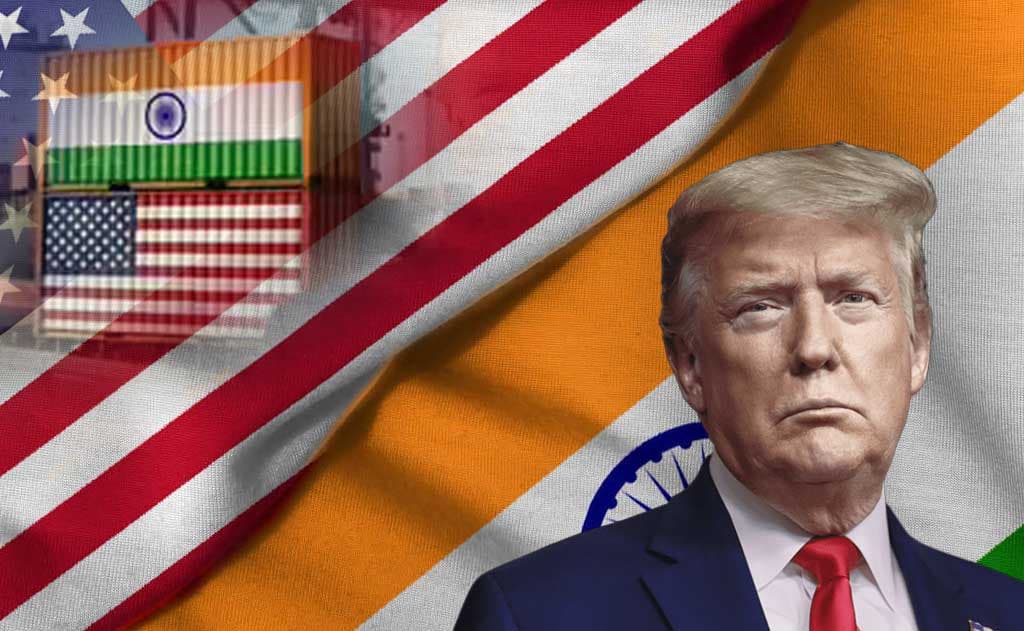
Trump Raises Tariffs on India to 50% Over Russian Oil Purchases
Washington, D.C., August 6, 2025 – U.S. President Donald Trump has escalated trade tensions with India by signing an executive order on August 6, 2025, imposing an additional 25% tariff on Indian goods, bringing the total tariff rate to 50%. The move, set to take effect on August 27, 2025, is described as a "penalty" for India’s continued purchase of Russian oil amid the ongoing Russia-Ukraine conflict. The decision has sparked concerns about its potential impact on India’s export-driven sectors and the broader U.S.-India economic relationship, which has been a cornerstone of bilateral ties for decades.
Background and Rationale
The executive order follows Trump’s earlier announcement on July 30, 2025, of a 25% tariff on Indian imports, citing India’s high trade barriers and its economic ties with Russia. In a statement on his Truth Social platform, Trump accused India of “fuelling the Russian war machine” by purchasing “massive amounts” of Russian oil and reselling it for profit on the open market. “They don’t care how many people in Ukraine are being killed,” Trump wrote, signaling his frustration with India’s refusal to align fully with Western efforts to isolate Russia economically.
The new tariff, outlined in the executive order, specifically targets India’s direct and indirect imports of Russian oil, which the U.S. argues undermines sanctions imposed on Russia following its invasion of Ukraine in 2022. According to the International Energy Agency, Russia accounted for 35% of India’s oil imports in 2024, making it the country’s top supplier. India’s imports surged from 100,000 barrels per day before the war to 1.8 million barrels per day in 2023, driven by discounted prices due to Western sanctions.
Trump’s order also authorizes U.S. officials to evaluate whether other countries purchasing Russian energy should face similar penalties, signaling a broader strategy to use trade policy as leverage against Russia’s war efforts. The U.S. has a $45.8 billion trade deficit with India, with bilateral trade reaching $190 billion in 2024, making India the U.S.’s 10th largest trading partner.
India’s Response
India’s Ministry of External Affairs (MEA) swiftly condemned the tariffs as “unfair, unjustified, and unreasonable,” arguing that the U.S. and European Union also engage in trade with Russia, including imports of uranium, palladium, fertilizers, and chemicals. The MEA noted that India began importing Russian oil after traditional supplies were diverted to Europe following the Ukraine conflict, a move it claims was encouraged by the U.S. to stabilize global energy prices. “India’s oil imports are a necessity compelled by global market conditions,” said MEA spokesperson Randhir Jaiswal, emphasizing that India’s decisions are driven by the need to ensure affordable energy for its 1.4 billion citizens.
Commerce Minister Piyush Goyal told India’s Parliament that the government is studying the implications of the tariffs and consulting stakeholders to safeguard national interests. India has signaled it may retaliate with tariffs of its own, potentially escalating the trade dispute. Former Indian trade official Ajay Srivastava suggested that India could absorb the tariffs by leveraging domestic consumption or exploring alternative export markets, but he acknowledged the competitive disadvantage against countries like Vietnam and Bangladesh, which face lower U.S. tariffs.
Economic Impact on India
India’s exports to the U.S., valued at $81 billion in 2024, include pharmaceuticals, gems, textiles, IT services, and auto components, which account for roughly 2% of India’s $4 trillion GDP. Economists warn that the 50% tariff could lead to a 0.2% to 0.4% reduction in India’s GDP growth, with sectors like pharmaceuticals and textiles facing significant price disadvantages. The Reserve Bank of India maintained its 6.5% GDP growth forecast for the 2025-26 financial year but acknowledged the tariffs as a potential headwind.
Aditi Nayar, chief economist at ICRA, noted that the extent of the economic impact depends on the specifics of any additional penalties, which remain unspecified. Nomura analysts suggested the tariffs could prompt India’s central bank to implement deeper rate cuts to protect growth. Industry leaders, including Harsha Vardhan Agarwal of FICCI, expressed hope that the tariffs would be temporary and urged for renewed trade negotiations to secure a permanent deal.
Implications for U.S.-India Relations
The tariffs mark a low point in U.S.-India relations, which had previously been bolstered by personal rapport between Trump and Indian Prime Minister Narendra Modi. The two leaders set a goal in 2024 to double bilateral trade to $500 billion by 2030, but the current dispute threatens that ambition. Trump’s rhetoric, including calling India and Russia “dead economies,” has strained diplomatic ties, with analysts like Ashok Malik describing the relationship as being in its “toughest spot since the mid-1990s.”
The U.S. move also complicates India’s geopolitical balancing act. India has maintained close ties with Russia, a major supplier of military equipment and energy, while deepening strategic partnerships with the U.S. through frameworks like the Quad. The tariffs could push India closer to BRICS allies like Russia and China, potentially reshaping global alignments.
Broader Trade Strategy
Trump’s tariffs on India are part of a broader trade policy aimed at reducing U.S. trade deficits and boosting domestic manufacturing. Since taking office, Trump has negotiated trade frameworks with the EU, Japan, the Philippines, and Indonesia, setting tariffs between 15% and 20% while securing market access for U.S. goods. The India tariffs, at 50%, are among the highest imposed, surpassing those on China (30%) and Pakistan (19%). Trump views tariff revenues as a means to offset recent income tax cuts and stimulate U.S. factory jobs, though economists warn of potential inflationary pressures and slower U.S. growth.
The Kremlin has called the U.S. tariff threats “illegitimate,” with spokesman Dmitry Peskov defending India’s right to choose its trade partners. Russia remains India’s top oil supplier, and tankers continue to deliver millions of barrels with no immediate signs of reduced imports despite U.S. pressure.
Looking Ahead
The tariffs are exempt for goods already in transit before August 27, 2025, provided they arrive in the U.S. by September 17, 2025, and for items covered under specific U.S. legal exemptions. However, the lack of clarity on the additional “penalty” for Russian oil purchases leaves room for further escalation.
As India evaluates its response, the global community watches closely. The U.S. deadline for Russia to reach a ceasefire in Ukraine looms on August 8, 2025, with Trump threatening further sanctions on Moscow and its trade partners. For Indian Americans and the broader NRI community, the tariffs raise concerns about economic ripple effects, from higher consumer prices in the U.S. to potential disruptions in India’s export-driven industries. As negotiations continue, the path to a “fair and balanced” trade deal remains uncertain, with both nations bracing for a challenging road ahead.
For more updates on U.S.-India trade relations and global economic developments, visit www.nriglobe.com.
Continue reading — NRI Globe pillar guide: NRI Taxation India — NRE/NRO/DTAA/FBAR
Related NRI Globe Coverage
- Trump Raises Tariffs on India Over Russian Oil Purchases, Sparking Diplomatic Tensions
- US Sanctions Divide: India Faces Tariffs for Russian Oil Imports While China, Europe Exempt
- India Saves ₹2.21 Lakh Crore by Buying Russian Oil, Bolstering Inflation Control
- Trump Tariffs Impact on NRIs
- Trump Imposes New Tariffs on India and Brazil, Signs Trade Deal with South Korea
- H-1B $100,000 Fee Rule 2026 — Complete Guide for Indian Tech Workers and Employers (What NRIs Need to Know)
- Trump Rejects AI Slowdown Calls, Backs Faster Innovation — What It Means for NRIs in 2026
- India-US Trade Relations 2026 Analysis: $240B Bilateral, Section 301 Tariffs, Interim Trade Agreement & NRI Impact
Fresh from NRI Globe
- YouTuber Nandu's World (Rama Nandana) UK Visa & Job Fraud Case: Full Details + Key Lessons for NRIs (2026)
- Dussehra / Vijayadashami 2026 Events Country-Wise — Global NRI Directory (Ram Lila, Ravana Dahan, Durga Puja Pandals, Ayudha Puja Venues + Booking)
- Diwali 2026 Events Country-Wise — Global NRI Directory (White House, Leicester, London Trafalgar, Toronto, Auckland, Sydney Parramasala, Fiji, Mauritius, Trinidad, South Africa and More)
- Diwali / Deepavali 2026 Country-Wise NRI Celebrations — Complete Global Guide (USA, UK, Canada, Australia, Fiji, Mauritius, Trinidad, South Africa, UAE and 30+ Countries)