
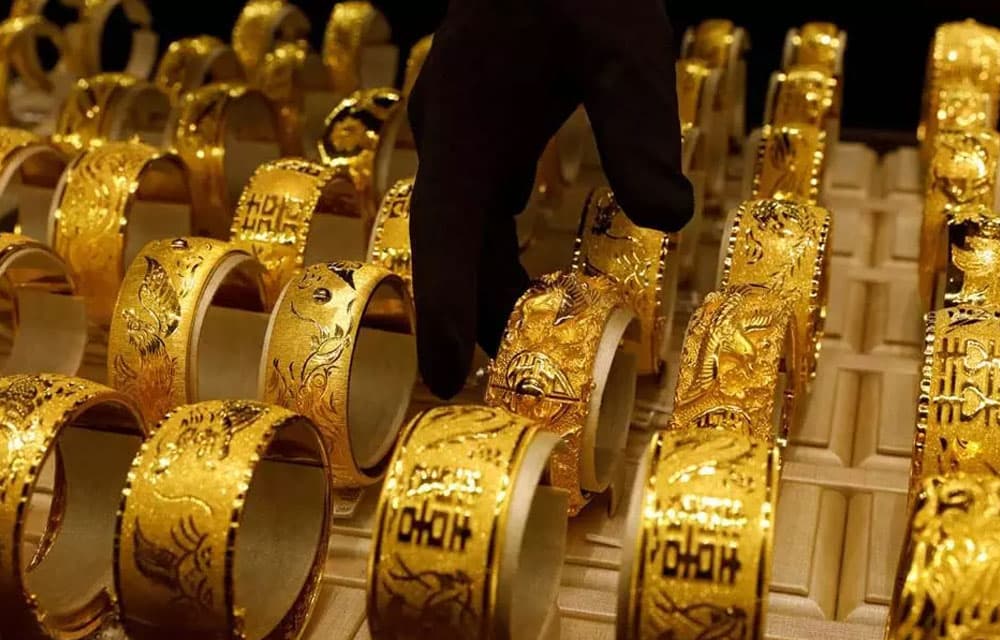
In a strategic move to strengthen its financial resilience and reduce dependence on the US dollar, the Reserve Bank of India (RBI) has significantly increased its gold reserves while scaling back investments in US Treasury bills (T-bills). This shift, reported by The Economic Times and other leading sources, reflects India’s alignment with a global trend among central banks to diversify foreign exchange reserves amid geopolitical uncertainties and economic volatility. The decision underscores India’s proactive approach to safeguarding its $690 billion forex kitty against currency fluctuations and global trade disruptions.
A Golden Hedge: RBI’s Strategic Shift
According to the latest data from the US Department of the Treasury and the RBI, India’s holdings of US T-bills dropped to $227 billion in June 2025, down from $242 billion in June 2024—a reduction of $14.5 billion. Over the same period, the RBI ramped up its gold purchases, adding 39.22 metric tonnes to its reserves, bringing the total to 879.98 metric tonnes as of June 27, 2025, up from 840.76 metric tonnes a year earlier. This increase has elevated gold’s share in India’s foreign exchange reserves to 11.70% by March 2025, nearly doubling from 5.87% in March 2021, as per the RBI’s Half Yearly Report on Management of Foreign Exchange Reserves.
The move to prioritize gold over US T-bills is driven by the RBI’s goal to diversify its reserve portfolio and mitigate risks associated with dollar-denominated assets. “Indian reserves have witnessed a steady buildup of gold, alongside diversification in forex currency assets,” said Madan Sabnavis, chief economist at Bank of Baroda. “This reflects a broader global trend of reducing reliance on the dollar amid trade conflicts and geopolitical tensions.” Gaura Sengupta, economist at IDFC First Bank, added, “India’s UST holdings fell despite lower yields, indicating a deliberate diversification away from US Treasuries to reduce the risk of revaluation loss due to US-specific factors.”
Why Gold? A Safe Haven in Uncertain Times
Gold’s appeal as a safe-haven asset has surged in recent years, fueled by global uncertainties, including the Russia-Ukraine conflict, Middle East tensions, and trade tariff wars, particularly under the backdrop of US policy shifts. The World Gold Council (WGC) notes that central banks globally have been net buyers of gold for 15 consecutive years, with 2024 seeing a record 1,045 tonnes purchased, driven by emerging market central banks like India, China, Poland, and Turkey. Gold’s ability to hedge against inflation, currency volatility, and geopolitical risks makes it a critical component of modern reserve management.
In India’s case, the RBI’s gold accumulation has paid off handsomely. The value of its gold holdings surged by 48.41% to $78.17 billion by March 2025, up from $52.67 billion a year earlier, driven by both increased holdings and a 30% rise in gold prices, which crossed $3,000 per ounce in 2025. In rupee terms, the value of RBI’s gold reserves jumped 53% to ₹6.65 lakh crore by March 2025, compared to ₹4.35 lakh crore the previous year, boosting the overall forex reserves to ₹56.87 lakh crore.
Reducing Dollar Dependence: A Global Trend
India’s strategy aligns with a broader global shift toward de-dollarization. Countries like China, which reduced its US T-bill holdings from $780 billion to $756 billion between June 2024 and June 2025, and Brazil have also pivoted toward gold and other assets to diversify their reserves. This trend is partly a response to the perceived “weaponization” of dollar-based assets, where financial sanctions can freeze or restrict foreign-held reserves during geopolitical conflicts. The RBI’s annual report for FY25 emphasizes diversification as the “most critical” approach to managing risks, spreading investments across asset classes, currencies, and jurisdictions.
Finance Minister Nirmala Sitharaman clarified in Lok Sabha that the RBI’s gold accumulation is not about replacing the US dollar but about maintaining a balanced reserve portfolio. However, the shift has sparked speculation about India’s long-term strategy in light of new US tariff policies, including a proposed 25% tariff on steel and aluminum imports announced by US President Donald Trump in January 2025. Such policies have fueled global demand for gold as a hedge against trade war-induced volatility.
Repatriating Gold: A Move Toward Self-Reliance
In a significant development, the RBI has also brought back substantial gold reserves to India. In FY25, the central bank repatriated 38.64 metric tonnes from the Bank of England and the Bank for International Settlements (BIS), increasing domestic holdings to 511.99 metric tonnes by March 2025. Over the past two years, 88.60 tonnes have been brought back to India, marking one of the largest movements of gold since 1991, when India pledged 67 tonnes to avert a balance-of-payments crisis. The WGC notes that this repatriation reflects a growing emphasis on domestic storage for asset security amid global fragmentation.
Implications for India’s Economy
The RBI’s gold-focused strategy has bolstered India’s economic stability, providing a buffer against rupee volatility and external shocks. With forex reserves at $690 billion as of August 22, 2025, India remains the fifth-largest economy globally and a top-20 investor in US T-bills, ahead of Saudi Arabia and Germany. The increased gold reserves have also contributed to valuation gains, offsetting declines in foreign currency assets, which dropped by $3.9 billion in November 2024 alone.
Economists see this as a prudent move. “Gold retains its value even when currencies fluctuate,” said Sahana Roy Chowdhury, professor of economics at the International Management Institute, Kolkata. “India’s accumulation began before recent geopolitical tensions, driven by portfolio diversification.” The RBI’s efforts to promote rupee-denominated trade through mechanisms like the Asian Clearing Union further signal a push to reduce reliance on the dollar, enhancing India’s financial autonomy.
Looking Ahead: A Golden Future?
As gold prices continue to climb, driven by central bank demand and global uncertainties, experts anticipate that the RBI will maintain its measured approach to gold accumulation. While purchases slowed in December 2024 and February 2025, the WGC’s Krishan Gopaul noted that “gold’s rising strategic importance in India’s reserves management is undeniable.” With central banks worldwide expected to continue buying gold at elevated levels into 2025, India’s strategy positions it well to navigate an increasingly volatile global financial landscape.
For the Indian diaspora, this move highlights India’s growing economic clout and strategic foresight. As the RBI builds its “golden hedge,” it not only strengthens the nation’s financial stability but also sends a message of resilience to the world.
Continue reading — NRI Globe pillar guide: Sending Money to India — Wise/Remitly/Xoom Comparison
Related NRI Globe Coverage
- Trump’s “One Big Beautiful Bill” Signed into Law, Ushering in Sweeping Tax Cuts and Border Security Measures
- Oracle Starts Another Round of Layoffs After Cutting 21,000 Jobs Last Fiscal Year
- US-India Trade Deal: Tariff Cuts and What They Mean for NRIs and the Indian Economy in 2026
- Iran War 2026: Gold, Oil, Crypto Impact
- Gold and Silver for NRIs: Spiritual Value & Smart Investing 2026
- Gold and Silver Price Predictions for End of 2026: Country-Wise NRI Guide
- No Tax Tips for Americans Under the One Big Beautiful Bill
- Impact of Trump's "One Big Beautiful Bill" on Non-Resident Indians
Fresh from NRI Globe
- YouTuber Nandu's World (Rama Nandana) UK Visa & Job Fraud Case: Full Details + Key Lessons for NRIs (2026)
- Dussehra / Vijayadashami 2026 Events Country-Wise — Global NRI Directory (Ram Lila, Ravana Dahan, Durga Puja Pandals, Ayudha Puja Venues + Booking)
- Diwali 2026 Events Country-Wise — Global NRI Directory (White House, Leicester, London Trafalgar, Toronto, Auckland, Sydney Parramasala, Fiji, Mauritius, Trinidad, South Africa and More)
- Diwali / Deepavali 2026 Country-Wise NRI Celebrations — Complete Global Guide (USA, UK, Canada, Australia, Fiji, Mauritius, Trinidad, South Africa, UAE and 30+ Countries)