
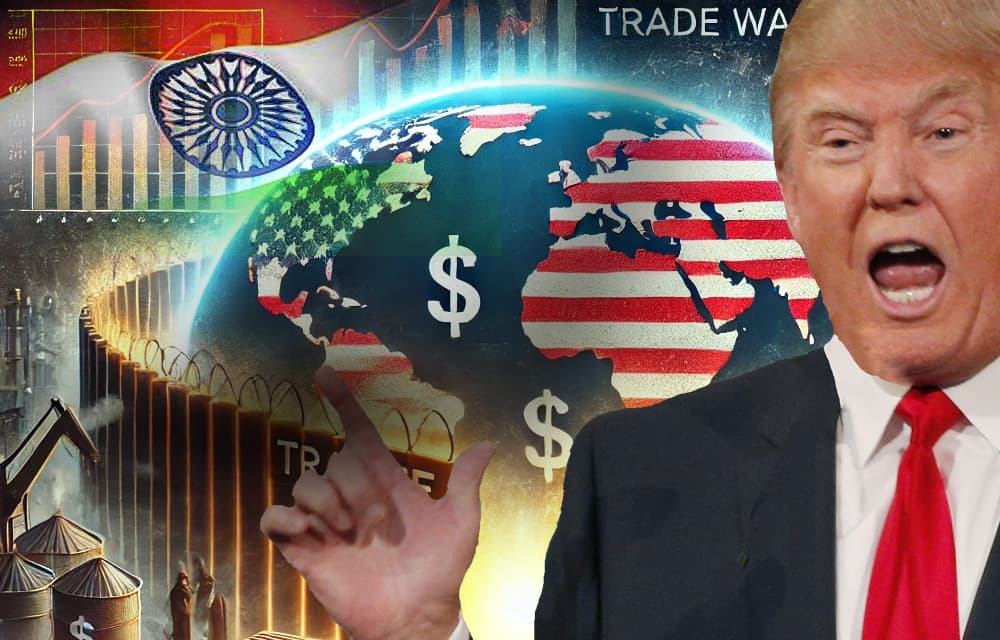
On July 15, 2025, President Donald Trump announced a bold trade deal with Indonesia, slapping a 19% tariff on its goods while securing tariff-free access for U.S. exports to Indonesia’s $40 billion market. This move, part of a broader wave of tariffs—including a 26% levy on Indian goods and up to 54% on Chinese imports—is sending shockwaves through global trade, with ripple effects hitting Indian-American communities across the U.S. For Non-Resident Indians (NRIs) running import-export businesses, retail shops, or simply managing household budgets, these tariffs are more than policy jargon—they’re reshaping grocery bills, business strategies, and the cost of living. Imagine Priya, an Indian-American grocery store owner in Edison, New Jersey, staring at rising wholesale prices for imported spices and snacks, wondering how to keep her customers happy without passing on costs. Here’s how Trump’s tariff policies are impacting Indian-American families, the opportunities they create for entrepreneurs, and insights from community business leaders navigating this economic storm.
Tariff-Induced Inflation: A Growing Burden for Indian-American Families
Trump’s tariffs, designed to reduce the U.S. trade deficit and boost domestic manufacturing, come with a hidden cost: inflation. According to the U.S. Labor Department, consumer prices rose 2.7% in the 12 months through June 2025, the highest in four months, with tariffs driving up costs for housing, food, and gasoline. For Indian-American families, grocery prices are a particular pain point. The U.S. imports significant amounts of food products, including spices, rice, and processed snacks, from countries like India, Indonesia, and Vietnam, all now facing tariffs ranging from 19% to 46%. These levies increase wholesale costs, which retailers often pass on to consumers.
For a typical Indian-American household, this means higher prices for staples like basmati rice, turmeric, and palm oil-based products. The Journal of Supply Chain Management reports that U.S. importers paid $19.3 billion in duties in April 2025 alone, a 3.5-fold increase from the 2018-19 trade war peak, with costs trickling down to shoppers. For example, a 10-pound bag of basmati rice, a staple in many NRI kitchens, has jumped from $12 to $15 in some markets, according to local grocers in California’s Bay Area. Combined with rising energy and housing costs, these increases are squeezing family budgets, especially for low-income NRIs who spend a larger share of income on groceries—often 30-40% compared to the national average of 11%.
Consider the story of the Gupta family in Chicago. With two young children and a single income from Anil’s tech job, they’re feeling the pinch. “We used to buy imported snacks like Haldiram’s namkeen for the kids, but now it’s $8 for a small packet,” says Meena Gupta. “We’re cutting back on treats and sticking to bulk buys, but it’s tough.” This sentiment echoes across Indian-American communities, where cultural food preferences make tariff-driven price hikes particularly disruptive.
Opportunities for Indian-American Entrepreneurs
While tariffs pose challenges, they also create opportunities for Indian-American entrepreneurs to adapt and thrive. The Global Trade Research Initiative (GTRI) notes that India’s 26% tariff rate is lower than China’s 54% or Vietnam’s 46%, giving Indian exporters a “tariff arbitrage” advantage. This opens doors for Indian-American businesses to pivot and capitalize on shifting trade dynamics:
- Diversifying Supply Chains: With tariffs hitting Indonesian goods (19%) and Chinese imports (54%), Indian-American import-export businesses can source more products from India, particularly textiles, electronics, and machinery. India’s textile industry, which accounts for 28% of its $9.6 billion in U.S. exports, could gain a competitive edge over pricier Chinese or Vietnamese goods.
- Local Manufacturing: Trump’s tariffs aim to boost U.S. production, creating opportunities for Indian-American entrepreneurs to invest in domestic manufacturing. For example, producing Indian snacks or spices locally could bypass import duties and appeal to cost-conscious consumers.
- Market Diversification: Retailers can explore sourcing from tariff-exempt countries or USMCA-compliant suppliers in Canada and Mexico, where goods face 0-12% tariffs. This could mean stocking more North American-made products alongside Indian imports.
- E-commerce Innovation: Indian-American retailers can leverage online platforms to offer competitive pricing or subscription models for cultural goods, offsetting tariff costs through volume sales.
The pharmaceutical sector, a bright spot for Indian-American businesses, remains exempt from reciprocal tariffs. India supplies 47% of U.S. generic drugs, and companies like those owned by Indian-American pharmacists in New York and Texas can maintain stable pricing, offering a lifeline amid rising costs elsewhere.
Insights from Indian-American Business Owners
Indian-American business owners are already navigating these changes with resilience and ingenuity. Rajesh Patel, who runs a chain of Indian grocery stores in Atlanta, shares, “The 19% tariff on Indonesian palm oil has spiked our costs for cooking oils and snacks. We’re negotiating with Indian suppliers for alternatives, but shipping delays are a headache.” Rajesh is also exploring local production of spices, partnering with a California-based processor to blend masala mixes domestically, avoiding import duties.
In Silicon Valley, Anjali Desai, an import-export entrepreneur, sees opportunity in the chaos. “The tariffs are pushing us to rethink supply chains. I’m sourcing more textiles from India instead of Vietnam, and my customers appreciate the quality. Plus, India’s lower tariff rate gives us an edge.” Anjali has also joined the Indus Entrepreneurs (TiE) to network with other Indian-American business owners, sharing strategies to absorb costs or pass them on strategically without losing customers.
Meanwhile, Vikram Singh, a retailer in Houston, is tackling inflation head-on. “Customers are frustrated with price hikes on imported lentils and snacks. We’re offering loyalty discounts and bulk deals to keep them coming back. It’s not ideal, but it’s about building trust.” Vikram’s story reflects the community’s adaptability, a trait honed through decades of navigating economic and cultural challenges in the U.S.
The Broader Cost-of-Living Impact for NRIs
Beyond groceries, Trump’s tariffs are driving up costs for consumer goods like electronics, clothing, and auto parts, which hit Indian-American families hard. The Tax Foundation estimates that tariffs could cost U.S. households $1,243 to $4,900 annually, with NRIs in urban areas like New York or San Francisco facing steeper impacts due to higher living costs. For instance, the 25% tariff on imported cars and parts could raise vehicle prices by thousands, affecting Indian-American professionals who rely on cars for commuting. The Federal Reserve’s June 2025 forecast predicts personal consumption expenditure (PCE) inflation rising to 3.1%, up from 2.8%, further straining budgets.
For NRIs on H-1B visas or awaiting green cards, these costs compound financial stress. Many lack access to social safety nets like Medicaid or SNAP, which were cut under the One Big Beautiful Bill Act, making it harder to absorb price hikes. Community organizations like the South Asian Public Health Association (SAPHA) report increased demand for financial counseling among Indian-American families, particularly those supporting elderly parents or U.S.-born children.
A Community’s Resilience
The story of the Indian-American community is one of grit and adaptation. Take Neeta, an NRI small business owner in Los Angeles who runs a sari boutique. When tariffs raised the cost of imported Indian textiles, she pivoted to selling locally designed Indo-fusion clothing, blending traditional patterns with American fabrics to dodge duties. “It’s not just about surviving,” Neeta says. “It’s about finding new ways to celebrate our culture while keeping prices fair.” Her boutique now hosts workshops teaching young Indian-Americans to design their own outfits, turning a challenge into a community-building opportunity.
Call to Action
Trump’s tariffs are reshaping the economic landscape for Indian-American families and businesses, but the community’s strength lies in its ability to adapt and innovate. Are you an NRI feeling the pinch of rising grocery or retail prices? Have you found creative ways to navigate these changes? Share your experiences in the comments below or on social media at @NRIGlobe. Let’s connect and support each other by spreading the word about local resources like SAPHA (www.saphapublichealth.org) or TiE (www.tie.org) to help Indian-American families thrive in this new economic reality.
Continue reading — NRI Globe pillar guide: NRI Taxation India — NRE/NRO/DTAA/FBAR
Related NRI Globe Coverage
- U.S. Trade Policies and Indian Businesses: Navigating the Brazil Trade War and Global Ripple Effects
- India-US Trade Relations 2026 Analysis: $240B Bilateral, Section 301 Tariffs, Interim Trade Agreement & NRI Impact
- US-India Trade Deal: Tariff Cuts and What They Mean for NRIs and the Indian Economy in 2026
- Trump's 100% Tariff on Pharma Imports: A Devastating Blow to India's Lifesaving Drug Exports
- Spain Rejects $7.24B F-35 Deal, Commits €10.5B to Eurofighter and FCAS Amid Trump’s Tariff Threats
- Impact of Trump’s 25% Tariff on Indian Exports: An NRI Perspective
- Global Impact of Trump’s Tariffs: A New Era of Trade Tensions
- Global Trade on Edge: Will Trump's Tariffs Backfire?
Fresh from NRI Globe
- YouTuber Nandu's World (Rama Nandana) UK Visa & Job Fraud Case: Full Details + Key Lessons for NRIs (2026)
- Dussehra / Vijayadashami 2026 Events Country-Wise — Global NRI Directory (Ram Lila, Ravana Dahan, Durga Puja Pandals, Ayudha Puja Venues + Booking)
- Diwali 2026 Events Country-Wise — Global NRI Directory (White House, Leicester, London Trafalgar, Toronto, Auckland, Sydney Parramasala, Fiji, Mauritius, Trinidad, South Africa and More)
- Diwali / Deepavali 2026 Country-Wise NRI Celebrations — Complete Global Guide (USA, UK, Canada, Australia, Fiji, Mauritius, Trinidad, South Africa, UAE and 30+ Countries)