
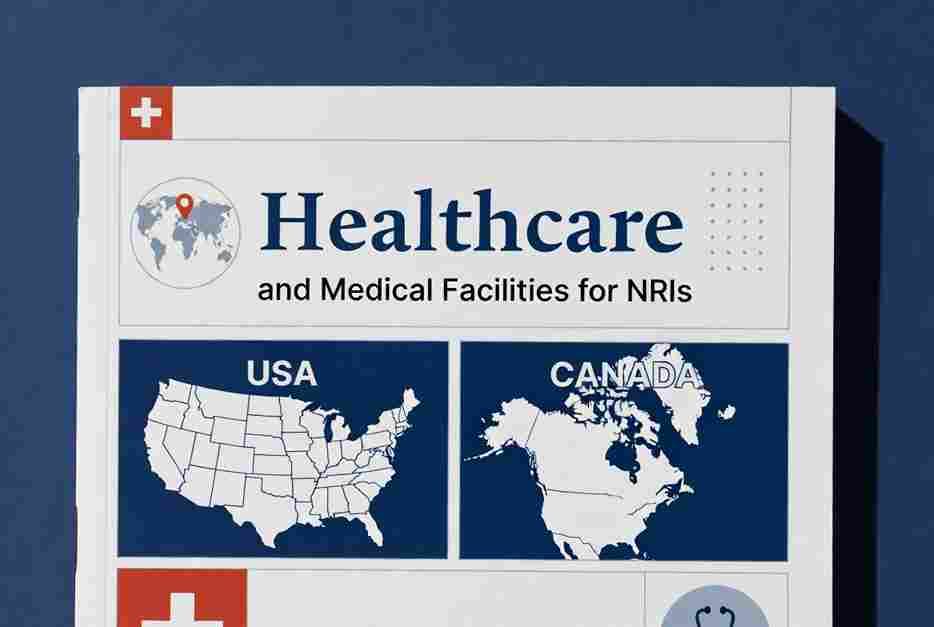
For most NRI households, health insurance is a multi-policy puzzle — country-of-residence coverage for the immediate family, dedicated insurance for parents in India, travel-medical insurance for India visits, and sometimes additional layers for dental, vision and specific conditions. The cost of getting this right is meaningful but bounded; the cost of getting it wrong can be life-changing for the family. This 2026 guide walks through the structure that actually works for NRI households across the major destination countries.
Layer 1: Country-of-residence health coverage
United States
- Employer coverage for H-1B and greencard-holder NRIs is typically the primary plan. Verify the network, deductible, out-of-pocket maximum and specialist-coverage tiers each year — open-enrolment defaults are not always optimal.
- Marketplace (ACA) coverage for self-employed and contract-NRI households. Subsidies based on household income; bronze / silver / gold / platinum tiers trade off premium against out-of-pocket exposure.
- Medicaid and CHIP for low-income households or children depending on state eligibility.
- HSA-eligible high-deductible plans for NRIs comfortable managing health-spending themselves — tax-advantaged for those who can fund the HSA and let it grow.
- COBRA bridge when transitioning between jobs; expensive but maintains continuity.
United Kingdom
- NHS coverage through the Immigration Health Surcharge for visa holders; provides comprehensive coverage with NHS waiting times.
- Private health insurance (BUPA, AXA, Vitality, Aviva) for faster specialist access; common employer-provided benefit at senior levels.
- Dental and vision typically not covered comprehensively by NHS or basic private plans — separate cover often needed.
Canada
- Provincial health insurance (OHIP, MSP, AHCIP and equivalents) covers most NRIs after residency-period qualification; comprehensive primary and hospital care.
- Supplementary private coverage for prescription drugs, dental, vision, paramedical services — typically employer-provided.
- Waiting period for new immigrants varies by province; bridge coverage during this period matters.
Australia and New Zealand
- Medicare coverage for citizens, permanent residents and reciprocal-arrangement temporary residents (Reciprocal Health Care Agreement countries — India is not a current RHCA partner).
- Private health insurance with Medicare Levy Surcharge tax benefit for higher earners; rebates for eligible policies.
- Coverage for new immigrants and visa categories — verify based on specific visa type before assuming coverage.
Gulf (UAE, Saudi Arabia, Qatar, Kuwait, Bahrain)
- Employer-provided coverage is the dominant pattern in Gulf countries; verify network and benefit tier rigorously.
- Mandatory insurance in UAE for residents; specific employer-funded plans operate under DHA (Dubai), DOH (Abu Dhabi) regulations.
- Optional top-up coverage for international hospitalisation or non-Gulf treatment as appropriate.
Layer 2: Senior-citizen health insurance for parents in India
This is the most commonly under-managed layer of the NRI health-insurance picture. Parents in India who are dependent on NRI children for health-finance face structural insurance friction:
- Indian senior-citizen plans (Star Health Senior Citizen Red Carpet, Care Senior, Niva Bupa Senior First, HDFC ERGO MyHealth Suraksha Senior, ICICI Lombard Complete Health) cover hospitalisation up to specific sub-limits with co-pay provisions for senior age bands.
- Sub-limits and co-pays apply more aggressively to senior policies than to standard plans — read the policy wording carefully before assuming complete coverage.
- Pre-existing disease (PED) waiting periods can be 2-4 years; later enrolment costs more than earlier enrolment.
- Top-up policies covering large hospitalisations (above a deductible) are typically the most cost-efficient incremental coverage for senior parents.
- Critical-illness rider coverage for cancer, cardiac and stroke conditions — lump-sum payout that supplements hospitalisation reimbursement.
- Network hospital empanelment — verify that the parent's preferred / closest hospital is in the insurer's cashless network. Out-of-network reimbursement is operationally painful.
The practical NRI workflow for parent insurance
- Buy coverage as early as the parent qualifies for any plan. Sub-65 enrolment options are wider than 65-plus; sub-75 wider than 75-plus. Delay raises premium and tightens coverage.
- Read the policy wording for sub-limits, co-pays, room-rent caps, PED waiting periods. These details determine real-world coverage more than the headline sum-insured number.
- Layer base + top-up rather than single-large policy. Base policy covers smaller events; top-up covers large hospitalisations.
- Verify network hospital list for cashless treatment at preferred hospital(s).
- NRI premium payment from abroad works for most insurers through online portals; some require Indian-bank ECS / standing instruction.
- Annual review — renew before lapse; lapsed policies often lose accrued no-claim bonus and PED waiting-period credit.
Layer 3: Travel-medical insurance for India visits
For NRIs visiting India, the question of whether country-of-residence coverage extends abroad is variable:
- US employer plans typically have limited international coverage; emergency-only out-of-network.
- UK private plans may include international cover at different tiers — verify before assuming.
- Canada and Australia residents typically lose provincial / Medicare coverage when abroad beyond specified durations; private travel insurance fills the gap.
- Dedicated travel-medical insurance (covering trip-cancellation, medical emergency, evacuation) is typically inexpensive and worth purchasing for India trips regardless of country-of-residence coverage gaps.
Layer 4: Dental and vision
Dental and vision are typically not comprehensively covered by country-of-residence primary plans. For NRI households:
- Country-of-residence dental insurance is often cost-efficient via employer or marketplace.
- India-trip dental work for routine cleaning, fillings or major work (crowns, root canals) at quality Indian dental practices is often substantially less expensive — a useful pattern for NRI families planning India visits.
- Eye exams and prescription eyewear follow similar economics — India routine eyecare costs are fraction of country-of-residence costs.
Layer 5: Specific condition and disability coverage
- Critical-illness lump-sum coverage separate from medical-expense insurance — pays out on diagnosis of specified serious conditions.
- Disability insurance protects income for working-age NRIs in case of disability that prevents working.
- Long-term care for elderly parents — Indian long-term care infrastructure is improving; check what current Indian senior plans cover.
The realistic multi-policy structure for NRI households
- Primary country-of-residence coverage for immediate household — employer or marketplace.
- Senior-citizen Indian plan + top-up for parents in India.
- Travel-medical insurance for India trips.
- Dental coverage in country of residence (sometimes; India-trip dental is alternative).
- Critical-illness for working-age household members (optional but cost-efficient for many).
Annual cost varies substantially by destination and family size; the parent-coverage component is often the cheapest in absolute terms but the most important for diaspora-household risk management.
Five common NRI health-insurance mistakes
- Delaying parent enrolment until parents are 70+. Premiums rise sharply and coverage tightens at higher entry ages. Earlier is better.
- Assuming country-of-residence coverage extends to India. Most do not — verify, don't assume.
- Choosing the cheapest senior plan without reading sub-limits. Headline sum-insured of INR 10 lakh with room-rent capped at 1% of sum-insured / day produces real-world coverage substantially below the headline.
- Letting policies lapse during transitions. Lapsed senior-citizen policies lose PED waiting-period credit; re-enrolment treats pre-existing conditions as new.
- Not maintaining travel-medical insurance for India trips. A serious health event during a visit can produce out-of-pocket costs in lakhs that travel insurance covers for hundreds of rupees of premium.
Final thoughts
NRI health-insurance planning is one of those tasks that produces near-zero short-term satisfaction and substantial long-term value. The hours invested in setting up the right multi-policy structure once compound into operational protection across decades. For diaspora households whose financial planning extends across two jurisdictions, health insurance is one of the highest-leverage uses of attention.
For broader framework on aging-parent support that health insurance underwrites, NRI Globe's supporting aging parents from abroad guide covers the five-layer support structure. For estate planning that complements health insurance for senior parents, the cross-border estate planning guide covers the succession framework.
Informational only — not insurance advice. Plan features, sub-limits, exclusions and pricing vary by insurer and change frequently. Consult licensed insurance advisors in both jurisdictions for specific policy recommendations and read policy wording carefully before purchasing.
Related NRI Globe pillar guide: Returning to India — Complete Checklist for NRIs
Related NRI Globe Coverage
- Impact of AI on NRI Mental Health: Challenges, Risks and Practical Ways Forward (2026)
- Supporting Aging Parents in India from Abroad: An NRI Framework for 2026
- A Heartbreaking Loss in Bengaluru: An NRI Parent’s Reflection on a Teen’s Tragic End
- Health & Fitness in Hot Weather: Your Ultimate Guide for Summer 2025
- Academic Pressure Cookers: Mental Health Crises Among NRI Students Abroad
- Raising "Third Culture Kids" (TCKs): Unique Challenges for NRI Parents
- Digital Health Platforms for NRIs Accessing Indian Healthcare
- Dental Health Issues Continue to Spread: Second Cases Rising
Fresh from NRI Globe
- YouTuber Nandu's World (Rama Nandana) UK Visa & Job Fraud Case: Full Details + Key Lessons for NRIs (2026)
- Dussehra / Vijayadashami 2026 Events Country-Wise — Global NRI Directory (Ram Lila, Ravana Dahan, Durga Puja Pandals, Ayudha Puja Venues + Booking)
- Diwali 2026 Events Country-Wise — Global NRI Directory (White House, Leicester, London Trafalgar, Toronto, Auckland, Sydney Parramasala, Fiji, Mauritius, Trinidad, South Africa and More)
- Diwali / Deepavali 2026 Country-Wise NRI Celebrations — Complete Global Guide (USA, UK, Canada, Australia, Fiji, Mauritius, Trinidad, South Africa, UAE and 30+ Countries)