
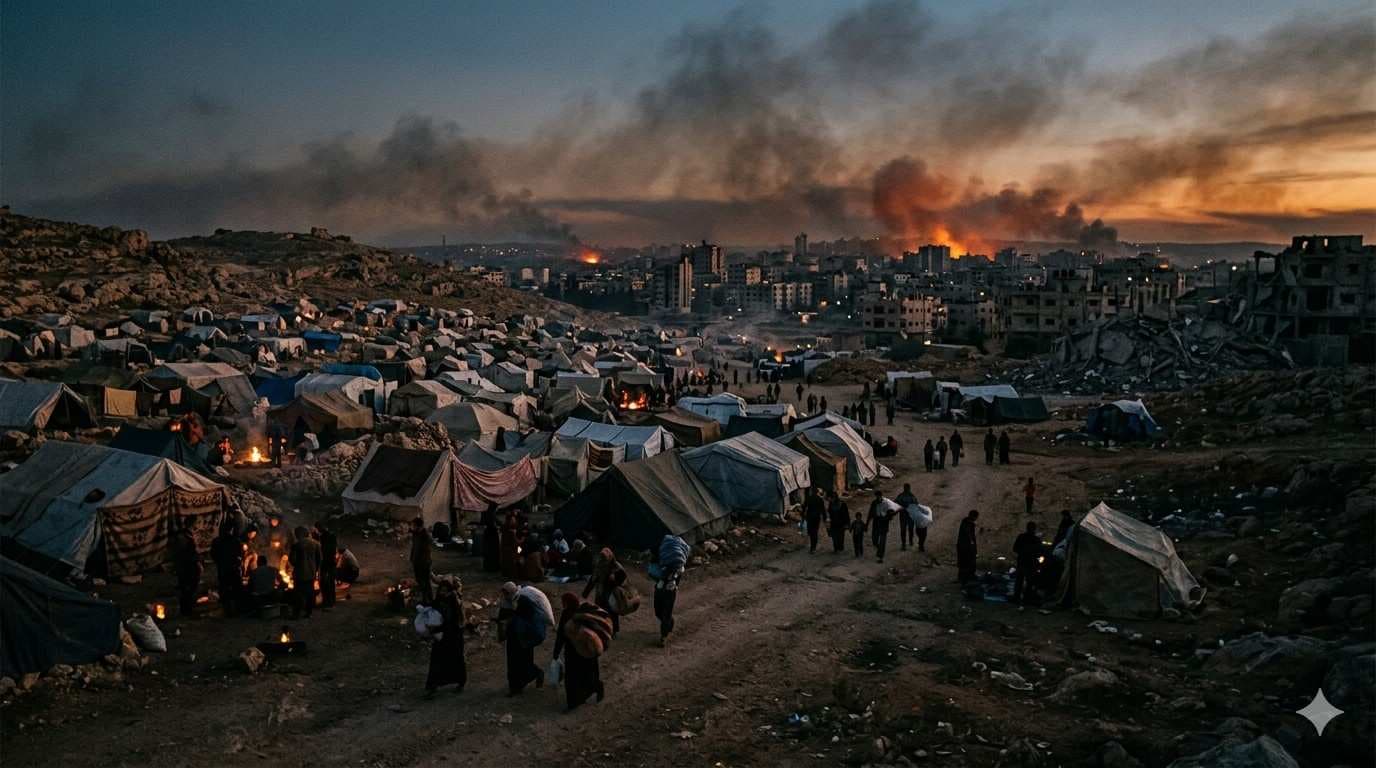
Tehran/Beirut/Washington – April 7, 2026 — As the US-Israel military campaign against Iran enters its sixth week, the human cost continues to mount with thousands killed, tens of thousands injured, and widespread displacement across the region, even as President Donald Trump threatens further destruction of Iranian power plants and bridges if the Strait of Hormuz is not reopened by Tuesday evening.
Independent estimates and humanitarian reports indicate that between 1,900 and over 3,500 people have been killed in Iran since Operation Epic Fury began on February 28, 2026. Among the dead are hundreds of civilians, including women and children, with one rights group reporting at least 244 children among the fatalities. Over 20,000 to 26,500 people have been injured in Iran alone, according to various monitors.
Civilian infrastructure has borne a heavy burden. Strikes have damaged universities, hospitals, fuel stations, and industrial sites, leading to power outages, fuel shortages, chemical pollution, and strained medical services. Recent attacks on petrochemical facilities in areas like Mahshahr have caused additional deaths and environmental hazards affecting local communities.
In Israel, Iranian missile and drone strikes have killed at least 20–28 people, mostly civilians, with thousands more injured. The United States has reported 13 service members killed, with additional injuries from Iranian attacks on regional bases. Related hostilities have displaced over 1.1 million people in Lebanon.
Escalating Strikes and Retaliation
US and Israeli forces have intensified operations in recent days, targeting scientific institutions like Sharif University of Technology in Tehran and key energy sites such as the South Pars gas field. Iranian retaliation has included missile barrages toward Israel and attacks on energy infrastructure in Gulf states.
The Islamic Revolutionary Guard Corps (IRGC) has also reported the loss of senior officials, including intelligence chief Maj. Gen. Seyed Majid Khademi. Meanwhile, US forces successfully rescued downed airmen in one high-risk operation, which President Trump highlighted during recent briefings.
Trump has warned that failure to reopen the Strait of Hormuz by 8 p.m. ET Tuesday could lead to “Power Plant Day and Bridge Day,” potentially crippling Iran’s electricity and transportation networks in a single night of overwhelming strikes. He has stated he is unconcerned about potential war crimes allegations related to such infrastructure targeting.
Expert Warnings on Civilian Impact
Military law and international humanitarian law experts have raised serious concerns that systematic attacks on power plants, bridges, desalination facilities, and other civilian objects could violate protections under the Geneva Conventions by causing disproportionate harm to non-combatants. Humanitarian organizations warn of long-term consequences, including outbreaks of disease due to lack of clean water and electricity, as well as environmental damage from fires at industrial sites.
The conflict, which reportedly began with strikes that affected top Iranian leadership (including contested reports around Supreme Leader Ali Khamenei), has already triggered significant regional ripple effects. Attacks on Gulf energy sites have heightened tensions, while millions face economic hardship from disrupted oil flows and rising global energy prices.
Calls for De-escalation
Human rights groups and the United Nations have urged all parties to prioritize civilian protection and pursue diplomatic solutions. Iran has rejected short-term ceasefire proposals, demanding a permanent end to the war, lifting of sanctions, and reconstruction support. Mediators, including Pakistan, continue efforts, but prospects for an immediate breakthrough remain uncertain as the Tuesday deadline approaches.
As the 2026 Iran War intensifies, the growing human toll serves as a stark reminder of the conflict’s far-reaching consequences. Families across Iran, Israel, Lebanon, and the broader region continue to bear the brunt of the violence, with many displaced and living in uncertainty.
This report is compiled from multiple international sources including Al Jazeera, Reuters, BBC, The New York Times, NPR, HRANA, and the International Federation of Red Cross and Red Crescent Societies as of April 7, 2026. Casualty figures vary across monitors and have not been fully independently verified in all cases. The situation remains highly fluid.
NRIGlobe.com – Balanced global news and insights for the worldwide Indian community and beyond.
Related NRI Globe Coverage
- Russia Issues Stark Warning to US Over Israel-Iran Conflict: Are We on the Brink of World War 3?
- Iran-Israel Conflict: Risks of Nuclear Escalation if Supreme Leader Assassinated
- Shadows Over the Gulf: The Fragile 2026 Iran War Ceasefire — May 8 Update for NRIs
- Trump Extends Iran Ceasefire: NRI Safety and Finance Updates
- Iran Blockade 2026: Impact on NRIs & Gas Prices
- Iran War 2026: Why Fuel Prices Still Rising in India
- Why US Chose Pakistan in Iran Conflict Explained
- 90 Lakh Indians in Gulf Face Iran War Risk
Fresh from NRI Globe
- YouTuber Nandu's World (Rama Nandana) UK Visa & Job Fraud Case: Full Details + Key Lessons for NRIs (2026)
- Dussehra / Vijayadashami 2026 Events Country-Wise — Global NRI Directory (Ram Lila, Ravana Dahan, Durga Puja Pandals, Ayudha Puja Venues + Booking)
- Diwali 2026 Events Country-Wise — Global NRI Directory (White House, Leicester, London Trafalgar, Toronto, Auckland, Sydney Parramasala, Fiji, Mauritius, Trinidad, South Africa and More)
- Diwali / Deepavali 2026 Country-Wise NRI Celebrations — Complete Global Guide (USA, UK, Canada, Australia, Fiji, Mauritius, Trinidad, South Africa, UAE and 30+ Countries)