
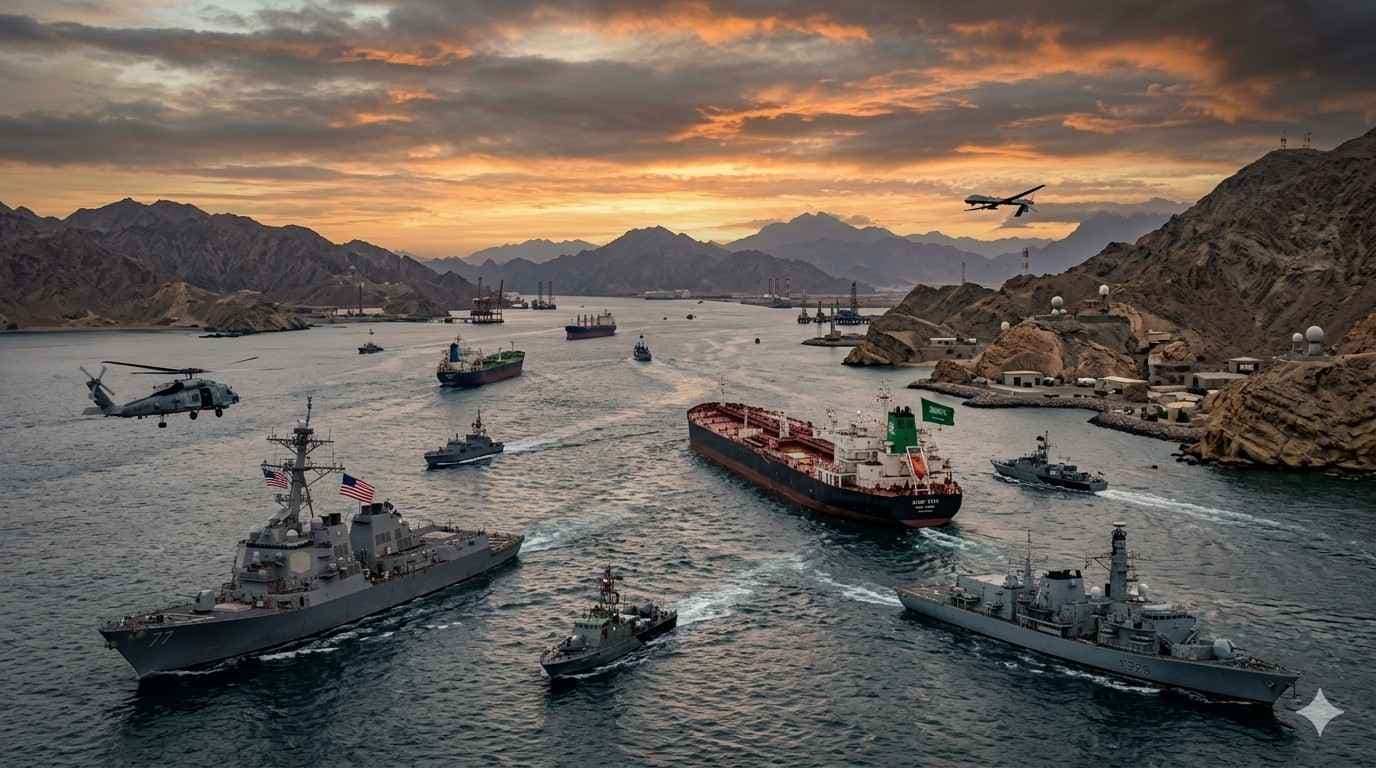
As April 2026 brought warmer winds across the Arabian Peninsula, the six nations of the Gulf Cooperation Council (GCC) — Saudi Arabia, the United Arab Emirates, Qatar, Kuwait, Bahrain, and Oman — found themselves at the epicenter of a deepening regional and global crisis. The ongoing US-Iran war, now in its second month, has turned the strategic Strait of Hormuz into a flashpoint, disrupting vital energy exports, triggering retaliatory Iranian strikes on Gulf infrastructure, and sending oil prices soaring. This week, GCC leaders balanced security concerns, economic shocks, and diplomatic maneuvering while urging the international community to protect maritime routes and restore stability.
The Strait of Hormuz Crisis: GCC Demands UN Action Amid Iranian Blockade
The dominant story this week was the effective closure of the Strait of Hormuz by Iran in retaliation for US-Israeli strikes. This narrow waterway, through which roughly 20% of global oil and LNG supplies normally pass, has seen shipping traffic plummet by up to 95%, triggering what analysts describe as one of the largest energy supply disruptions in history.
On April 2-3, GCC Secretary-General Jasem Mohamed Al-Budaiwi addressed a high-level UN Security Council meeting in New York — the first dedicated to UN-GCC cooperation. He condemned Iran’s actions, stating that Tehran had “closed the Strait of Hormuz, prevented commercial vessels and oil tankers from transiting, and imposed conditions on some to pass through.” Al-Budaiwi called on the Security Council to authorize “all necessary measures,” including defensive force if needed, to protect maritime routes and ensure safe international navigation.
Bahrain, currently holding the UN Security Council presidency, pushed for a vote on a resolution supporting these efforts. The GCC nations stressed that any future agreements with Iran on regional security must include them as key stakeholders. Several commercial vessels, including LNG tankers, managed limited transits this week, but the overall disruption continued to fuel global energy concerns.
Iranian retaliatory strikes added to the tension. Reports emerged of attacks targeting energy sites and infrastructure across the Gulf, including fuel tanks at Kuwait’s international airport (where fires were quickly contained), missile interceptions over Saudi Arabia, the UAE, Bahrain, and Qatar, and threats to other facilities. Some analysts noted that while physical damage was limited in many cases, the psychological and economic impact was significant, with airspace restrictions and heightened security measures affecting aviation and trade.
Divergent Voices Within the GCC: Hawks vs. Diplomats
The crisis highlighted subtle differences among GCC members. Saudi Arabia and the UAE appeared more hawkish, reportedly urging stronger action against Iran and even considering scenarios for further pressure to weaken Tehran’s capabilities. Bahrain aligned closely with this stance, emphasizing collective defense.
In contrast, Qatar, Oman, and Kuwait leaned toward quicker diplomatic off-ramps, mindful of long-term coexistence with Iran and the need to avoid prolonged economic pain. Behind-the-scenes discussions reportedly included calls for the US to continue operations until key objectives were met, while others pushed for de-escalation to reopen shipping lanes swiftly.
Prime Minister and Foreign Minister of Qatar, along with leaders from the UAE, held high-level talks to coordinate responses. Oman continued its traditional mediation role, while the broader GCC maintained a unified public front through joint statements and the UN appeal.
Soaring Oil Prices and Economic Fallout: A Double-Edged Sword
The blockade and uncertainty drove Brent crude past $105–$110 per barrel at points this week, with some forecasts warning of spikes to $150–$200 if disruptions persist. For GCC oil exporters, higher prices offered partial compensation for lost export volumes, but the overall impact remained deeply negative.
Production shortfalls, force majeure declarations on LNG exports (particularly from Qatar), and damaged or threatened infrastructure led to revenue losses estimated in the tens of billions. Kuwait warned of potential four-to-six-month delays in resuming full output even after the strait reopens. Food imports — heavily reliant on the strait — faced severe disruptions, causing grocery price spikes of 40–120% in some areas and forcing airlifts of staples.
Aviation giants like Emirates, Qatar Airways, and Etihad experienced major disruptions due to airspace closures, hammering tourism and business travel. Major events were postponed or rescheduled, including the Bahrain and Saudi Arabian Formula 1 Grands Prix, the World Economic Forum’s Global Collaboration and Growth Meeting in Jeddah, and Abu Dhabi Business Week. These cancellations dealt a blow to the GCC’s growing reputation as a global events hub.
Economists warned that prolonged uncertainty could push GCC economies toward recession in 2026, with diversification efforts (Vision 2030 in Saudi Arabia, various UAE and Qatar initiatives) facing new headwinds from higher borrowing costs and redirected fiscal spending.
Broader Regional and International Engagement
GCC countries joined wider talks, including UK-led discussions with around 40 nations on reopening the strait and ensuring freedom of navigation. There were also bilateral and multilateral efforts involving China, the US, and European partners. The GCC emphasized that any resolution must prioritize Gulf security and include their voices.
On the domestic front, governments activated emergency measures: enhancing defense cooperation, protecting critical infrastructure (including desalination plants vital for water supply in Kuwait and Qatar), and preparing targeted support for affected sectors.
Looking Ahead: Resilience Tested, Unity in Focus
This week underscored the GCC’s vulnerability as the world’s energy heartland while highlighting its diplomatic agility. As President Trump signaled the US campaign against Iran could continue for another two to three weeks — with threats of expanded strikes — Gulf leaders face a delicate balancing act: safeguarding immediate security and economic interests without being drawn deeper into conflict.
For global readers, the implications are clear — from higher fuel and grocery prices worldwide to potential shifts in energy markets and alliances. The coming days may bring further UN developments, attempts to test the strait, or breakthroughs in indirect negotiations.
The GCC’s response will shape not only regional stability but also its long-term economic trajectory in an increasingly uncertain world.
Continue reading — NRI Globe pillar guide: UAE Golden Visa Complete Guide
Related NRI Globe Coverage
- Iran War Latest Updates April 2026: US Fighter Jet Shot Down, Trump Warns of More Strikes, Strait of Hormuz Crisis Deepens
- US News Weekly: Trump-Iran Tensions & Weather Chaos
- Global Crises 2026: Hormuz & Ceasefire Impact
- Hormuz Crisis: How NRIs Worldwide Could Be Hit
- Hormuz Blockade: Global Oil Supply at Risk
- France News This Week: April 2026 – Diplomatic Tensions, Rising Fuel Costs, and a Touch of National Heritage
- Canada News This Week: April 2026 – Pride in Space, Political Pressure at Home, and Global Ripples from the Iran Conflict
- GCC News March 2026: Iran War Hits NRIs Hard
Fresh from NRI Globe
- YouTuber Nandu's World (Rama Nandana) UK Visa & Job Fraud Case: Full Details + Key Lessons for NRIs (2026)
- Dussehra / Vijayadashami 2026 Events Country-Wise — Global NRI Directory (Ram Lila, Ravana Dahan, Durga Puja Pandals, Ayudha Puja Venues + Booking)
- Diwali 2026 Events Country-Wise — Global NRI Directory (White House, Leicester, London Trafalgar, Toronto, Auckland, Sydney Parramasala, Fiji, Mauritius, Trinidad, South Africa and More)
- Diwali / Deepavali 2026 Country-Wise NRI Celebrations — Complete Global Guide (USA, UK, Canada, Australia, Fiji, Mauritius, Trinidad, South Africa, UAE and 30+ Countries)