
TL;DR:
- NIA arrested Parvaiz Ahmad Jothar and Bashir Ahmad Jothar on June 22, 2025, for sheltering Pakistani LeT terrorists who carried out the Pahalgam attack on April 22, 2025.
- The massacre in Baisaran Valley resulted in multiple fatalities and injuries; victims were reportedly targeted based on religion.
- The attackers were identified as Pakistani nationals trained by Lashkar-e-Taiba, operating through proxy group The Resistance Front.
- India launched a military response targeting terrorist infrastructure across the border in May 2025.
- NRIs planning travel to Kashmir should monitor official travel advisories and register with their nearest consulate.
The Pahalgam Massacre: What Happened
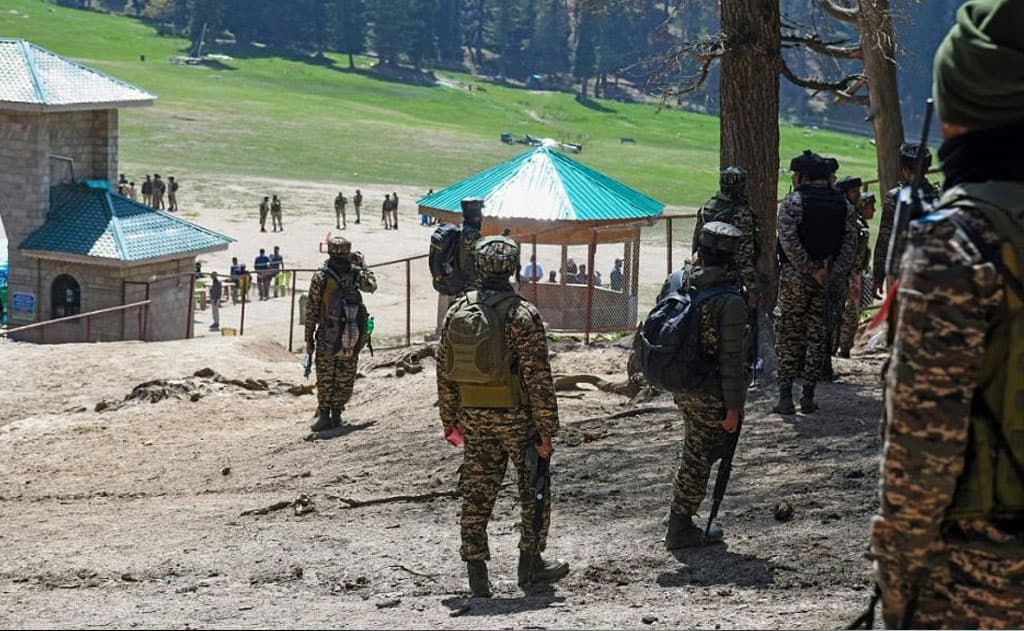
On April 22, 2025, three armed terrorists opened fire on tourists in Baisaran Valley, a meadow in Pahalgam, Jammu and Kashmir. The attack resulted in significant casualties and injuries. According to eyewitness accounts and investigative reports, victims were singled out based on their religion, marking a deliberate targeting strategy.
Baisaran Valley, often referred to as "Mini Switzerland" for its scenic alpine meadows, is a popular destination for domestic and international tourists. The assault on an undefended civilian location during peak tourist season shocked the nation and prompted immediate national security responses.
The Resistance Front, a known proxy organization linked to Lashkar-e-Taiba (LeT), claimed responsibility for the attack. This claim, combined with forensic evidence and intelligence gathered by the National Investigation Agency, confirmed the involvement of Pakistani-trained terrorists operating under LeT command.
NIA's Breakthrough: The Arrests of June 22, 2025
On June 22, 2025, the National Investigation Agency arrested two Pahalgam residents—Parvaiz Ahmad Jothar and Bashir Ahmad Jothar—for harboring the three attackers prior to the massacre. The arrests came under Section 19 of the Unlawful Activities (Prevention) Act, 1967, which criminalizes providing shelter, food, or logistical support to designated terrorists.
According to the NIA's formal case filing, the accused men provided the attackers with food, shelter, and logistical assistance at a seasonal hut in Hill Park, Pahalgam. The investigation revealed that both men had prior knowledge of the attackers' identities and intentions, yet chose to facilitate their operations.
The three identified attackers were described in NIA documentation as Pakistani nationals with operational roles in the attack. Investigators used forensic data, surveillance footage from hotels and checkpoints, and testimonies from tourism staff and villagers to build the case. The NIA's investigation continues to uncover broader networks and additional collaborators involved in the attack's planning and execution.
The scope of the investigation extends beyond the immediate perpetrators. Authorities are examining financial flows, communication networks, and supply chains that enabled the attackers to reach their target location. This expanded investigation reflects the complexity of cross-border terrorist operations and the multiple layers of support required to execute such attacks.
The Lashkar-e-Taiba Connection and Pakistan's Role
The National Investigation Agency confirmed that the attackers were Pakistani nationals trained by Lashkar-e-Taiba, a globally designated terrorist organization. LeT has been responsible for major attacks including the 2008 Mumbai attacks, the 2019 Pulwama bombing, and numerous cross-border strikes targeting Indian military and civilian targets.
The use of a proxy organization—The Resistance Front—reflects LeT's operational strategy of maintaining plausible deniability while executing attacks through affiliated groups. The religious profiling of victims aligns with LeT's documented targeting methodology seen in previous operations.
Pakistan's role in facilitating the attack has drawn international scrutiny. The Financial Action Task Force (FATF), an intergovernmental organization that monitors money laundering and terrorism financing, maintains ongoing assessments of countries' compliance with counterterrorism financing standards. Reports from international monitoring bodies have documented concerns regarding terror financing enforcement in the region. Security analysts argue that the attack demonstrates the continued use of non-state actors to conduct operations against India while maintaining official deniability.
The attack underscores persistent challenges in disrupting terrorist networks that operate across international borders. Intelligence agencies from multiple countries have documented the cross-border movement of operatives, funding, and equipment used in such attacks. The Pahalgam incident exemplifies how terrorist organizations exploit geographical proximity and porous border regions to launch operations.
Operation Sindoor: India's Military Response
India launched a military operation in May 2025, approximately two weeks after the Pahalgam attack. The operation targeted terrorist infrastructure, training camps, and supply lines in Pakistan and Pakistan-occupied Kashmir (PoK). Military sources reported that the operation disrupted key logistics networks and destroyed several hideouts used for planning cross-border attacks.
The operation resulted in heightened military tensions between Indian and Pakistani forces, with increased activity along the Line of Control. Despite diplomatic protests from Pakistan, India maintained that the operation was a necessary response to the attack and part of its broader counterterrorism strategy.
Following the military response, security measures in Kashmir were substantially increased:
- Army patrols intensified in all major tourist destinations and valley towns.
- Drone surveillance deployed in sensitive zones, particularly near the Line of Control.
- Random identity verification checks implemented at hotels, checkpoints, and transportation hubs.
- Enhanced coordination between local police, CRPF, and Army intelligence units.
These enhanced security protocols represent a significant shift in Kashmir's security posture. The increased military and intelligence presence aims to deter future cross-border attacks and improve early detection of infiltration attempts. However, security experts note that balancing robust counterterrorism measures with the needs of the tourism industry and local populations remains a complex challenge.
Implications for NRIs: Travel Safety and Awareness
For Indian diaspora members planning to visit Kashmir or other parts of India during holiday seasons, the Pahalgam attack underscores the persistent security risks in certain regions. While Kashmir remains culturally and historically significant for many NRIs, the attack demonstrates that tourist destinations can become targets during periods of heightened militant activity.
The Indian Ministry of External Affairs maintains updated travel advisories for all regions. NRIs should consult these advisories before booking travel, particularly for Jammu and Kashmir. Consulates in major cities—including New York, London, Toronto, Singapore, and Sydney—provide real-time security updates and emergency assistance for Indian citizens abroad.
Practical safety measures for NRI travelers include registering your visit with the nearest Indian consulate, maintaining contact with local tour operators who have security protocols in place, avoiding large crowds and public gatherings, and staying informed through official government channels rather than social media rumors.
NRIs should also be aware that travel insurance policies may have specific exclusions or restrictions related to travel to designated high-risk areas. Consulting with insurance providers before booking travel to Kashmir is advisable. Additionally, maintaining regular contact with family members and informing them of travel itineraries can be crucial in emergency situations.
Political and Public Response in India
The arrests triggered significant political reactions across Jammu and Kashmir. National Conference leader Farooq Abdullah called for deeper investigations into cross-border linkages and demanded stronger border security measures. Peoples Democratic Party spokesperson Iltija Mufti condemned the attack as "inhuman and cowardly," while praising the NIA's investigative work as "a step toward justice for the victims and their families."
Public sentiment, reflected in social media discussions and news coverage, expressed outrage at the accused men's decision to shelter the attackers. Hashtags including #PahalgamTerrorInvestigation and #JusticeForTourists trended across platforms, with citizens demanding swift prosecution and stronger counterterrorism measures.
The arrests also reignited debates about radicalization, local complicity in terrorist activities, and the need for community-based deradicalization programs in border regions. Civil society organizations have called for balanced approaches that address security concerns while avoiding collective blame of entire communities.
The political response has also highlighted tensions between national security imperatives and concerns about civil liberties. Legal experts have noted that cases prosecuted under the UAPA require careful attention to procedural safeguards and evidentiary standards, even as public pressure for swift justice mounts.
Next Steps
The NIA investigation continues to expand, with authorities working to identify additional individuals who may have provided support to the attackers or their handlers in Pakistan. Ongoing efforts include analyzing financial transactions, communication records, and travel patterns to map the full network behind the attack.
The cases against Parvaiz Ahmad Jothar and Bashir Ahmad Jothar will proceed through India's judicial system. Prosecution under the UAPA typically involves stringent evidentiary standards, and conviction carries substantial prison sentences. The judicial process is expected to span several months, with multiple hearings and procedural steps required before trial commencement.
At the policy level, India's security establishment is reviewing protocols for tourist area protection, intelligence sharing between agencies, and border surveillance capabilities. International cooperation with countries sharing intelligence on LeT activities—including the United States, United Kingdom, and European nations—is expected to intensify.
Long-term implications of the Pahalgam attack include potential revisions to Kashmir's tourism management policies, enhanced vetting procedures for local guides and service providers, and increased investment in border surveillance technology. These measures reflect a broader recognition that preventing similar attacks requires sustained, multi-layered security approaches combining military, intelligence, and civilian components.