
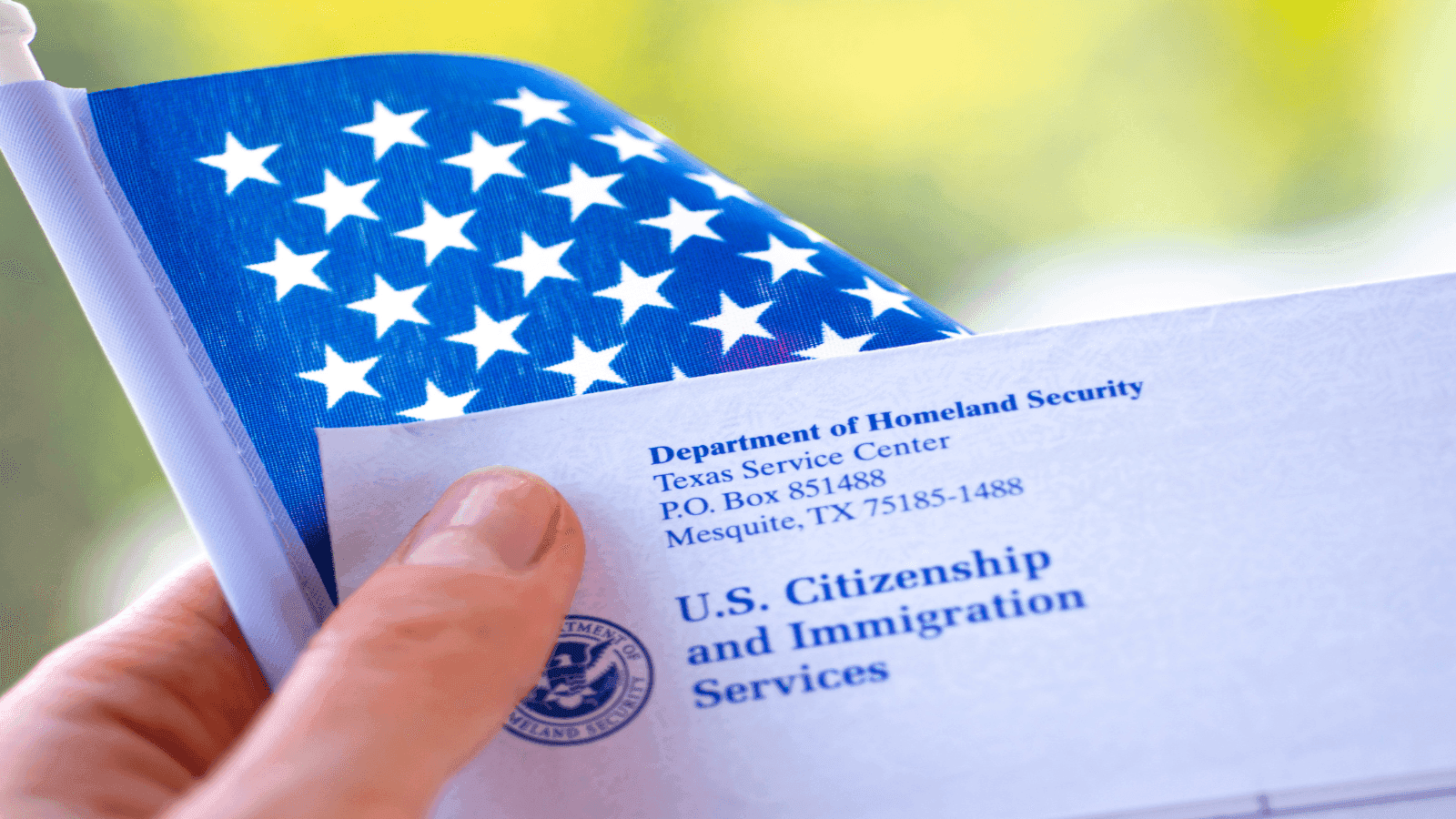
If you are an Indian professional on H-1B, an F-1/OPT student eyeing a US career, or a green-card aspirant who has been "in the queue" for years, June 2026 has delivered a triple jolt. This is the US H1B visa latest news June 2026 for Indians in one place: a brutal EB-2 India retrogression in the June 2026 Visa Bulletin, a brand-new wage-weighted H-1B selection rule that reshapes the lottery, and a headline-grabbing bill in Congress proposing a three-year H-1B pause. Lakhs of families in India and across the diaspora are anxious — so let us separate what is law, what is policy, and what is merely a proposal with little chance of passing.
We have verified every date and number below against primary sources — the US Department of State Visa Bulletin (travel.state.gov), USCIS, the Federal Register, and Congress.gov. Where the brief or the rumour mill overstates things, we say so plainly.
The headline: EB-2 India retrogression in the June 2026 Visa Bulletin
The State Department's June 2026 Visa Bulletin retrogressed (moved backward) the India employment-based Final Action Dates sharply:
- EB-2 India fell to September 1, 2013 — a jump backward of more than 10 months from May's date.
- EB-1 India fell to December 15, 2022 — back about three and a half months.
- EB-3 India actually edged forward slightly to December 15, 2013.
What does "retrogression" mean in plain terms? The Final Action Date is the cut-off priority date at which a green card can actually be approved in that month. When the date moves backward, people who were "current" last month are suddenly not current again — their green card cannot be finalized until the date crosses their priority date once more. For EB-2 India, a 2014 priority date that was nearly current in May is, as of June, no longer eligible.
The Visa Bulletin explains why: very high demand and number use by India-chargeable applicants in EB-1 and EB-2 forced the cut-offs back to keep usage within the FY2026 annual limits. The bulletin also carries an explicit warning that these categories may retrogress further — or be made "Unavailable" — in the coming months if India's pro-rated limits are reached before the fiscal year ends on September 30, 2026.
Important nuance: As of the June bulletin, the Department of State had not declared EB-2 India formally "Unavailable" for the rest of FY2026 — it warned that this could become necessary. Treat any claim that "no more EB-2 India green cards will be issued this year" as a risk, not a confirmed fact.
Before vs. after: India EB-category comparison
| Category | May 2026 Final Action Date | June 2026 Final Action Date | Movement |
|---|---|---|---|
| EB-1 India | April 1, 2023 | December 15, 2022 | Retrogressed ~3.5 months |
| EB-2 India | July 15, 2014 | September 1, 2013 | Retrogressed >10 months |
| EB-3 India | November 15, 2013 | December 15, 2013 | Advanced ~1 month |
(Source: US Department of State Visa Bulletin, May and June 2026, travel.state.gov.)
What it means if you are already in the green-card queue
- Approved I-140, waiting to file/adjust: If your priority date was current in May and is now behind the June cut-off, your adjustment of status (Form I-485) cannot be approved this month. Pending I-485s do not get rejected for retrogression — they simply wait. Your underlying H-1B status and EAD/AP (if you have them) generally continue.
- Trying to file a new I-485 in June: USCIS confirmed that for June 2026, employment-based applicants must use the Final Action Dates chart (not the more generous Dates for Filing chart) to determine eligibility to file. With EB-2 India at September 1, 2013, almost no recent EB-2 India filer can submit a fresh I-485 in June.
- EB-3 "downgrade" watchers: Because EB-3 India (Dec 15, 2013) is now ahead of EB-2 India (Sep 1, 2013), some applicants with an older EB-2 petition and an eligible job may again explore an EB-2-to-EB-3 downgrade with their employer. This is case-specific — talk to your attorney before assuming it helps.
This is the reality of the green card backlog India 2026: the India employment-based wait remains one of the longest in the world, and month-to-month dates can swing hard near a fiscal-year end.
The proposed "H-1B ban": separating noise from law
You have probably seen viral posts about an "H1B ban 2026." Here is the verified picture.
On April 22, 2026, Rep. Eli Crane (R-AZ) introduced H.R. 8443, the "End H-1B Visa Abuse Act of 2026." As described in the bill and its sponsor's announcement, it would, among other things:
- Pause new H-1B visa issuance for three years.
- Cut the annual H-1B cap from 65,000 to 25,000.
- Impose a minimum salary floor of around $200,000 for H-1B workers.
- Eliminate Optional Practical Training (OPT) in all forms.
- Bar H-visa holders from bringing dependent family members.
- End the pathway to adjust to permanent residency from within the US for these categories.
If that sounds alarming, it should also sound unlikely to become law as written. Here is the crucial context every NRI needs:
- It is a PROPOSAL, not law. As of June 2026, H.R. 8443 has only been introduced and referred to the House Judiciary Committee. There has been no committee markup, no House floor vote, no Senate action, and no signature. Nothing about your current H-1B status changes because of this bill.
- It has a small group of cosponsors and no Senate companion that has advanced. Standalone restrictionist immigration bills of this kind historically have very low odds of passage — most die in committee. Independent legislative trackers rate its chance of enactment as low.
- Many of its provisions (eliminating OPT, a $200,000 floor, banning dependents) would face heavy opposition from universities, the tech industry, and courts.
So: do not let a viral "H-1B ban" headline drive a panic decision. Watch it, but plan around today's rules, not a bill that may never move. We will update this page if its status changes.
What IS changing for real: the wage-weighted H-1B lottery (FY2027)
The more consequential, actually finalized change is regulatory. DHS published a final rule establishing a weighted (wage-based) selection process for cap-subject H-1B registrations. Key verified facts:
- The rule was finalized in late December 2025 and is effective February 27, 2026, applying to the FY2027 H-1B cap season. See the Federal Register for the complete regulatory text.
- Instead of a purely random lottery, registrations are weighted by OEWS wage level: a beneficiary at Wage Level IV is entered four times, Level III three times, Level II twice, and Level I once.
- A random tie-break still happens within this weighted pool, but higher-paid roles now have a materially higher chance of selection.
Why this matters for Indian H-1B hopefuls
- Entry-level and new-grad roles take the hit. Many F-1/OPT students and first jobs are classified at Wage Level I or II. Under the old lottery everyone had roughly equal odds; under the weighted system, Level I beneficiaries get a single entry against Level IV's four. New graduates and consultancy/staffing placements at lower wage levels are statistically disadvantaged.
- Senior, higher-paid Indian professionals benefit. If your offer sits at Wage Level III or IV (often experienced engineers, specialists, and managers), your selection odds improve.
- Strategy shifts to employers. Companies that genuinely pay at higher OEWS levels — and accurately classify roles — will win more selections. "Lowballing" wage levels now directly hurts lottery odds.
This is the most important of the H1B visa changes for NRIs because, unlike the Crane bill, it is finalized policy taking effect now.
Real impact, audience by audience
If you are on H-1B right now: Your status is unaffected by the bill and by retrogression. Keep your I-94, extensions, and amendments current. If your green card was close and just retrogressed, your H-1B can typically be extended beyond the usual 6-year limit under AC21 because you have an approved I-140 — confirm with counsel.
If you are an F-1/OPT student: OPT and STEM-OPT remain valid today; the proposed OPT elimination is not law. But the wage-weighted lottery genuinely lowers cap-lottery odds for entry-level roles. Plan for multiple cap attempts, target employers who pay above prevailing wage, and keep cap-gap and STEM-OPT timing airtight.
If you are a green-card aspirant (EB-2/EB-3 India): Expect continued volatility through the September 30 fiscal-year boundary. A retrogressed month does not erase your place in line — your priority date is preserved. The wait is long, but the queue is real.
Family implications: H-4 dependents and H-4 EAD holders (where eligible) are not affected by the June bulletin. The proposed bill's dependent ban is not in force. Children aging out (turning 21) remain a real concern in the India backlog — review Child Status Protection Act (CSPA) math with your attorney, especially after a retrogression changes the calculus.
Practical advice: what to actually do now
- Use premium processing for I-140s, H-1B extensions, and amendments where speed matters — it shortens uncertainty even when the green-card date is stuck.
- Run your CSPA age calculation if you have a child near 21; retrogression can change protected age.
- Aim higher on wage level for any new H-1B cap attempt — a Level III/IV offer now meaningfully improves lottery odds.
- Build a backup plan: consider parallel options like L-1, O-1, or a Canada PR/Express Entry pathway as a hedge — many Indian professionals are diversifying.
- Keep documents deploy-ready: approved I-140, EAD/AP renewals, pay stubs, and a clean immigration paper trail.
- Do not make irreversible decisions (quitting a job, selling a home, pulling kids from school) based on an unpassed bill.
- Verify everything at the source each month — the Visa Bulletin and USCIS chart designation can change.
Image ideas (with alt text)
- Hero: An Indian software professional reviewing a US Visa Bulletin chart on a laptop. Alt: "Indian H-1B professional checking the June 2026 US Visa Bulletin EB-2 India retrogression."
- Infographic: Before/after EB-1, EB-2, EB-3 India Final Action Dates for May vs June 2026. Alt: "Comparison table of India EB green card final action dates May vs June 2026."
- Explainer graphic: How wage-level weighting (I–IV) changes H-1B lottery odds. Alt: "Diagram showing wage-weighted H-1B lottery entries by OEWS wage level for FY2027."
Frequently asked questions
1. Is the H-1B visa banned in 2026? No. There is no H-1B ban. A bill (H.R. 8443) proposes a three-year pause, but it has only been introduced and referred to committee — it is not law and faces low odds of passing.
2. Why did EB-2 India retrogress in June 2026? High demand by India-chargeable applicants forced the Department of State to move the EB-2 India Final Action Date back to September 1, 2013 to keep visa usage within the FY2026 annual limit.
3. I have a pending I-485 — does retrogression cancel it? No. A pending adjustment application is not rejected because of retrogression. It simply cannot be approved until your priority date becomes current again. Your EAD/AP and underlying status generally continue.
4. Can I file a new EB-2 India I-485 in June 2026? For June 2026, USCIS requires the Final Action Dates chart for employment-based filings. With EB-2 India at September 1, 2013, virtually no recent applicant qualifies to file a fresh I-485 this month.
5. How does the new wage-weighted H-1B rule affect my chances? Effective February 27, 2026 (FY2027 cap season), registrations get more lottery entries at higher wage levels (Level IV ×4 down to Level I ×1). Entry-level roles have lower odds; higher-paid roles have better odds.
6. Is OPT being eliminated? Not currently. OPT and STEM-OPT remain valid. OPT elimination appears only in the proposed H.R. 8443, which is not law.
7. Does a retrogressed month mean I lose my place in the green-card line? No. Your priority date is preserved. Retrogression delays approval timing; it does not reset your position in the queue.
Sources
- US Department of State — Visa Bulletin for June 2026 and May 2026 (travel.state.gov)
- USCIS — Adjustment of Status Filing Charts, June 2026; DHS H-1B weighted selection news release (uscis.gov)
- Federal Register — "Weighted Selection Process for Registrants and Petitioners Seeking To File Cap-Subject H-1B Petitions" (effective Feb 27, 2026)
- Congress.gov / GovInfo / GovTrack — H.R. 8443, "End H-1B Visa Abuse Act of 2026"
- Rep. Eli Crane, press release (Apr 22, 2026); secondary legal analyses (Fragomen, Murthy, Ogletree, Fisher Phillips, Greenberg Traurig)
Related reading on nriglobe
Next steps / CTA
Bookmark this page — we update it with every Visa Bulletin and any movement on H.R. 8443. Before you act on any of this, speak with a licensed US immigration attorney about your specific case, and always cross-check the current month's chart on travel.state.gov and uscis.gov.
Disclaimer: This article is for informational purposes only and is not legal or financial advice. Immigration rules, Visa Bulletin dates, and pending legislation change frequently. Verify the latest position with official sources (travel.state.gov, uscis.gov, congress.gov) and consult a licensed immigration attorney before making any decision.
Further reading: See the White House and Ministry of External Affairs (India) for official policy updates and guidance. For historical context on visa categories and immigration law, consult Wikipedia's immigration resources.
Continue reading — NRI Globe pillar guide: US Green Card for Indians — EB-1/2/3 Complete Guide