
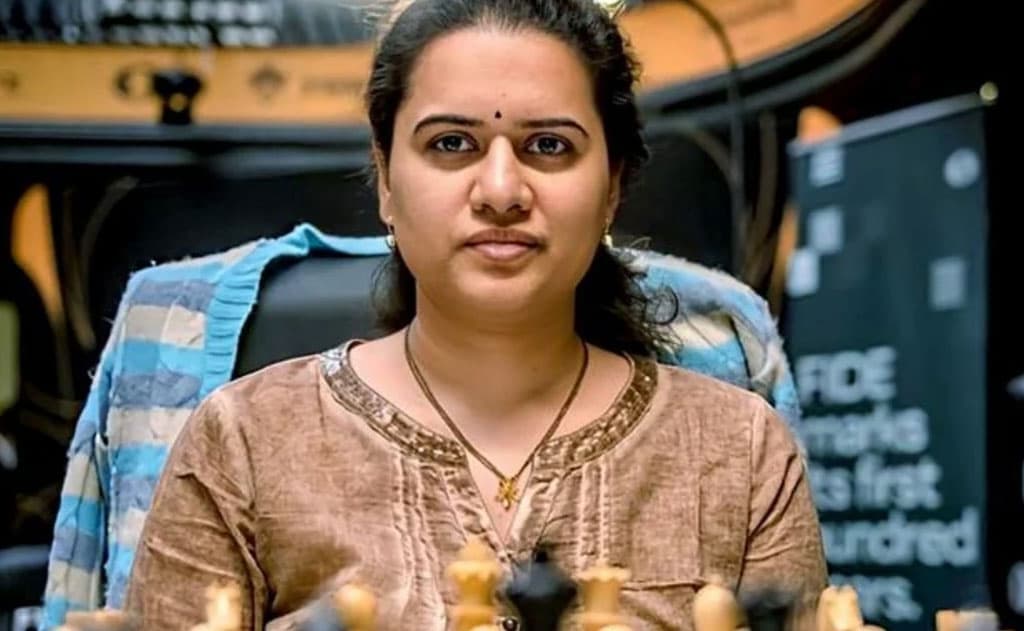
Indian chess continues to make waves on the global stage, with Grandmaster Koneru Humpy adding another glorious chapter to the nation's sporting history. Humpy has become the first Indian woman to secure a coveted spot in the semifinals of the prestigious FIDE Women's Chess World Cup, a milestone that underscores India's growing dominance in competitive chess and opens new pathways for female players in the sport.
The Historic Quarterfinal Victory
Her landmark achievement was sealed after a strategic draw in the second game of her quarterfinal match against China's Song Yuxin. Humpy had already put herself in a commanding position by winning the first game, and her cautious yet decisive approach in the second game led to Yuxin's draw offer, solidifying Humpy's historic entry into the final four. The two-game quarterfinal series took place in Batumi on Saturday night, where Humpy demonstrated the composure and tactical acumen that have defined her career at the highest levels of international chess.
The nature of Humpy's victory—combining an opening-round win with a carefully managed draw—reflects the modern approach to knockout chess tournaments, where players must balance aggression with pragmatism. By securing the first game, Humpy placed herself in the driver's seat, and her opponent's decision to offer a draw in the second game acknowledged the strength of Humpy's position. This outcome exemplifies the kind of match management that separates elite players from the rest of the field, particularly in high-pressure championship settings.
Significance for Indian Chess and the NRI Community
For the Indian diaspora, particularly those following chess from abroad, Humpy's achievement carries special resonance. India has long been a chess powerhouse, with players like Viswanathan Anand achieving world championship status and Praggnanandhaa emerging as a prodigious young talent. However, the women's game in India, while growing, has historically lagged behind the men's circuit in terms of global recognition and tournament success at the highest levels. Humpy's breakthrough into the World Cup semifinals changes that narrative and signals that Indian women's chess is entering a new era of competitiveness.
For NRIs working in competitive fields—whether in technology, finance, or academia—Humpy's perseverance and strategic thinking offer a compelling example of how Indian talent, when given the right platform and support, can achieve world-class results. Her success also highlights the importance of sustained investment in chess infrastructure and coaching in India, a lesson that resonates across multiple sectors where Indian professionals compete globally.
The Road Ahead: Semifinal Matchup and Tournament Structure
Looking ahead, Humpy is poised to face Lei Tingjie in what promises to be a thrilling semifinal clash. Lei Tingjie, a strong Chinese player, represents a formidable opponent, and this matchup will test Humpy's preparation and in-game decision-making at the semifinal stage. On the other side of the draw, the winner of the all-Indian tiebreaker between Dronavalli Harika and Divya Deshmukh will contend for the other semifinal spot against Tan Zhongyi. This configuration is particularly noteworthy: with two Indian players competing against each other for a semifinal berth, India has already guaranteed at least one representative in the final four, a testament to the depth of talent in Indian women's chess.
Dronavalli Harika and Divya Deshmukh, both accomplished players in their own right, represent the next generation of Indian chess talent. Their presence in the quarterfinals alongside Humpy underscores the competitive strength of the Indian contingent at this World Cup. An all-Indian semifinal between Humpy and either Harika or Deshmukh would be a historic moment for Indian women's chess, though such an outcome would also mean that one of these talented players would be eliminated before the final.
The Candidates Tournament and Qualification Pathways
With at least one Indian player now guaranteed a semifinal berth, India's presence in the next stage of the Women's World Championship cycle is assured. The stakes are high, as the top three finishers in the FIDE World Cup will earn an automatic qualification for the highly anticipated Candidates Tournament, slated for later this year. This qualification structure is crucial for understanding the importance of Humpy's achievement: reaching the semifinals puts her in a strong position to secure one of these coveted Candidates spots, which would represent another historic first for Indian women's chess.
The Candidates Tournament is the penultimate stage in the path to the World Championship, making qualification for it one of the most significant milestones in a player's career. For Humpy, advancing from the semifinals to the final—and ideally finishing in the top three—would cement her status as one of the world's elite female players and open the door to future World Championship matches. For the Indian chess community, both within India and among the diaspora, such an achievement would represent a watershed moment in the sport's development in the country.
Humpy's Journey and Playing Style
Humpy's journey to the semifinals saw her maintain control through a safe and strategic approach, even after some minor inaccuracies in the first game of the two-game quarterfinal series. This capacity to recover from imperfections and still emerge victorious is a hallmark of championship-level play. In chess, perfection is impossible—even the world's strongest players make mistakes—but the ability to minimize damage and capitalize on opponent errors is what separates champions from the rest.
Throughout her career, Humpy has been known for her solid, positional style of play, combined with the tactical sharpness required to compete at the elite level. Her approach in the World Cup quarterfinal—winning the first game and then accepting a draw in the second—demonstrates maturity and strategic thinking. Rather than overextending and risking a loss in pursuit of a second victory, she recognized that her position was already strong enough to advance, a decision that reflects both confidence and prudence.
Broader Context: Women's Chess and Global Representation
Humpy's achievement also occurs within a broader context of growing investment in women's chess globally. Organizations like FIDE have increasingly emphasized gender parity in chess, and tournaments like the Women's World Cup provide a dedicated platform for female players to compete at the highest levels. The presence of multiple Indian women in the quarterfinals and beyond demonstrates that India is not only participating in this global movement but is actively shaping it.
For NRI women in particular, Humpy's success serves as an inspiration and a reminder that barriers in competitive fields—whether chess, science, business, or other domains—can be broken by talent, dedication, and strategic thinking. Her achievement challenges stereotypes and opens conversations about the role of women in competitive intellectual pursuits, both within Indian communities abroad and in broader society.
What Comes Next
As Humpy prepares for her semifinal against Lei Tingjie, the chess world will be watching closely. A victory in the semifinal would put her one step away from the final, and a top-three finish would secure her place in the Candidates Tournament. Even if her World Cup campaign ends in the semifinals, Humpy has already achieved something historic: she has proven that Indian women can compete and win at the absolute highest levels of chess, and she has paved the way for future generations of Indian female players to follow in her footsteps.
The broader implications of Humpy's success extend beyond chess. For the Indian diaspora, her achievement is a source of pride and a reminder of the talent and potential that India continues to produce. For young Indian girls interested in chess, Humpy now represents a tangible role model—not just a distant champion, but a contemporary player actively competing and winning on the world stage. In that sense, her historic semifinal berth is not just a personal triumph but a milestone for Indian chess as a whole.
Related NRI Globe Coverage
- Brook's Century Secures England's T20 World Cup Win
- Pakistan’s T20 World Cup 2026 Semi-Final Scenarios Explained
- Sri Lanka’s Semi-Final Chances in T20 World Cup 2026
- T20 World Cup 2026: Super 8 Stage Begins
- India’s Super 8 Opponents T20 World Cup 2026
- Australia Stunned in T20 World Cup 2026 Group Exit
- Italy Wins Historic T20 World Cup Match vs Nepal
- India vs Pakistan T20 World Cup Match: Will It Happen?
Fresh from NRI Globe
- YouTuber Nandu's World (Rama Nandana) UK Visa & Job Fraud Case: Full Details + Key Lessons for NRIs (2026)
- Dussehra / Vijayadashami 2026 Events Country-Wise — Global NRI Directory (Ram Lila, Ravana Dahan, Durga Puja Pandals, Ayudha Puja Venues + Booking)
- Diwali 2026 Events Country-Wise — Global NRI Directory (White House, Leicester, London Trafalgar, Toronto, Auckland, Sydney Parramasala, Fiji, Mauritius, Trinidad, South Africa and More)
- Diwali / Deepavali 2026 Country-Wise NRI Celebrations — Complete Global Guide (USA, UK, Canada, Australia, Fiji, Mauritius, Trinidad, South Africa, UAE and 30+ Countries)