
Quick take: The 2026 regional conflict involving Iran, the US, and Israel brought unprecedented challenges to Dubai and the wider UAE — airspace closures, travel disruption, and testing of the "safe haven" reputation. For the estimated 3.5-5 million Indian NRIs and PIOs across the UAE (heavily concentrated in Dubai), the effects touched visas, jobs, family safety, real estate decisions, and long-term residency plans. Here's the full picture as of early September 2026.
1. Visa & Immigration Relief Measures Introduced by the UAE
UAE authorities responded quickly with flexible immigration policies:
- Overstay fine waivers: From late February 2026 (when airspace closed), the Federal Authority for Identity, Citizenship, Customs and Port Security (ICP) waived overstay fines for tourist/visit visa holders, exit-permit holders, and residents who had cancelled their visas but couldn't leave.
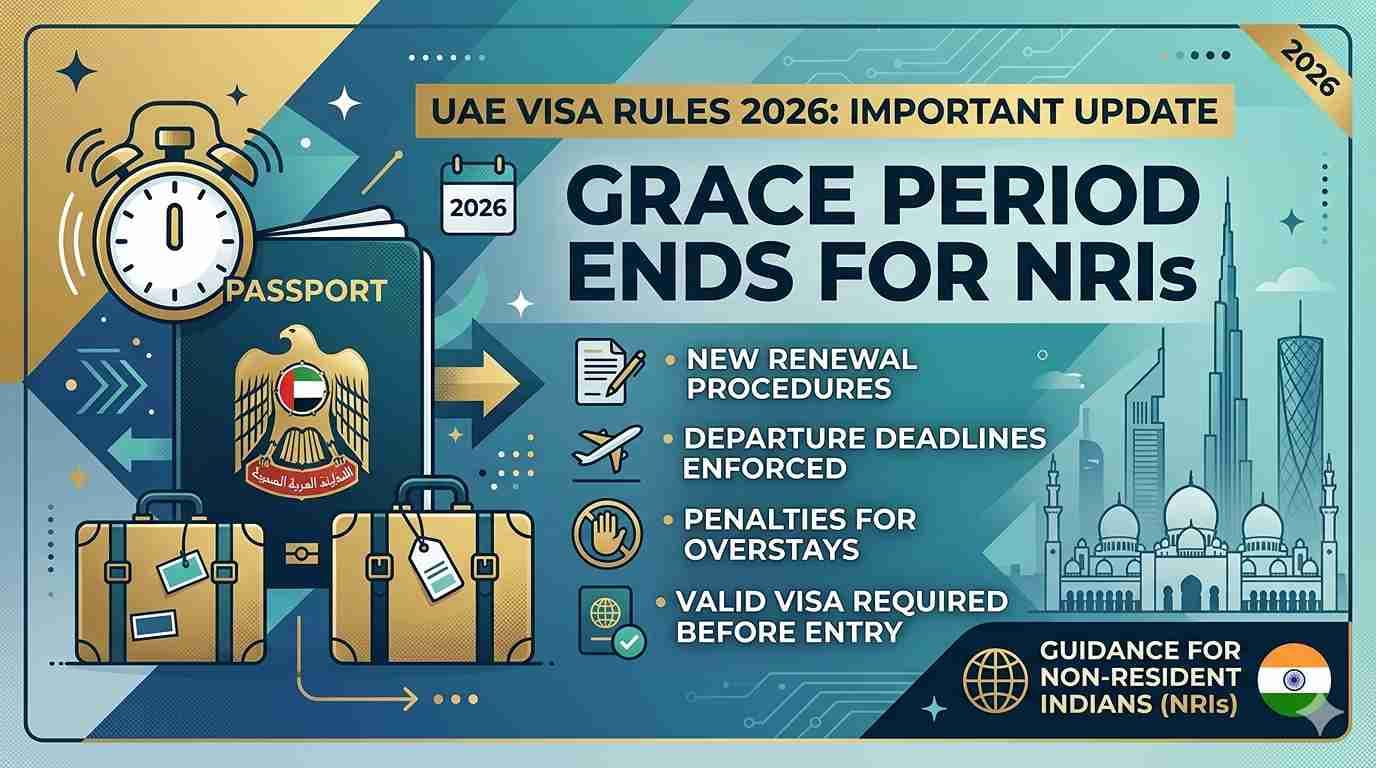
- 30-day grace period: In June 2026, a formal 30-day grace period (running roughly June 10 - July 9) was announced. Affected individuals could regularise their status or exit without penalties.
- Humanitarian support: Automatic extensions, one-year humanitarian stay options in hardship cases, and government-assisted accommodation for stranded travellers.
These measures prevented large-scale overstay penalties during peak disruption. Once the grace periods ended, standard rules resumed.
Golden Visa Holders Enjoyed Stronger Protection
The 10-year Golden Visa is exempt from the normal six-month continuous presence/re-entry rules that apply to ordinary residence visas — so being stranded abroad did not automatically cancel status.
2. Impact on Jobs and Daily Life for NRIs
Dubai's economy relies heavily on tourism, aviation, hospitality, retail, and construction — sectors hit hard by the conflict:
- Tourism and hospitality saw sharp drops in occupancy (some reports of declines to 20-30% or lower at the peak).
- Many low- and middle-income migrant workers faced layoffs, furloughs, unpaid leave, or salary cuts (especially retail and hotels).
- A ManpowerGroup survey indicated significant employer caution on hiring in subsequent quarters.
Indian professionals in white-collar roles generally faced more stability than blue-collar or tourism-linked workers, but uncertainty affected the broader community. Some families sent spouses and children back to India temporarily while the main earner stayed to retain employment and residency.
3. Real Estate and Investment Behaviour Among NRIs
The conflict prompted a noticeable shift in Indian investment patterns:
- Sentiment among Middle East-based NRIs became more cautious.
- More first-time and middle-income buyers redirected focus toward property in India as a hedge.
- High-net-worth individuals often delayed, resized, or diversified purchases rather than exiting Dubai entirely.
- Overall, experts described it as "risk repricing" rather than structural abandonment of Dubai.
Dubai property transactions slowed in the immediate aftermath but showed resilience later, with average prices still rising in some segments. Indians remained an important buyer group.
4. Travel, Safety Perceptions, and Longer-Term Residency
- Airspace reopened fully in May 2026, and many international travel advisories were later eased.
- Some international airlines continued selective suspensions or reduced frequencies into late 2026.
- Perceptions of Dubai as an absolute "safe haven" were temporarily dented, leading some expats to reassess long-term plans.
- Interest in Golden Visas and long-term residency options remained strong among those prioritising tax advantages, lifestyle, and business opportunities.
UAE authorities also explored more flexible tax residency rules to encourage return of skilled talent who had temporarily left.
What NRIs in Dubai Should Do Now — Practical Checklist
- Check visa status: Confirm validity of residence visa, Emirates ID, pending cancellations, or re-entry permits via ICP or GDRFA portals.
- Golden Visa holders: Status is generally more secure; document any extended absences if needed.
- Job security: Review employment contracts, end-of-service benefits, contingency plans. Diversify skills where possible.
- Family planning: Maintain updated emergency contacts with the Indian Embassy/Consulate in Abu Dhabi and Dubai.
- Investments: Balance Dubai exposure with assets in India or other jurisdictions. Consult tax and immigration advisors on residency implications.
- Stay informed: Monitor official ICP, GDRFA, Indian Embassy, and airline updates. Avoid relying solely on unverified social media.
Looking Ahead
Dubai and the UAE have demonstrated resilience and proactive governance during previous crises. While the 2026 conflict created short-to-medium-term disruption for visas, jobs, and investor confidence, recovery measures and the city's fundamental strengths (tax environment, infrastructure, and business ecosystem) continue to attract Indian talent and capital.
For many NRIs, Dubai remains a key destination — but with a more risk-aware approach than before.
Related NRI Globe Coverage
- UAE Golden Visa Complete Guide 2026 — Eligibility, Investors, Talents, Property
- Trump 'Essentially Taken Over Iran' May 2026 — Full Context
- Sending Money to India — Wise/Remitly/Xoom Comparison
- Returning to India Complete Checklist
- NRI Taxation India — NRE/NRO/DTAA/FBAR
Disclaimer: This article summarises publicly reported developments related to the 2026 regional conflict as of early September 2026. Immigration rules and security situations can change rapidly. Always verify the latest information on official UAE government portals (ICP, GDRFA) and consult qualified legal or immigration professionals for personalised advice.
Related NRI Globe Coverage
- UAE Golden Visa 2026 for Indians — Complete Guide (Eligibility, Application, Investment)
- UAE Golden Visa Complete Guide 2026 — Eligibility, Costs, Timeline, NRI Playbook
- Dubai / UAE Visa Guide 2026 — Types, Fees, NRI Application Complete Guide
- Golden Visa Showdown 2026: Portugal vs Greece vs UAE
- Dubai Golden Visa 2026 Updates: New Categories and Easier Rules for Indian Investors
- UAE Golden Visa 2025: New Rules, Eligibility & Application Guide
- UAE Visa 2026: Grace Period Ends for NRIs
- H-1B Visa 2026: New Rules Impact Indians
Fresh from NRI Globe
- YouTuber Nandu's World (Rama Nandana) UK Visa & Job Fraud Case: Full Details + Key Lessons for NRIs (2026)
- Dussehra / Vijayadashami 2026 Events Country-Wise — Global NRI Directory (Ram Lila, Ravana Dahan, Durga Puja Pandals, Ayudha Puja Venues + Booking)
- Diwali 2026 Events Country-Wise — Global NRI Directory (White House, Leicester, London Trafalgar, Toronto, Auckland, Sydney Parramasala, Fiji, Mauritius, Trinidad, South Africa and More)
- Diwali / Deepavali 2026 Country-Wise NRI Celebrations — Complete Global Guide (USA, UK, Canada, Australia, Fiji, Mauritius, Trinidad, South Africa, UAE and 30+ Countries)