
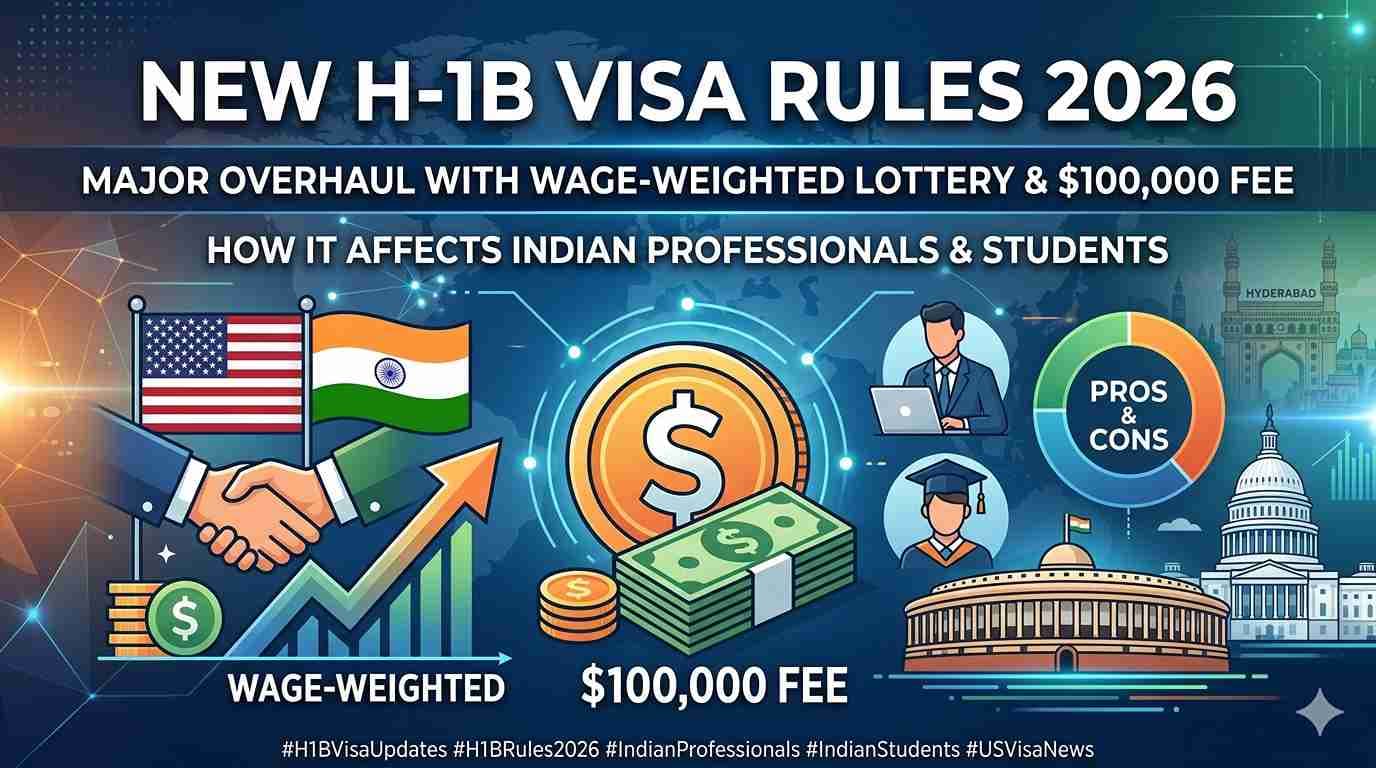
TL;DR
- Weighted lottery favors higher wages starting February 2026.
- New $100,000 fee applies to many initial petitions from abroad.
- Entry-level applicants see reduced selection odds.
- Experienced professionals gain priority in selections.
- Employers face higher costs and stricter documentation rules.
Overview of 2026 H-1B Reforms
The United States rolled out major H-1B updates that took full effect early in 2026. Officials designed the measures to emphasize higher compensation and specialized skills. Indian nationals have long accounted for the majority of approvals, so the shifts affect thousands of IT specialists, engineers, and recent graduates seeking employment sponsorship in the United States.
The H-1B visa program serves as a critical pathway for skilled workers from abroad to fill specialty occupations. For decades, the selection process relied on a random lottery system that gave all applicants equal odds regardless of salary level or experience. The 2026 reforms fundamentally altered this approach by introducing a wage-weighted selection mechanism. Under the new framework, petitions offering higher salaries receive greater weight in the drawing process, effectively prioritizing candidates whose compensation packages exceed prevailing wage thresholds set by the Department of Labor.
Primary government sources detail the mechanics. Applicants must track announcements from USCIS and the Department of Labor for exact filing windows and wage tables. The shift reflects broader policy objectives to attract talent at senior levels while discouraging what policymakers view as lower-wage displacement of domestic workers. For Indian professionals, many of whom enter the U.S. market through entry-level or mid-tier positions, the implications are substantial and warrant careful consideration.
Understanding the Wage-Weighted Lottery System
The wage-weighted lottery represents a departure from the previous random selection model. Rather than each petition having an equal chance of selection, the new system assigns selection probability based on the offered salary relative to Department of Labor prevailing wage levels. Petitions offering salaries at the highest tiers—typically Level III and Level IV positions—receive multiple entries in the drawing pool, effectively multiplying their chances of selection.
This mechanism creates a tiered structure within the H-1B applicant pool. Entry-level positions, which traditionally attracted recent graduates and career-changers, now face substantially lower odds. A position offering the prevailing wage minimum might receive a single entry, while a senior role offering significantly above the prevailing wage could receive dozens of entries. The cumulative effect concentrates selection probability among higher-paid roles, fundamentally reshaping who gains access to the visa program.
For Indian IT professionals, this shift carries particular weight. The Indian diaspora has historically dominated H-1B approvals, with Indian nationals receiving approximately 70 percent of visas in recent years. Many entered through entry-level or mid-tier consulting roles. The wage-weighted system pressures employers to either sponsor candidates at higher salary levels or seek alternative visa categories entirely.
The $100,000 Supplemental Fee
Beyond the lottery mechanism, the 2026 reforms introduced a supplemental fee of $100,000 for many initial H-1B petitions filed on behalf of applicants outside the United States. This fee applies to companies with certain characteristics or petition volumes, though specific exemptions exist for startups, nonprofits, and educational institutions in some cases.
The fee structure creates a significant financial barrier. For an individual applicant, the $100,000 fee represents a substantial cost beyond standard USCIS filing fees, attorney fees, and administrative expenses. For employers, the cumulative cost of sponsoring multiple overseas candidates becomes prohibitively expensive. A company seeking to hire five entry-level engineers from India now faces $500,000 in supplemental fees alone, before other costs.
This financial mechanism effectively prices out lower-margin business models. Consulting firms that traditionally relied on high-volume hiring of entry-level talent from India face margin compression. Some have responded by shifting hiring toward candidates already in the United States on Optional Practical Training (OPT) status, where the supplemental fee does not apply. Others have reduced overseas hiring entirely, instead focusing on domestic recruitment or remote work arrangements with India-based teams.
Comparison of Selection and Fee Changes
| Element | Pre-2026 Approach | 2026 Approach |
|---|---|---|
| Lottery method | Random selection | Wage-weighted priority |
| Entry-level priority | Equal chance | Lowest tier |
| Supplemental fee | None | $100,000 for many new overseas cases |
| Form version | Older editions accepted | Only latest I-129 edition |
Effects on Recent Graduates and Entry-Level Professionals
STEM graduates on OPT now encounter lower selection rates for entry-level offers. The combination of wage-weighted selection and the supplemental fee creates a dual barrier. Even if an employer is willing to sponsor an entry-level graduate, the candidate faces reduced odds in the lottery while the employer absorbs the $100,000 fee. Many consider alternative visa options such as O-1 or National Interest Waiver routes instead, though these categories carry their own requirements and limitations.
Recent graduates from Indian universities face particular challenges. Those seeking to enter the U.S. job market directly encounter both the wage-weighted lottery disadvantage and the supplemental fee. The economics no longer favor traditional consulting firm hiring models where entry-level talent from India was brought in at prevailing wage rates and trained on the job.
Some return to India to build experience before reapplying at higher wage levels. This approach allows candidates to develop specialized skills that command higher salaries, making them more competitive under the new system. Others explore opportunities in Europe or Canada where sponsorship rules differ. Countries like Canada and the United Kingdom have expanded skilled worker visa programs, creating alternative pathways for Indian professionals who might have previously targeted the United States.
The shift also affects the traditional career progression model. Previously, an Indian professional might enter the United States on an entry-level H-1B, gain experience, and transition to higher-paying roles over time. The new system pressures employers to sponsor candidates at higher levels from the outset, reducing opportunities for career development through the visa system itself.
Opportunities for Senior Roles and Specialized Expertise
Engineers and managers commanding Level III or Level IV wages receive stronger weighting in the new selection system. Firms increasingly sponsor internal candidates already working in the United States on OPT or existing H-1B status. This shift creates a two-tier market: abundant opportunities for senior professionals and specialists, but constrained access for entry-level candidates.
Specialists in artificial intelligence, machine learning, cybersecurity, and cloud infrastructure report faster petition approvals when salary data meets the new benchmarks. These fields command premium compensation, making candidates in these roles more attractive under the wage-weighted system. Companies adjust recruitment calendars to align with the February 27, 2026, weighted registration period, timing their hiring announcements and offer letters to maximize selection probability.
For experienced Indian professionals already in the United States, the reforms create advantages. An H-1B holder seeking to extend their visa or transition to green card sponsorship faces improved odds if their salary qualifies for higher wage tiers. Similarly, Indian professionals with 10 or more years of experience in specialized fields find employers more willing to sponsor them, as their compensation packages align with the new system's incentives.
The reforms also encourage employers to invest in training and development for existing employees. Rather than hiring entry-level talent and developing them internally, companies increasingly prefer to hire experienced professionals directly. This shift has implications for knowledge transfer and mentorship within organizations, potentially reducing opportunities for junior professionals to learn from senior colleagues.
Employer Cost and Compliance Shifts
The added fee and elevated wage floors raise total sponsorship expenses significantly. A company sponsoring an entry-level engineer from India now faces the $100,000 supplemental fee plus standard USCIS fees, attorney fees, and administrative costs. The total cost per sponsorship can exceed $150,000 or more, depending on the firm's size and petition volume.
Outsourcing companies review their mix of overseas versus domestic hires. Detailed job descriptions and supervisory duties now appear on the revised Form I-129. The form requires more granular information about the position, the employee's qualifications, and how the role qualifies as a specialty occupation. This increased documentation burden requires employers to invest in compliance infrastructure.
Site visits from fraud detection units occur more frequently. USCIS has increased audit rates for H-1B petitions, particularly for companies with high petition volumes or those in industries historically associated with visa abuse. Employers maintain records that demonstrate genuine employee relationships and accurate wage reporting. Companies must document that the offered wage matches the prevailing wage for the position and that the employee actually performs the duties described in the petition.
The compliance burden extends to ongoing obligations. Employers must maintain evidence that sponsored employees are performing specialty occupation work and receiving the promised compensation. Failure to comply can result in penalties, visa revocation, and debarment from future sponsorships. For smaller employers unfamiliar with immigration compliance, the increased requirements necessitate hiring immigration attorneys or compliance consultants, further raising costs.
Broader Industry Implications
The 2026 H-1B reforms reflect broader policy debates about immigration, labor market competition, and wage levels. Policymakers argue the changes protect domestic workers by ensuring that visa sponsorship does not depress wages in specialty occupations. Critics contend the reforms reduce access to talent and increase costs for employers, potentially slowing innovation and economic growth.
For the Indian IT industry, the reforms have significant implications. Indian IT consulting firms like TCS, Infosys, and Wipro have historically relied on H-1B sponsorship to staff U.S. projects. The wage-weighted system and supplemental fee increase costs for these firms, potentially affecting their competitive position against domestic competitors. Some Indian firms have responded by increasing salaries for sponsored employees or shifting toward higher-value consulting work that commands premium compensation.
The reforms also affect the broader Indian diaspora strategy. For decades, the H-1B visa served as a primary pathway for Indian professionals to establish themselves in the United States, build networks, and eventually sponsor family members for green cards. The new system constrains this pathway, potentially affecting long-term immigration patterns and the composition of the Indian-American community.
Recent Tech Industry Layoffs and H-1B Implications
Recent technology sector layoffs have added complexity to the H-1B landscape. Major companies including Amazon, Meta, and Atlassian have announced significant workforce reductions. These layoffs affect both domestic workers and visa-sponsored employees, including H-1B holders. For Indian IT professionals, layoffs create uncertainty about visa status and employment prospects.
When an H-1B holder is laid off, their visa status becomes precarious. While certain grace periods exist, the employee must either find a new employer willing to sponsor them or depart the United States. The wage-weighted H-1B system makes it harder for laid-off professionals to secure new sponsorship, particularly if they previously held entry-level or mid-tier positions. The combination of industry layoffs and tighter visa requirements creates a challenging environment for affected professionals.
For context on these developments, see March 2026 software layoffs and their impact on Indian IT professionals and tech layoffs affecting Indian NRI professionals.
Strategic Responses for Indian Professionals
Indian professionals navigating the 2026 H-1B environment should consider multiple strategies. Those currently on OPT should prioritize securing H-1B sponsorship before the wage-weighted system fully disadvantages entry-level candidates. Professionals with specialized skills in high-demand fields should emphasize their expertise when negotiating with potential sponsors.
Building experience and credentials in India before seeking U.S. sponsorship has become more viable. A professional with five years of experience in India can command higher salaries in the United States, making them more competitive under the wage-weighted system. This approach requires patience but may offer better long-term outcomes than struggling to secure entry-level sponsorship.
Professionals should also explore alternative visa pathways. The O-1 visa for individuals with extraordinary ability, the L-1 visa for intracompany transfers, and the EB-5 investor visa represent alternatives to H-1B sponsorship. Each carries different requirements and implications, but they may provide viable paths for those unable to secure H-1B sponsorship under the new rules.
For additional guidance on visa rules and their implications, consult visa rules every NRI must know regarding host country changes.
Next steps
Current H-1B holders should review extension timelines and green card strategies. Those approaching visa expiration should consult immigration attorneys about renewal options and alternative pathways. Students track wage data for target employers and assess whether entry-level sponsorship remains feasible. Companies prepare updated I-129 templates ahead of the next registration cycle and evaluate whether their hiring models remain economically viable under the new fee structure.
Sources
- USCIS H-1B page
- Department of Labor foreign labor site
- March 2026 software layoffs and Indian IT professionals
- Tech layoffs affecting Indian NRI professionals
- Visa rules every NRI must know
Continue reading — NRI Globe pillar guide: H-1B Complete Guide for Indians 2026
Related NRI Globe Coverage
- H-1B Visa Changes 2026:Indian Professionals Brace for Impact
- New US Visa Rules in 2026 for Indians: Complete Guide for Students, H-1B Workers & Green Card Applicants
- USA Visa Grace Period New Rules 2026 — H-1B, F-1 NRI Guide
- H-1B Visa Sponsorship by State in 2026: Where Indian Professionals Find the Most Opportunities
- H-1B Visa New Guidelines 2026: Major Changes Every NRI & Indian Professional Must Know
- Trump Tightens H-1B and Green Card Rules in June 2026: What Indian NRIs and Tech Professionals Must Know Now
- H-1B Visa Fee Hike to $100,000: How It Hits Indian Tech Professionals in the US in 2026
- Trump Administration Tightens Green Card Rules: NRIs on H-1B May Need to Return Home for Consular Processing
Fresh from NRI Globe
- YouTuber Nandu's World (Rama Nandana) UK Visa & Job Fraud Case: Full Details + Key Lessons for NRIs (2026)
- Dussehra / Vijayadashami 2026 Events Country-Wise — Global NRI Directory (Ram Lila, Ravana Dahan, Durga Puja Pandals, Ayudha Puja Venues + Booking)
- Diwali 2026 Events Country-Wise — Global NRI Directory (White House, Leicester, London Trafalgar, Toronto, Auckland, Sydney Parramasala, Fiji, Mauritius, Trinidad, South Africa and More)
- Diwali / Deepavali 2026 Country-Wise NRI Celebrations — Complete Global Guide (USA, UK, Canada, Australia, Fiji, Mauritius, Trinidad, South Africa, UAE and 30+ Countries)