
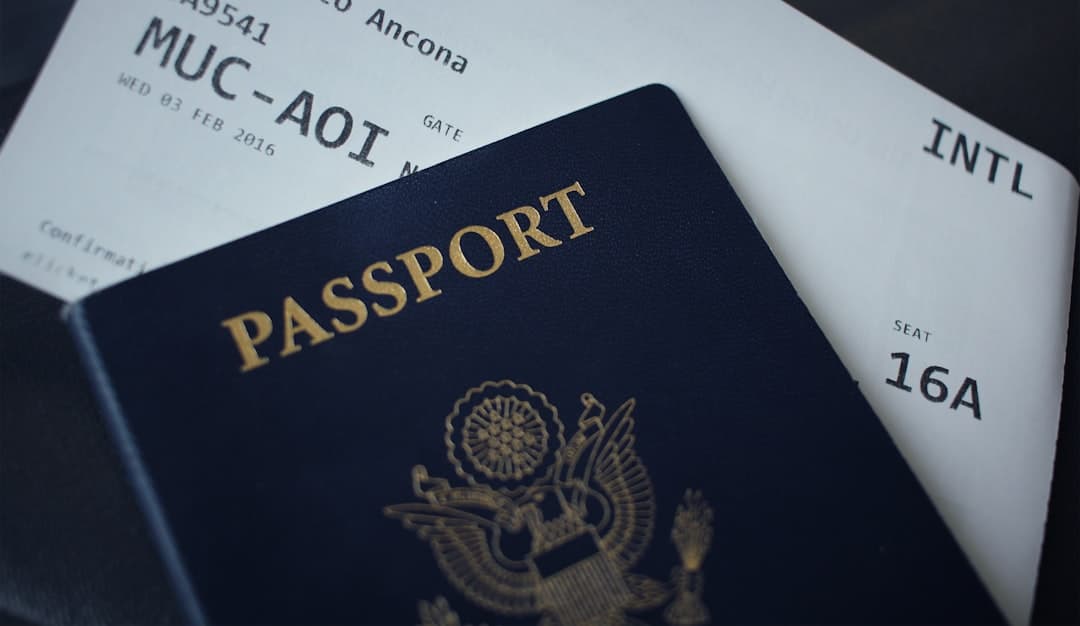
In June 2026, United States Citizenship and Immigration Services (USCIS) issued updated guidance that materially tightens adjudication standards for H-1B visa extensions and employment-based green-card processing, particularly affecting Indian nationals and technology professionals. The new rules introduce stricter consular processing requirements, extend already-lengthy green-card backlogs to more than a decade for Indian applicants due to per-country numerical caps, and impose heightened discretionary scrutiny on H-1B renewal petitions. For the Indian diaspora—which comprises the largest cohort of H-1B visa holders and faces the most acute green-card queue delays—these changes demand immediate strategic review of visa status, documentation readiness, and alternative immigration pathways.
This article examines what has changed, why the backlogs have deepened, and what NRIs and their employers should do now to protect their immigration standing and explore contingency options. The stakes are high: a delayed H-1B extension or a green-card application trapped in multi-year processing can disrupt career trajectories, family reunification plans, and long-term settlement strategies. Understanding the mechanics of the new rules—and acting on them before further tightening occurs—is essential for professionals currently in the United States or planning to enter it.
What Changed in June 2026: The New USCIS Guidance
USCIS guidance issued in June 2026 introduced three substantive shifts in how immigration officers evaluate H-1B and employment-based green-card applications. First, consular processing—the step where visa applicants interview at a U.S. embassy or consulate abroad—now requires demonstrable evidence of ties to the United States, including a detailed employment letter, proof of housing arrangements, and financial documentation showing ability to support oneself and dependents. Previously, consular officers exercised discretion on these matters; the new guidance makes them mandatory checkpoints.
Second, H-1B extension petitions—filed by employers to renew a worker's authorization beyond the initial three-year period—are now subject to heightened "specialty occupation" verification. USCIS examiners are required to scrutinize whether the role genuinely requires a bachelor's degree or higher in a specific field, rather than accepting employer attestations at face value. This shift reflects a policy intent to reduce what officials characterize as overuse of the visa category for roles that could be filled by U.S. workers.
Third, employment-based green-card processing has slowed further due to per-country numerical caps. Indian nationals—who account for roughly 70 per cent of the employment-based green-card backlog—now face wait times exceeding 10 years in the EB-2 (advanced degree) and EB-3 (skilled worker) categories. The June 2026 guidance does not change the cap itself, but it clarifies USCIS's interpretation of priority-date rules and consular-processing sequencing in ways that extend the effective timeline for applicants already in the queue.
The Per-Country Cap and the Indian Green-Card Backlog
Why Indian Nationals Face the Longest Waits
The U.S. immigration system allocates employment-based green cards by category (EB-1 for individuals with extraordinary ability, EB-2 for advanced-degree holders, EB-3 for skilled workers, and so on) and by country. No single country can receive more than 7 per cent of the total employment-based green cards issued in a fiscal year. Because India has a population of 1.4 billion and a large, English-speaking, technically skilled workforce, demand for employment-based green cards from Indian nationals vastly exceeds the annual allocation. As a result, the priority-date cutoff—the date by which an applicant's green-card petition must have been filed to be processed that year—has moved forward only incrementally, creating backlogs measured in decades.
For NRIs in the EB-2 category, the current priority-date cutoff stands years behind the filing date. An Indian national who filed an EB-2 green-card petition in 2015 may not see their case adjudicated until 2026 or later. Those filing now should expect to wait more than a decade before receiving a green card, assuming no legislative change occurs. The June 2026 USCIS guidance does not alter this cap, but it does clarify that applicants cannot "port" their priority date to a new employer as flexibly as previously assumed, further constraining options for those mid-career or changing roles.
Impact on NRI Career Planning
The extended backlog creates a strategic dilemma for Indian professionals. Remaining on an H-1B visa while waiting for a green card means accepting visa-dependent status for a decade or more—a period during which job changes, layoffs, or visa-policy shifts can jeopardize immigration standing. Conversely, returning to India while a green-card petition is pending carries its own risks: consular processing may be delayed, and re-entry to the United States on a new visa may be complicated if the applicant is no longer employed by the sponsoring employer.
NRIs must therefore weigh the certainty of remaining in the United States on an H-1B (with the new June 2026 extension scrutiny) against the uncertainty of waiting abroad for a green card. Immigration attorneys note that some clients are now exploring a "staggered" approach: filing an EB-2 green-card petition while simultaneously pursuing an H-1B extension, and then reassessing after 12–18 months whether the H-1B path remains viable or whether a return to India is preferable.
H-1B Extensions Under the New Rules: What Employers and Employees Must Do
Tighter Specialty-Occupation Verification
The June 2026 guidance requires USCIS examiners to apply a more rigorous test when evaluating whether an H-1B role qualifies as a "specialty occupation." Under the Immigration and Nationality Act, an H-1B position must require a bachelor's degree or higher in a specific field. The new guidance clarifies that a general degree in computer science does not automatically qualify a role as a specialty occupation if the job description emphasizes project management, business analysis, or other functions that do not inherently require specialized technical knowledge.
For NRIs seeking H-1B extensions, this means employers must now submit detailed job descriptions, organizational charts, and evidence that the role genuinely requires specialized expertise. Generic descriptions such as "software engineer" or "systems analyst" are no longer sufficient. Instead, employers should document the specific technical skills required, the complexity of the work, and why a U.S. worker without the applicant's particular expertise would not be suitable. Immigration attorneys advise that this documentation be prepared well in advance of the extension filing date, as delays in gathering evidence can push the application past the deadline.
Timing and Strategic Filing
H-1B extensions can typically be filed up to six months before the current authorization expires. Under the June 2026 guidance, USCIS is processing extensions more slowly, with some cases taking 4–6 months to adjudicate compared to 2–3 months previously. NRIs should therefore file extensions as early as possible—ideally at the six-month mark—to avoid gaps in work authorization. An applicant whose H-1B expires in September 2026 should file an extension petition in March 2026, not June, to ensure adjudication before expiration.
Additionally, the new guidance permits employers to file extension petitions for multiple years at once (e.g., a three-year extension rather than a one-year renewal). Some immigration attorneys recommend this approach for NRIs, as it reduces the frequency of adjudication scrutiny and provides longer-term certainty. However, this strategy assumes the applicant will remain with the employer for the full period; a mid-contract job change would complicate the situation.
Exploring Alternative Visa Categories: EB-1, EB-2 NIW, and O-1
EB-1 (Extraordinary Ability) and EB-2 National Interest Waiver
For NRIs facing extended green-card backlogs in the EB-2 and EB-3 categories, the EB-1 category (reserved for individuals with extraordinary ability in their field) and the EB-2 National Interest Waiver (NIW) offer potential shortcuts. An EB-1 green card does not have a per-country cap and can be processed much faster—sometimes within 12–18 months—but the bar for "extraordinary ability" is high. Applicants must demonstrate sustained acclaim and recognition in their field, typically through awards, publications, media coverage, or similar evidence. Most H-1B workers do not qualify.
The EB-2 NIW, by contrast, is more accessible. It allows applicants with advanced degrees to bypass the labor-certification process (which can add 1–2 years to the timeline) if they can demonstrate that their work is in the national interest of the United States. For researchers, engineers, and healthcare professionals, the NIW can reduce the green-card timeline from 10+ years to 2–3 years. However, the NIW requires careful documentation and often benefits from expert testimony or published work demonstrating the applicant's contributions to their field.
Immigration attorneys note that NRIs should explore the NIW option early, particularly if they have published research, patents, or evidence of specialized expertise. Filing an EB-2 NIW petition does not preclude also pursuing a standard EB-2 green card; the two can proceed in parallel, with the faster track (NIW or standard) reaching adjudication first.
O-1 Visa for Individuals with Extraordinary Ability
The O-1 visa category, designed for individuals with extraordinary ability in science, arts, business, or athletics, has become increasingly relevant for NRIs seeking an alternative to H-1B extensions. Unlike the H-1B, the O-1 does not have an annual cap and can be renewed indefinitely as long as the applicant continues to demonstrate extraordinary ability. For senior engineers, research scientists, and business leaders, the O-1 can provide a more stable immigration status than an H-1B subject to the new extension scrutiny.
The O-1 requires evidence of sustained acclaim—similar to EB-1—but the bar is somewhat lower. Published work, media recognition, and evidence of contributions to one's field can support an O-1 petition. The process typically takes 2–3 months and costs $2,000–$5,000 in legal and filing fees. For NRIs in mid-to-senior roles, the O-1 is worth exploring as a complement to or alternative to H-1B extension.
Documentation Readiness: What NRIs Should Prepare Now
For H-1B Extension Applicants
NRIs planning to file H-1B extensions should begin gathering documentation immediately. This includes a detailed, role-specific job description; evidence of the applicant's educational credentials and their relevance to the position; performance reviews or letters from supervisors; and proof of salary and benefits comparable to U.S. workers in similar roles. Additionally, applicants should compile evidence of their specialized expertise: certifications, publications, patents, or internal training records demonstrating technical depth.
Employers should also prepare organizational documentation: the company's business structure, the applicant's role within the organization, and evidence that the position is genuine and ongoing (not temporary or speculative). For NRIs employed by smaller firms or startups, this documentation is particularly important, as USCIS examiners often scrutinize such cases more closely.
For Green-Card Applicants (EB-2, EB-3, and NIW)
NRIs with pending green-card applications or considering filing should ensure their I-140 (Immigrant Petition for Alien Worker) and supporting documentation are complete and current. This includes educational credentials (transcripts, diplomas, and, if obtained outside the United States, credential evaluations); employment history and letters from previous employers; evidence of salary and job offer from the sponsoring employer; and, for EB-2 NIW applicants, published work, patents, or expert letters supporting the national-interest claim.
For applicants in consular processing (i.e., those who have been approved for a green card and are awaiting visa issuance at a U.S. embassy or consulate), the June 2026 guidance requires additional documentation: a detailed employment letter from the sponsoring employer, proof of housing in the United States (lease, purchase agreement, or letter from a sponsor), bank statements or other financial evidence, and affidavits of support from the employer or a U.S. citizen or permanent resident. NRIs should request this documentation from their employers and sponsors now, rather than waiting for a consular interview, to avoid delays.
The Realistic Timeline for Legislative Response
Will Congress Act?
The June 2026 USCIS guidance has prompted calls from technology industry groups, immigration advocates, and some lawmakers for legislative action to increase the per-country cap or create additional green-card allocations for high-skilled workers. However, the legislative outlook remains uncertain. Immigration reform is a politically contentious issue, and any bill addressing green-card caps would likely face opposition from those concerned about labor-market impacts or immigration levels more broadly.
Immigration attorneys and policy analysts suggest that meaningful legislative change—such as an increase in the per-country cap or a new visa category for advanced-degree holders—is unlikely before 2027 or 2028, if it occurs at all. NRIs should therefore plan on the assumption that the current rules, including the extended backlogs and the new H-1B extension scrutiny, will remain in effect for the next 18–24 months. Relying on legislative relief as a primary strategy is not prudent.
Interim Policy Adjustments
USCIS may issue further guidance clarifying or adjusting the June 2026 rules, particularly if industry feedback highlights unintended consequences or administrative bottlenecks. However, such adjustments are likely to be incremental and may not substantially ease the backlog or reduce extension scrutiny. NRIs should monitor official USCIS announcements and consult with immigration attorneys regularly to stay informed of any changes.
Practical Advice for NRIs: A Decision Framework
If You Are on an H-1B and Eligible for Extension
File your extension petition as early as possible (at the six-month mark before expiration) and ensure your employer submits comprehensive documentation of the specialty-occupation requirement. If your employer is reluctant or unable to do so, begin exploring alternative visa categories (EB-2 NIW, O-1) or consider whether returning to India is a viable option. Do not wait until the extension deadline approaches; processing delays mean that late filings risk gaps in work authorization.
If You Are Pursuing a Green Card in the EB-2 or EB-3 Category
Accept that your priority date may not become current for 10+ years. In the interim, maintain your H-1B status and file extensions on schedule. Simultaneously, explore the EB-2 NIW if you have published work, patents, or evidence of specialized contributions to your field. If you are considering returning to India, consult an immigration attorney about the implications for your green-card petition; some applicants can remain in the queue while abroad, but consular processing may be delayed.
If You Are Considering Entering the United States on an H-1B
Ensure your employer is prepared to document the specialty-occupation requirement thoroughly. Be aware that H-1B extensions will be more difficult to obtain under the June 2026 guidance, so plan for a longer-term immigration strategy (green card, EB-2 NIW, or O-1) rather than relying solely on H-1B renewals. If you are early in your career, consider whether the extended green-card backlog and H-1B extension scrutiny make the U.S. path less attractive than other options (Canada, Australia, or the United Kingdom, which have their own skilled-worker visa programs with shorter processing times).
Broader Implications: The Shifting Landscape for Skilled Immigration
The June 2026 USCIS guidance reflects a broader policy shift toward restricting employment-based immigration and prioritizing domestic labor-market considerations over employer demand for foreign workers. While the per-country cap remains unchanged, the tighter extension scrutiny and extended backlogs effectively reduce the practical utility of the H-1B visa for long-term settlement in the United States. For NRIs, this means the era of treating the H-1B as a straightforward path to permanent residence is ending.
Instead, skilled immigration to the United States increasingly requires either exceptional credentials (EB-1, O-1) or a willingness to accept a decade-long green-card wait while remaining in precarious H-1B status. This reality may shift the calculus for Indian professionals, some of whom may find alternative destinations (Canada's Express Entry, the United Kingdom's points-based system, or Australia's skilled-migration program) more attractive. For those committed to the United States, the new rules demand earlier, more strategic planning and a willingness to explore multiple visa pathways simultaneously.
FAQs
What exactly changed in the June 2026 USCIS guidance?
USCIS introduced three main changes: (1) mandatory documentation requirements for consular processing, including proof of ties to the United States; (2) heightened scrutiny of "specialty occupation" claims in H-1B extension petitions; and (3) clarified priority-date rules for employment-based green cards that extend the effective wait time for Indian nationals. The per-country cap itself did not change, but the guidance's interpretation of processing rules has slowed the timeline.
How long will I wait for a green card if I am an Indian national filing an EB-2 petition now?
Based on current priority-date movement, an Indian national filing an EB-2 petition in 2026 should expect to wait more than 10 years before their case is adjudicated and a green card is issued. This assumes no legislative change and no significant acceleration in processing. The wait time for EB-3 (skilled worker) is even longer. These timelines make it essential to explore faster alternatives, such as the EB-2 NIW, if you qualify.
Can I file an H-1B extension and a green-card petition at the same time?
Yes. In fact, immigration attorneys often recommend this approach. Filing an H-1B extension maintains your work authorization in the short term, while a green-card petition (standard EB-2, EB-2 NIW, or EB-1) proceeds in parallel. If the green card is approved first, you can transition to permanent-resident status. If the H-1B extension is approved first, you remain authorized to work while the green-card petition continues.
What is the EB-2 National Interest Waiver, and do I qualify?
The EB-2 NIW allows applicants with advanced degrees to bypass the labor-certification process and obtain a green card faster (typically 2–3 years instead of 10+) if they can demonstrate that their work is in the national interest of the United States. You may qualify if you have published research, patents, specialized expertise, or evidence of contributions to your field. Consult an immigration attorney to assess your eligibility; the NIW requires careful documentation but can significantly accelerate the green-card timeline.
Should I file my H-1B extension early or wait until closer to the deadline?
File as early as possible—ideally at the six-month mark before your current authorization expires. The June 2026 guidance has slowed USCIS processing, and filing early ensures your petition is adjudicated before your visa expires. A late filing risks a gap in work authorization, which can have serious consequences for your employment and immigration status. Coordinate with your employer to gather required documentation well in advance.
What NRIs Should Do This Month
Review your current visa status and expiration date. If you are on an H-1B expiring within 12 months, consult an immigration attorney about extension timing and documentation. If you are pursuing a green card, request an updated priority-date estimate from your employer's immigration counsel and explore whether the EB-2 NIW or another faster category applies to you. Gather and organize all educational credentials, employment records, and evidence of specialized expertise. Finally, monitor official USCIS announcements for any further guidance changes, and schedule a consultation with an immigration attorney to develop a personalized strategy tailored to your circumstances and long-term goals.
Sources: United States Citizenship and Immigration Services (USCIS) policy guidance and adjudication procedures; U.S. Department of State consular processing requirements; immigration attorney analysis and industry commentary; employment-based green-card priority-date data from USCIS and the Department of Labor.Continue reading — NRI Globe pillar guide: US Green Card for Indians — EB-1/2/3 Complete Guide