
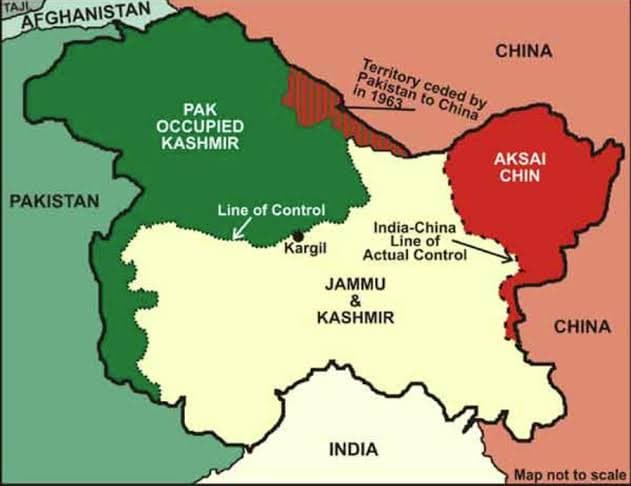
Pakistan Occupied Kashmir (POK) is once again in turmoil. What began as protests over rising electricity tariffs and flour prices has escalated into deadly violence, with at least 11 people reported killed and dozens injured in clashes in Rawalakot in early June 2026. The latest unrest centres on the Joint Awami Action Committee (JAAC), a civil society alliance that has been leading grassroots agitation in the region for years. The group now faces a government ban under anti-terror laws, while residents prepare for larger demonstrations. For NRIs and the global Kashmiri diaspora watching from afar, these events highlight the deep-seated economic hardships and political frustrations of people living under Pakistani administration in the region.
What triggered the latest deadly clashes?
According to multiple international reports, violence erupted in Rawalakot — in Poonch district — around 7 June 2026. Security forces opened fire during confrontations with protesters, including at a gathering linked to the funeral of a local rights activist and JAAC figure.
Official figures from Pakistani-administered Kashmir authorities state that 11 people were killed in total — a mix of protesters and security personnel — with around 70 injured. Some reports suggest higher civilian casualties; final verified figures may evolve as more information emerges.
JAAC leaders have described the incident as a "massacre" and accused forces of using excessive lethal force against largely peaceful demonstrators. Authorities maintain that protesters opened fire with automatic weapons and threw petrol bombs, forcing security personnel to respond to restore order. As is typical in contested situations, the two narratives differ sharply and independent verification is limited.
The timing is critical: the clashes occurred just days after the regional government banned the JAAC under anti-terror legislation around 6 June and ahead of a planned major rally and march toward Muzaffarabad on or around 9-10 June 2026. Tourists were advised to leave the region.
This is not an isolated flare-up. Similar large-scale protests rocked POK in September-October 2025, also resulting in deaths and injuries before a temporary agreement was reached.
Core demands of the protesters
The JAAC — Jammu Kashmir Joint Awami Action Committee — represents traders, lawyers, students and civil society groups. Their long-standing charter includes:
- Subsidised electricity and flour. Residents complain of high tariffs despite the region hosting several major hydropower projects. They demand lower rates and a fair share of royalties or revenue from those projects.
- Abolition of 12 reserved legislative seats for Kashmiri refugees living in Pakistan (outside POK). These seats are up for the 27 July 2026 elections to the regional assembly. Protesters argue that these seats are often captured by politicians from Punjab and Sindh, diluting the voice of local residents and amounting to political engineering.
- Broader political and economic rights. Restoration of genuine autonomy, better governance, an end to elite privileges, improved healthcare and jobs, and protection of human rights.
- Electoral and constitutional reforms. Addressing alleged discrepancies in voter lists and reducing Islamabad's heavy influence over the regional administration.
A Pakistan-administered Kashmir Supreme Court ruling reportedly upheld that abolishing the refugee seats would require a constitutional amendment, further fuelling anger among protesters who view this as a barrier to local representation.
These demands reflect recurring themes: economic distress amid inflation, perceived lack of development despite natural resources, and frustration with political representation that many locals feel does not serve them.
Government response and crackdown
Pakistani authorities have taken a hard line:
- Banned the JAAC and designated it a proscribed group.
- Used force, including live fire, to disperse gatherings.
- Imposed restrictions, with past protests seeing internet and mobile service disruptions.
- Accused JAAC of misleading the public and inciting violence.
Critics, including some analysts, describe the response as disproportionate and argue that treating a popular civil society movement as a terrorist outfit risks further radicalising public sentiment. The regional government in Muzaffarabad is widely seen as having limited real autonomy, with key decisions influenced by Islamabad.
Global reactions: diaspora raises voice
The unrest has spilled beyond POK's borders. Members of the Kashmiri diaspora in the United Kingdom have staged protests outside the Pakistani Consulate in Bradford and other cities, accusing Islamabad of excessive force and calling for international scrutiny.
Some UK lawmakers have expressed concern over the humanitarian situation and communications blackouts affecting families. This global dimension gives the protests added visibility at a time when Pakistan is already facing multiple internal and economic challenges.
India has strongly condemned the killings. Official Indian statements have expressed hope that the international community will hold Pakistan accountable for what New Delhi describes as misdeeds and abuses in the region.
Why these protests keep returning
POK — also called Azad Jammu and Kashmir — has a population of around 4-5 million. Despite being presented by Pakistan as a showcase of self-governance, residents have repeatedly taken to the streets over the past two years over very basic issues: affordable power, food subsidies and political voice.
The 12 refugee seats have long been a flashpoint. Many locals view them as a mechanism that allows external political influence to dominate the assembly. Combined with high electricity costs — even as the region generates significant hydropower — and broader governance complaints, the grievances run deep.
The current escalation shows how quickly economic protests can morph into larger political confrontations when met with bans and force.
What happens next?
As of 9 June 2026, tension remains high. JAAC has vowed to continue its planned march and sit-in in Muzaffarabad despite the ban. Further clashes, larger shutdowns or attempts at negotiation are all possible. The situation carries clear risks:
- Worsening humanitarian conditions if communications remain restricted.
- Potential for more violence ahead of the July elections.
- Increased international attention on human rights and governance in the region.
For the wider Kashmir discourse, these events once again put the spotlight on the lived realities of people on both sides of the Line of Control.
Key takeaways
- At least 11 reported killed in Rawalakot clashes in early June 2026 during JAAC-led protests.
- Main triggers: high electricity and flour prices plus opposition to 12 reserved refugee seats in upcoming elections.
- JAAC banned under anti-terror laws; larger protests planned for Muzaffarabad.
- Diaspora protests in the UK; India calls for accountability.
- Recurring unrest exposes long-standing economic and political frustrations in POK.
FAQs
What is JAAC in POK protests? The Joint Awami Action Committee (JAAC) is a broad civil society platform in Pakistan Occupied Kashmir that has organised multiple waves of protests since 2024-2025 demanding economic relief and political reforms.
Why are people in POK protesting electricity prices? Residents argue that despite hosting major hydropower projects, local electricity tariffs remain high. They demand subsidies and a fair share of revenue from these projects.
What are the 12 reserved seats in POK elections? These are legislative assembly seats reserved for Kashmiri refugees living in Pakistan outside POK. Protesters want them abolished, claiming they give disproportionate political influence to non-locals.
Is the situation in POK stable now? No. As of 9 June 2026, fresh protests and a government ban on JAAC have kept the region on edge, with a major rally planned in Muzaffarabad.
The people of Pakistan Occupied Kashmir are once again making their voices heard — this time at significant human cost. Whether the latest round of unrest leads to meaningful dialogue or deeper confrontation remains to be seen. For NRIs with family connections or deep interest in the Kashmir issue, these developments serve as a reminder of the complex human realities behind the headlines.
This is a developing news story based on reports from Al Jazeera, Frontline, India Today, Times of India, Reuters and other international outlets as of 9 June 2026. Casualty figures and narratives may be updated as more verified information emerges. We present facts from multiple sources for balanced understanding.
Continue reading — NRI Globe pillar guide: Returning to India — Complete Checklist
Related NRI Globe Coverage
- Pushpayagam Mahotsavam Tirupati June 22, 2026: NRI Devotee Guide
- Adhika Masik Shivaratri June 13, 2026: NRI Four-Prahar Guide
- Pradosh Vrat June 12, 2026: NRI Home Puja Guide for Diaspora Hindus
- Strait of Hormuz Crisis: How Tensions Are Hitting Indian Wallets and NRI Households
- USA, UK, Australia & Canada: What NRIs Should Be Tracking This Week (June 9, 2026)
- ICE Raid in Camarillo Sparks Violence: Gunfire and Tear Gas Amid Immigration Crackdown
- 2025 Los Angeles Protests: NRI Safety, Economic Impact & Community Response
- How NRIs Are Celebrating Labor Day 2026 Differently This Year — Community, Gas Prices & the Shift to Local
Fresh from NRI Globe
- YouTuber Nandu's World (Rama Nandana) UK Visa & Job Fraud Case: Full Details + Key Lessons for NRIs (2026)
- Dussehra / Vijayadashami 2026 Events Country-Wise — Global NRI Directory (Ram Lila, Ravana Dahan, Durga Puja Pandals, Ayudha Puja Venues + Booking)
- Diwali 2026 Events Country-Wise — Global NRI Directory (White House, Leicester, London Trafalgar, Toronto, Auckland, Sydney Parramasala, Fiji, Mauritius, Trinidad, South Africa and More)
- Diwali / Deepavali 2026 Country-Wise NRI Celebrations — Complete Global Guide (USA, UK, Canada, Australia, Fiji, Mauritius, Trinidad, South Africa, UAE and 30+ Countries)