
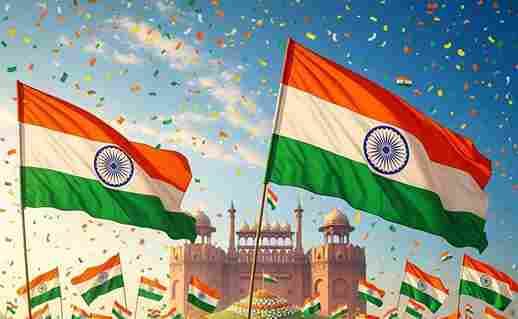
Independence Day fancy dress ideas for kids work best when they are simple, comfortable and meaningful. Popular choices include freedom fighters such as Mahatma Gandhi, Rani Lakshmibai and Bhagat Singh, plus soldiers, farmers and national-symbol themes. One rule matters above all: children should never dress as the national flag or wear it as clothing. Choose tricolour-themed outfits instead.
For families in India and for Non-Resident Indian (NRI) households marking the day abroad, a school fancy-dress competition is often a child's first real introduction to the freedom struggle. A well-chosen costume can spark curiosity about history, courage and service. This guide keeps the ideas warm, age-appropriate and, importantly, respectful of the rules that protect our national symbols.
A gentle but important rule before you begin
Before picking any costume, one point deserves a kind, clear explanation to children: dressing up as the national flag, or wearing the Tiranga as a dress, cape, drape, saree or shirt, is not permitted. This is not about spoiling the fun — it is about honouring a symbol that stands for the whole nation.
The Flag Code of India, 2002 and the Prevention of Insults to National Honour Act, 1971 govern how the national flag may be displayed and used. Using the flag as apparel, costume or drapery is contrary to the dignity the flag is meant to carry. The Chakra (the 24-spoke wheel) and the exact tricolour proportions belong to the official flag alone and should not be turned into a garment. For the full rules, parents and teachers should read our explainer on the Flag Code of India rules and always consult the official Ministry of Home Affairs (MHA) text for specifics.
The good news: you can still celebrate the tricolour spirit safely. A saffron kurta, a white dupatta and a green skirt — without the Ashoka Chakra and not arranged to imitate the flag itself — lets a child wear the colours of the nation proudly and lawfully. When in doubt, a freedom-fighter or national-hero costume is always a safe, meaningful choice.
Freedom fighter fancy dress ideas
Freedom fighters are the most loved category for a reason — the costumes are recognisable, the stories are inspiring, and children can learn a short speech about the person they portray. Keep props simple and safe (no sharp or real weapons for young kids).
| Character | Simple costume elements | One-line intro a child can say |
|---|---|---|
| Mahatma Gandhi | White dhoti, round glasses, a wooden staff, a bald cap or shaved-look | "I believed in truth and non-violence." |
| Bhagat Singh | Beige or khaki shirt, a light hat, a rolled-up moustache look | "I gave my life for the freedom of my country." |
| Rani Lakshmibai | Warrior-queen attire, a turban or crown, a toy sword (blunt/soft) | "I fought bravely for the freedom of Jhansi." |
| Sarojini Naidu | Simple saree, a bindi, a small notebook (the "Nightingale of India") | "I was a poet and a leader in the freedom movement." |
| Subhas Chandra Bose | Round glasses, a military-style cap and jacket | "Give me blood, and I will give you freedom." (popularly attributed to Netaji) |
| Bhagini / Sister Nivedita | Simple white attire, a shawl | "I served India through education and service." |
A few more well-known figures children can portray include Sardar Vallabhbai Patel, Dr B. R. Ambedkar, Lal Bahadur Shastri, Mangal Pandey and Kittur Rani Chennamma. Encourage the child to learn two or three true facts about the person so the costume becomes a small history lesson rather than only an outfit.
Tips for a great freedom-fighter costume
- Prioritise comfort: children stand for a long time during assemblies, so choose breathable, weather-appropriate fabrics.
- Keep props soft and safe — swords, sticks and glasses should be blunt, light and non-hazardous.
- Help your child memorise a short, factual introduction. Avoid inventing quotes; if a saying is uncertain, teachers can note it is "popularly attributed to" the figure.
- Focus on the story, not just the look — a confident two-line speech often wins more appreciation than an elaborate costume.
Soldier, farmer and service-hero themes
Not every hero comes from the freedom struggle. Themes that celebrate those who serve the nation today are equally meaningful and often easier to assemble at home.
- Soldier / Armed Forces: A simple uniform-style outfit, a cap and a proud salute. Children can say a line about protecting the country's borders. Keep it respectful and avoid real or realistic weapons.
- Farmer (Annadata): A kurta, a gamcha or towel on the shoulder, a straw hat and a small toy sickle (soft). The message: farmers feed the nation.
- Doctor / Nurse: A white coat and a stethoscope, honouring healthcare workers who serve the country.
- Postman, Teacher or Police officer: Everyday national-service roles that even the youngest children recognise and enjoy.
- Scientist / Space theme: A lab coat or a simple astronaut look celebrating India's achievements in science and space.
National-symbol themes (done the right way)
National-symbol themes are popular and colourful, but they need care. Some symbols are protected by law. For example, the State Emblem is governed by the State Emblem of India (Prohibition of Improper Use) Act, 2005, so the emblem should never be worn or copied as a costume. Similarly, the national flag itself must not be worn.
Safer national-symbol ideas that children can enjoy include:
- Peacock (the national bird) — colourful, easy and a favourite with younger children.
- Bengal Tiger (the national animal) — a printed outfit and face paint.
- Lotus (the national flower) — a simple flower-petal collar or headpiece.
- Mango (the national fruit) or a banyan tree (the national tree) for a creative group act.
- Map of India as a cardboard prop — a child can hold it while speaking about unity in diversity.
For older children who want to explain the meaning behind our symbols, our guide to the Indian national flag history and meaning is a helpful, age-appropriate reference for a short speech — while remembering that the flag is to be spoken about and respected, never worn.
Tricolour-themed outfits: the safe alternative to "dressing as the flag"
Many children simply want to look patriotic in saffron, white and green. That is wonderful — and completely possible without imitating the flag. The key distinction is simple: wearing the colours is fine; wearing the flag is not.
| Allowed and encouraged | Not permitted |
|---|---|
| A saffron top, white sash and green skirt/trousers as separate garments | An outfit stitched or draped to look like the national flag |
| Tricolour ribbons, badges or hair accessories | Wearing the Tiranga as a cape, saree, dupatta or shirt |
| Tricolour face paint (small, respectful, no Chakra) | Painting or printing the Ashoka Chakra on clothing or skin as decoration |
| A freedom-fighter or service-hero costume | Costumes that copy the State Emblem or the flag's exact design |
When you separate the tricolour into distinct pieces of clothing and leave out the Chakra, the outfit celebrates the colours of the nation without turning the flag itself into a costume. This is the simplest way to keep everyone happy, safe and within the rules.
Age-appropriate ideas by group
- Toddlers (2–4): Peacock, lotus, or a simple tricolour outfit with a comfy kurta. Keep speeches to a single short line.
- Younger kids (5–8): Gandhi, a soldier, a farmer or a national bird/animal, with two easy facts to say aloud.
- Older kids (9–12): Bhagat Singh, Rani Lakshmibai, Sarojini Naidu, Netaji, or a scientist theme, with a confident three-sentence introduction.
A note on the day itself: the 80th Independence Day
If your child's speech mentions the date, help them get it right. 15 August 2026 is the 80th Independence Day of India, marking 79 completed years of freedom. It is easy to mix these up, so we have a short explainer on the difference between the 80th vs 79th Independence Day question that parents and teachers can read before the event.
On Independence Day the flag is hoisted (raised from the bottom of the pole and then flown), which is different from Republic Day, when the flag is unfurled (already tied at the top and released). Our guide on hoisting vs unfurling the flag explains this simply for school programmes. For broader celebration ideas, see our Independence Day 2026 pillar page.
Final reminders for parents and teachers
- Choose comfort and safety first — no sharp props, no real weapons, weather-appropriate fabric.
- Turn the costume into learning: a few true facts matter more than an elaborate outfit.
- Never dress a child as the national flag, and never use the flag or the State Emblem as clothing or a prop.
- Prefer tricolour-themed separates (without the Chakra) or a freedom-fighter costume as your safe default.
- For any flag-handling in the programme, follow the official MHA / Ministry of Culture guidance and our Flag Code of India rules page.
With a little planning, your child can celebrate the spirit of the nation proudly, safely and respectfully — and come away with a story worth remembering.
Related reading
- Independence Day 2026: complete guide
- Is it the 80th or 79th Independence Day in 2026?
- Flag Code of India: rules you should know
- Indian national flag: history and meaning
- Hoisting vs unfurling the flag
- How to dispose of a national flag respectfully
Related NRI Globe Coverage
- Independence Day vs Republic Day: 12 Differences Explained
- Independence Day Celebration Ideas for Schools 2026: Programme Ideas
- Independence Day 2026 for NRIs: USA, UK, Canada, Australia, UAE, Europe and Singapore Guide
- Independence Day Speech for Kids: Simple Speeches for Ages 4 to 10
- Short Independence Day Speech: 1-Minute and 2-Minute Versions
- Why Is India's Independence Day on 15 August? The Reason Behind the Date
- Celebrating Independence Day 8,000 Miles From Home
- Independence Day 2026 Theme, Red Fort Ceremony and What to Expect
Fresh from NRI Globe
- YouTuber Nandu's World (Rama Nandana) UK Visa & Job Fraud Case: Full Details + Key Lessons for NRIs (2026)
- Dussehra / Vijayadashami 2026 Events Country-Wise — Global NRI Directory (Ram Lila, Ravana Dahan, Durga Puja Pandals, Ayudha Puja Venues + Booking)
- Diwali 2026 Events Country-Wise — Global NRI Directory (White House, Leicester, London Trafalgar, Toronto, Auckland, Sydney Parramasala, Fiji, Mauritius, Trinidad, South Africa and More)
- Diwali / Deepavali 2026 Country-Wise NRI Celebrations — Complete Global Guide (USA, UK, Canada, Australia, Fiji, Mauritius, Trinidad, South Africa, UAE and 30+ Countries)