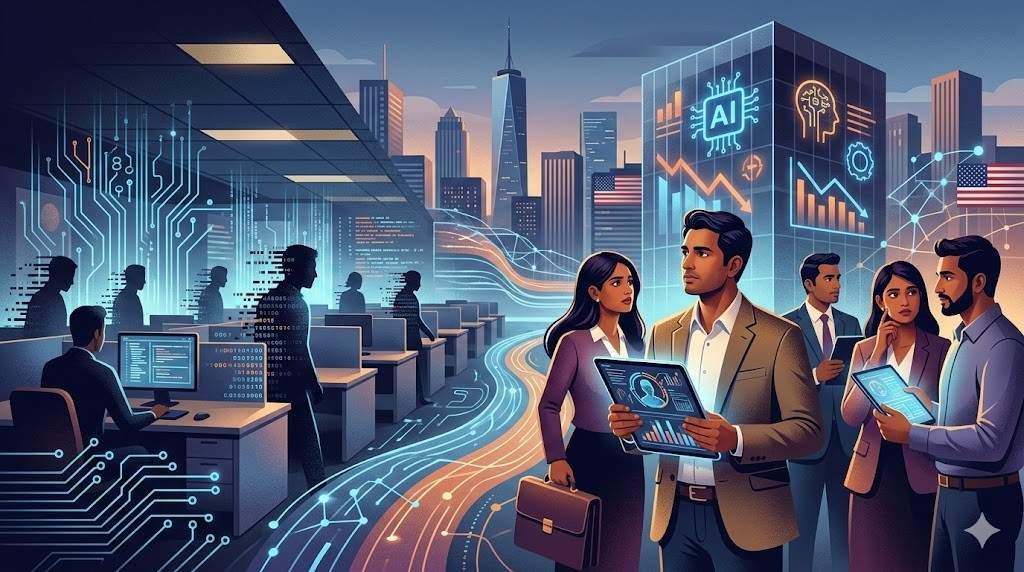
Fintech leader Block (parent to Square and Cash App) has made headlines with its February 2026 decision to cut nearly half its workforce—around 4,000 jobs—explicitly linking the reductions to productivity gains from artificial intelligence tools. In a shareholder letter, CEO Jack Dorsey described the move as a shift to smaller, flatter, “intelligence-native” teams, where AI enables far greater output. He warned that most companies remain “late” to this transformation and predicted widespread adoption in the coming year.
The announcement initially boosted Block shares by over 20% in after-hours trading, as investors cheered the efficiency push amid broader market jitters from Nvidia‘s outlook and concerns over AI investment sustainability. However, it has intensified worries about accelerating white-collar job disruption in the US, particularly for the large Indian diaspora in tech and finance.
AI as the Core Driver: Real Shift or Cost-Cutting Cover?
Block highlighted how AI has boosted engineer productivity by over 40% in recent months, allowing the company to maintain—or even grow—output with far fewer people. While still hiring senior AI engineers, the firm is eliminating thousands of roles in areas like development, support, and operations. Critics debate whether this is genuine AI-driven change or “AI-washing” for addressing overhiring from the pandemic era and high costs.
Regardless, the market’s positive reaction signals that efficiency via AI is rewarded, raising the stakes for similar restructurings across Silicon Valley and beyond.
NRI Perspective: Heightened Risks for Indian Professionals in US Tech
For Non-Resident Indians (NRIs) and the Indian diaspora— who form a significant portion of the US tech workforce, especially on H-1B visas—this development hits close to home. Silicon Valley’s Indian community faces amplified exposure: the Silicon Valley Index estimates nearly 410,000 jobs in the region include AI-automatable tasks, with many in high-paying tech roles held by Indian-origin professionals.
Affected employees have shared stories on platforms like LinkedIn, including H-1B holders noting tight 60-day windows to find new sponsorship or face visa complications. Broader trends show US tech layoffs disproportionately impacting immigrants, with visa uncertainties compounding the pressure. Reports indicate rising “reverse brain drain,” as NRIs return to India amid job instability, stricter immigration policies, and AI threats.
The Federal Reserve’s ongoing debate on AI’s dual impact—short-term displacement versus long-term productivity—adds uncertainty. While AI could ease inflation through growth, immediate white-collar churn risks higher unemployment, particularly in knowledge sectors where many NRIs excel in coding, data, and analytics.
Outlook: Adaptation Key for NRIs Amid Disruption
Block’s cuts mark a tipping point: AI is moving from experimental to operational, reshaping white-collar roles faster than anticipated. For NRIs in the US, the message is clear—roles involving routine, data-heavy, or screen-based tasks face growing risks, while those requiring human judgment, creativity, or complex integration may evolve or thrive.
Reskilling in AI tools, prompt engineering, ethical deployment, and hybrid skills will be crucial. Many NRIs are already pivoting toward AI-specialized roles or considering opportunities back home, where India’s AI hiring is surging (projected 32% growth in 2026). Policymakers and companies must prioritize fair transitions, but individuals should focus on upskilling to stay ahead.
As Dorsey’s vision unfolds, 2026 may redefine white-collar security for the global Indian workforce. Track these shifts and strategies at nriglobe.com for tailored insights on NRI careers in the AI era.