
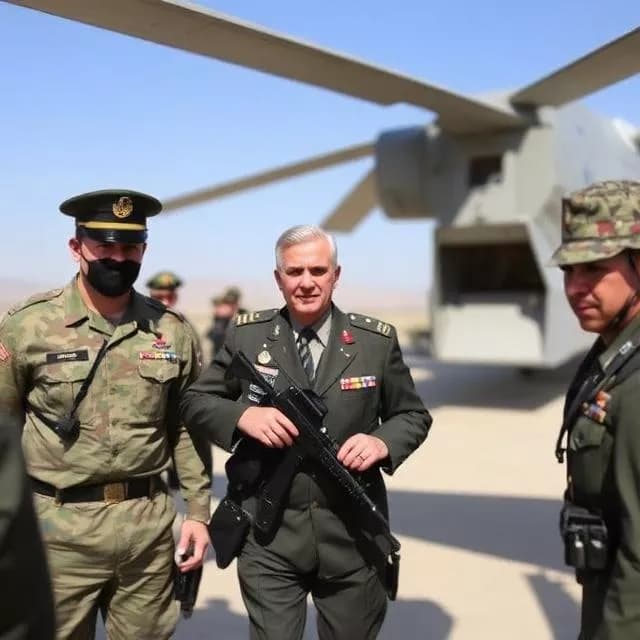
April 6, 2026 – In one of the most high-risk operations of the ongoing Iran war, U.S. special forces successfully rescued the second crew member — an injured Air Force colonel serving as weapons systems officer — from hostile territory in Iran on April 5. The F-15E Strike Eagle jet was shot down near Isfahan on April 3, marking the first U.S. combat loss of a manned fighter aircraft in over two decades.
President Donald Trump announced the success with a powerful message on Truth Social: “We Got Him!” He described the mission as “one of the most daring search-and-rescue operations in U.S. history.”
For millions of NRIs across the USA, UAE, Saudi Arabia, UK, Canada, and other countries, this dramatic development adds a new layer of uncertainty to an already tense geopolitical situation that is directly affecting oil prices, jobs in the Gulf, remittances to India, and overall safety.
How the Dramatic Rescue Unfolded
The two-member crew ejected safely after the jet was hit by Iranian air defenses. The pilot was rescued quickly by helicopters. However, the weapons systems officer (a colonel), who sustained injuries, evaded Iranian forces and survived nearly 48 hours alone in the rugged, mountainous terrain of Iran while a massive manhunt was underway.
The rescue involved:
- Elite units including Navy SEAL Team Six and Air Force Pararescuemen.
- Extensive air cover with A-10 Warthogs and other aircraft providing protection.
- Deception tactics and a temporary forward base on an abandoned airstrip.
- U.S. forces destroying their own damaged aircraft to prevent sensitive technology from falling into Iranian hands.
Despite clashes with Iranian troops and small arms fire, the operation ended with zero American fatalities. The injured colonel is now safe and expected to recover fully.
Trump praised the U.S. military’s bravery and commitment to “leave no one behind,” even deep inside enemy territory on Day 37 of the conflict.
Why This Matters to NRIs – Key Impacts
The Iran war, now in its sixth week, is no longer just distant news for the Indian diaspora. Here’s how the latest events could affect you:
- Gulf NRIs (UAE, Saudi Arabia, Qatar, Kuwait, Oman): Home to over 9 million Indians, the region remains a major hub for remittances. Escalating tensions raise safety concerns, with possible flight restrictions, heightened security alerts, and risks to projects in construction, oil & gas, and logistics. Many NRIs are monitoring Indian Embassy advisories and employer contingency plans closely.
- Oil Prices and Your Wallet: The conflict, including disruptions in the Strait of Hormuz, has already pushed global oil prices higher. This directly increases fuel, LPG, and transportation costs back in India, affecting your family’s monthly expenses. For NRIs earning in dollars or dirhams, a weaker rupee could make remittances more valuable in INR — but prolonged instability may slow Gulf economies.
- Remittances to India: Any slowdown in Gulf jobs or early repatriation could impact the flow of money to states like Kerala, Telangana, Andhra Pradesh, and Punjab. Economists are watching how the energy shock affects India’s import bill and current account.
- NRIs in USA, UK & Canada: While physically safer, you may see ripple effects on investments, stock markets, inflation, and travel costs due to higher energy prices and global uncertainty. Indian IT professionals, students, and business owners are tracking how U.S. foreign policy evolves.
- Travel and Flights: Airspace restrictions and fuel surcharges could make journeys between India and the Gulf or West more expensive and complicated.
Broader Context of the Iran War
The rescue comes amid continued U.S. and Israeli strikes on Iranian military targets and as President Trump issues strong warnings about reopening the Strait of Hormuz. Indirect ceasefire talks are ongoing but have not yet yielded a breakthrough.
India maintains a balanced diplomatic stance, prioritizing the safety of its citizens abroad and energy security at home.
Related NRI Globe Coverage
- Trump Says US 'Essentially Taken Over' Iran (May 2026): Context, Operation Epic Fury & Current Status
- Shadows Over the Gulf: The Fragile 2026 Iran War Ceasefire — May 8 Update for NRIs
- Trump Extends Iran Ceasefire: NRI Safety and Finance Updates
- Iran Blockade 2026: Impact on NRIs & Gas Prices
- US-Iran Talks Collapse: 21-Hour Islamabad Timeline
- Trump’s Iran Ceasefire Claim Faces New Doubts
- Iran War 2026: Why Fuel Prices Still Rising in India
- Why US Chose Pakistan in Iran Conflict Explained
Fresh from NRI Globe
- YouTuber Nandu's World (Rama Nandana) UK Visa & Job Fraud Case: Full Details + Key Lessons for NRIs (2026)
- Dussehra / Vijayadashami 2026 Events Country-Wise — Global NRI Directory (Ram Lila, Ravana Dahan, Durga Puja Pandals, Ayudha Puja Venues + Booking)
- Diwali 2026 Events Country-Wise — Global NRI Directory (White House, Leicester, London Trafalgar, Toronto, Auckland, Sydney Parramasala, Fiji, Mauritius, Trinidad, South Africa and More)
- Diwali / Deepavali 2026 Country-Wise NRI Celebrations — Complete Global Guide (USA, UK, Canada, Australia, Fiji, Mauritius, Trinidad, South Africa, UAE and 30+ Countries)