NRI Concerns Rise Under Trump Policies
  • February 17, 2026
  • Sreekanth bathalapalli
  • 0

NRI Concerns Rise Under Trump Policies

As Presidents’ Day 2026 approaches, the second Trump administration is moving at a relentless pace, reshaping America’s immigration landscape, foreign relations, and domestic priorities. For the 4+ million-strong Indian American community—one of the most successful immigrant groups contributing billions in taxes, innovation, and remittances—these shifts bring a mix of opportunity and profound uncertainty.

The partial DHS shutdown, now in its fourth day since February 14, remains the most immediate flashpoint. Stemming from failed negotiations over reforms to Immigration and Customs Enforcement (ICE) and Customs and Border Protection (CBP)—sparked by fatal incidents involving federal agents in Minneapolis—funding lapsed when Congress recessed until February 23. Democrats demand oversight measures like bans on masked agents and stricter warrants; Republicans and border czar Tom Homan call these “unreasonable” and insist enforcement continues unabated via prior funding from the 2025 One Big Beautiful Bill Act.

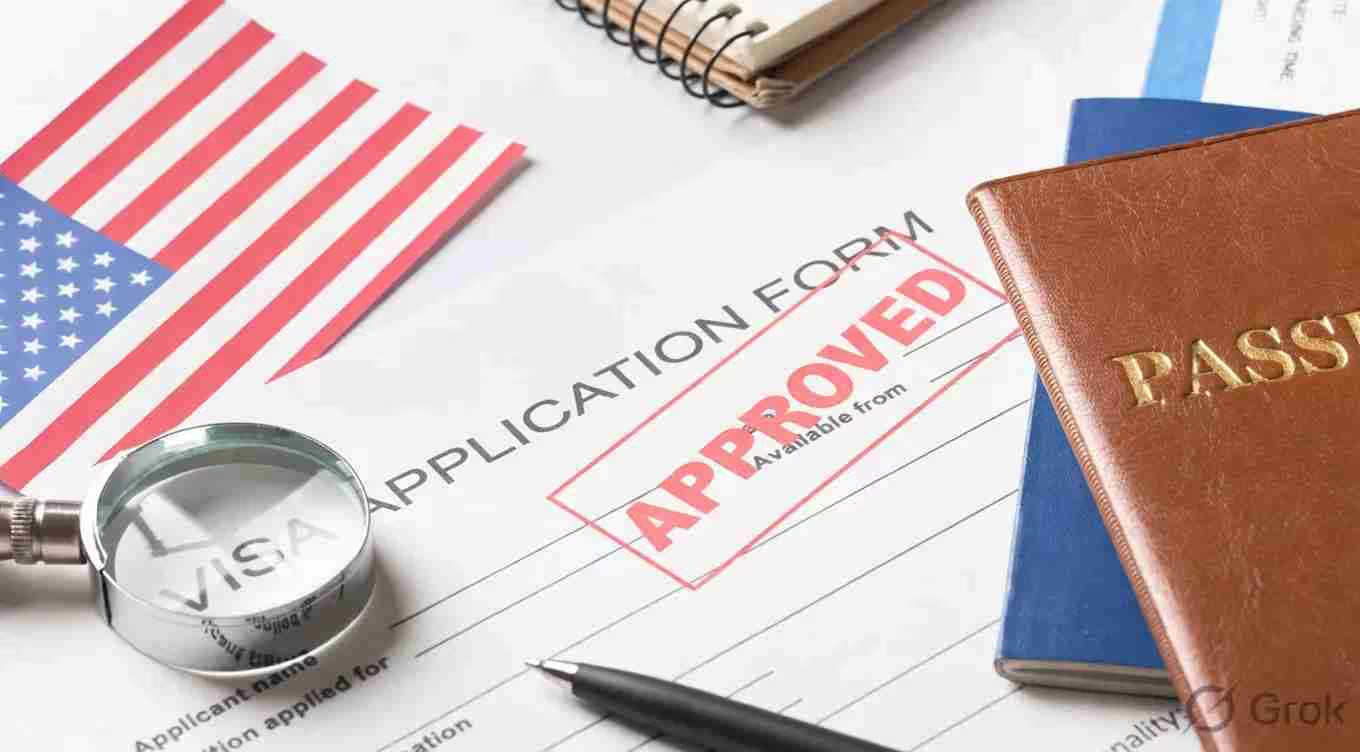
This targeted shutdown affects USCIS processing (visas, green cards, naturalizations), though 90% of DHS staff are essential and working without pay. For NRIs, it exacerbates existing backlogs: Indian nationals face the longest waits in EB-2/EB-3 categories (often 10+ years), H-1B extensions risk delays, and family petitions stall. One Atlanta-based NRI physician shared: “My PERM approval is pending; this chaos could push my green card another year. My parents in India are aging—every delay hurts.”

Broader Trump policies amplify concerns. Aggressive deportation efforts have removed over 675,000 migrants since January 2025, with claims of 2.2 million “self-deportations.” While focused on undocumented individuals, the climate heightens scrutiny for all immigrants, including legal H-1B holders fearing status lapses or workplace raids.

Immigration & Visa Stability: Core NRI Worries

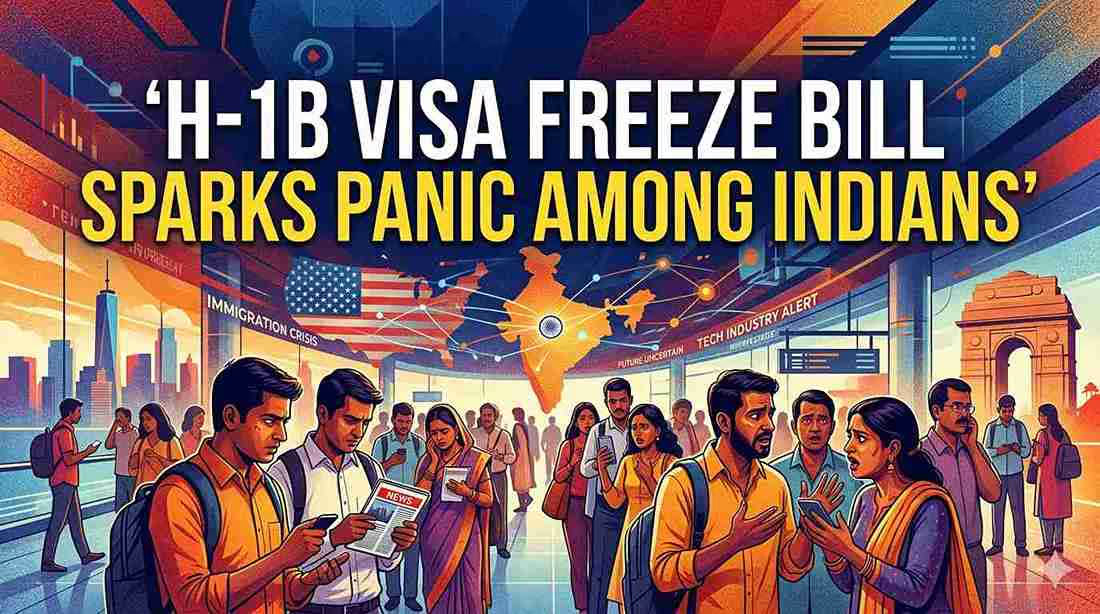
  • H-1B and Work Visas — Tech giants (Google, Microsoft, Amazon) rely on Indian talent. Delays in extensions or premium processing could disrupt jobs, especially with six-year H-1B limits looming for many. USCIS slowdowns mean uncertainty in renewals.
  • Green Card Backlogs — Per-country caps hit Indians hardest. Reforms discussed in shutdown talks could either ease or tighten paths—experts like immigration attorney Rajiv Khanna note: “Oversight demands might indirectly help legal immigrants by shifting focus from enforcement to processing efficiency, but political gridlock prolongs waits.”
  • Family Reunification — I-130 petitions and consular processing for parents/siblings face indefinite delays. Visitor visas and Advance Parole re-entries carry added risk amid heightened port scrutiny.
  • Economic Ties — Remittances to India neared $125 billion in 2025 (much from US NRIs). Job instability in IT/healthcare could reduce flows, though the US economy remains robust under Trump’s policies (stock market highs, low inflation per White House claims).

Balanced perspective: Some NRIs support stricter enforcement for community safety and legal pathways. Advocacy groups like Indian American Impact Fund push for balanced reforms.

Foreign Policy Ripples: Iran, Ukraine, and Global Stability

Trump’s “peace through strength” approach dominates headlines. US military preparations for potential weeks-long operations against Iran follow threats of a “very bad day” if talks fail. Envoys (including Jared Kushner) negotiate in Geneva with Oman mediation, but tensions rise with carrier deployments. Iran’s supreme leader warns of “regional war.”

For NRIs: Geopolitical instability could spike oil prices (impacting US inflation/gas costs), disrupt global supply chains (affecting tech jobs), and heighten anti-immigrant sentiment if conflicts escalate. Indian Americans with family/business in the Middle East monitor closely.

On Ukraine-Russia: Trump pressures Kyiv for a “fast” deal before US-brokered Geneva talks (second round upcoming, near invasion’s fourth anniversary). Secretary Rubio’s Europe moves (e.g., boosting Hungary’s far-right leader) draw bipartisan criticism for straining alliances.

Implications: Reduced US aid to Ukraine might stabilize energy markets (positive for remittances/economy), but broader isolationism could weaken global trade—critical for India’s IT exports and NRI careers.

Domestic actions include EPA’s massive deregulation (repealing Obama-era endangerment finding, saving trillions per claims), DOJ suits over Harvard admissions data (post-affirmative action), and court orders restoring historical displays (e.g., slavery at Washington’s house). These reflect ideological pushes but indirectly affect NRI professionals in regulated sectors.

NRI Responses and Community Impact

Diaspora forums buzz with anxiety and strategy. Many report heightened vigilance: renewing passports early via Indian consulates (unaffected), building emergency funds, networking for job backups. Advocacy ramps up—petitions to Congress, town halls with reps.

Pros of policies: Economic growth (stock highs, border security claims) benefits NRI investments/remittances. Some see enforcement as deterring illegal competition in job markets.

Cons: Deferred dreams, family separations, mental health strain from uncertainty. One Silicon Valley engineer noted: “We came for opportunity—now it feels conditional.”

Practical Steps for NRIs Amid Uncertainty

  1. Track USCIS/DOS — Daily checks on uscis.gov and travel.state.gov; sign up for alerts.
  2. Legal Prep — Consult AILA attorneys; file extensions early; gather documents.
  3. Financial Planning — Diversify savings; monitor remittances via apps.
  4. Community Engagement — Join local Indian associations, temples, or groups like AAPI for support/updates.
  5. Advocacy — Contact reps via Indian American PACs; vote in midterms if eligible.
  6. Stay Informed — Follow balanced sources; avoid misinformation.

This administration’s pace—third shutdown in term two, bold foreign moves—tests NRI resilience. History shows immigration policies swing with administrations, but preparation empowers. As one community elder said: “We’ve overcome worse; unity and diligence will see us through.”

Share your experiences below—how are these policies affecting your life? We’ll continue covering NRI angles as events unfold.

Sreekanth NRI Globe Contributor

As Presidents’ Day 2026 approaches, the second Trump administration is moving at a relentless pace, reshaping America’s immigration landscape, foreign relations, and domestic priorities. For the 4+ million-strong Indian American community—one of the most successful immigrant groups contributing billions in taxes, innovation, and remittances—these shifts bring a mix of opportunity and profound uncertainty.

The partial DHS shutdown, now in its fourth day since February 14, remains the most immediate flashpoint. Stemming from failed negotiations over reforms to Immigration and Customs Enforcement (ICE) and Customs and Border Protection (CBP)—sparked by fatal incidents involving federal agents in Minneapolis—funding lapsed when Congress recessed until February 23. Democrats demand oversight measures like bans on masked agents and stricter warrants; Republicans and border czar Tom Homan call these “unreasonable” and insist enforcement continues unabated via prior funding from the 2025 One Big Beautiful Bill Act.

This targeted shutdown affects USCIS processing (visas, green cards, naturalizations), though 90% of DHS staff are essential and working without pay. For NRIs, it exacerbates existing backlogs: Indian nationals face the longest waits in EB-2/EB-3 categories (often 10+ years), H-1B extensions risk delays, and family petitions stall. One Atlanta-based NRI physician shared: “My PERM approval is pending; this chaos could push my green card another year. My parents in India are aging—every delay hurts.”

Broader Trump policies amplify concerns. Aggressive deportation efforts have removed over 675,000 migrants since January 2025, with claims of 2.2 million “self-deportations.” While focused on undocumented individuals, the climate heightens scrutiny for all immigrants, including legal H-1B holders fearing status lapses or workplace raids.

Immigration & Visa Stability: Core NRI Worries

  • H-1B and Work Visas — Tech giants (Google, Microsoft, Amazon) rely on Indian talent. Delays in extensions or premium processing could disrupt jobs, especially with six-year H-1B limits looming for many. USCIS slowdowns mean uncertainty in renewals.
  • Green Card Backlogs — Per-country caps hit Indians hardest. Reforms discussed in shutdown talks could either ease or tighten paths—experts like immigration attorney Rajiv Khanna note: “Oversight demands might indirectly help legal immigrants by shifting focus from enforcement to processing efficiency, but political gridlock prolongs waits.”
  • Family Reunification — I-130 petitions and consular processing for parents/siblings face indefinite delays. Visitor visas and Advance Parole re-entries carry added risk amid heightened port scrutiny.
  • Economic Ties — Remittances to India neared $125 billion in 2025 (much from US NRIs). Job instability in IT/healthcare could reduce flows, though the US economy remains robust under Trump’s policies (stock market highs, low inflation per White House claims).

Balanced perspective: Some NRIs support stricter enforcement for community safety and legal pathways. Advocacy groups like Indian American Impact Fund push for balanced reforms.

Foreign Policy Ripples: Iran, Ukraine, and Global Stability

Trump’s “peace through strength” approach dominates headlines. US military preparations for potential weeks-long operations against Iran follow threats of a “very bad day” if talks fail. Envoys (including Jared Kushner) negotiate in Geneva with Oman mediation, but tensions rise with carrier deployments. Iran’s supreme leader warns of “regional war.”

For NRIs: Geopolitical instability could spike oil prices (impacting US inflation/gas costs), disrupt global supply chains (affecting tech jobs), and heighten anti-immigrant sentiment if conflicts escalate. Indian Americans with family/business in the Middle East monitor closely.

On Ukraine-Russia: Trump pressures Kyiv for a “fast” deal before US-brokered Geneva talks (second round upcoming, near invasion’s fourth anniversary). Secretary Rubio’s Europe moves (e.g., boosting Hungary’s far-right leader) draw bipartisan criticism for straining alliances.

Implications: Reduced US aid to Ukraine might stabilize energy markets (positive for remittances/economy), but broader isolationism could weaken global trade—critical for India’s IT exports and NRI careers.

Domestic actions include EPA’s massive deregulation (repealing Obama-era endangerment finding, saving trillions per claims), DOJ suits over Harvard admissions data (post-affirmative action), and court orders restoring historical displays (e.g., slavery at Washington’s house). These reflect ideological pushes but indirectly affect NRI professionals in regulated sectors.

NRI Responses and Community Impact

Diaspora forums buzz with anxiety and strategy. Many report heightened vigilance: renewing passports early via Indian consulates (unaffected), building emergency funds, networking for job backups. Advocacy ramps up—petitions to Congress, town halls with reps.

Pros of policies: Economic growth (stock highs, border security claims) benefits NRI investments/remittances. Some see enforcement as deterring illegal competition in job markets.

Cons: Deferred dreams, family separations, mental health strain from uncertainty. One Silicon Valley engineer noted: “We came for opportunity—now it feels conditional.”

Practical Steps for NRIs Amid Uncertainty

  1. Track USCIS/DOS — Daily checks on uscis.gov and travel.state.gov; sign up for alerts.
  2. Legal Prep — Consult AILA attorneys; file extensions early; gather documents.
  3. Financial Planning — Diversify savings; monitor remittances via apps.
  4. Community Engagement — Join local Indian associations, temples, or groups like AAPI for support/updates.
  5. Advocacy — Contact reps via Indian American PACs; vote in midterms if eligible.
  6. Stay Informed — Follow balanced sources; avoid misinformation.

This administration’s pace—third shutdown in term two, bold foreign moves—tests NRI resilience. History shows immigration policies swing with administrations, but preparation empowers. As one community elder said: “We’ve overcome worse; unity and diligence will see us through.”

Share your experiences below—how are these policies affecting your life? We’ll continue covering NRI angles as events unfold.

Sreekanth NRI Globe Contributor

Latest NRI News & Global Updates:

Health, Wellness & Lifestyle for NRIs
https://nriglobe.com/health-wellness/

Latest NRI News & Global Updates
https://nriglobe.com/news/

Business & Finance News for NRIs
https://nriglobe.com/business/

Investment Guides for NRIs
https://nriglobe.com/investment/

Jobs & Career Opportunities for NRIs
https://nriglobe.com/jobs/

Share

Leave a Reply

Your email address will not be published. Required fields are marked *