
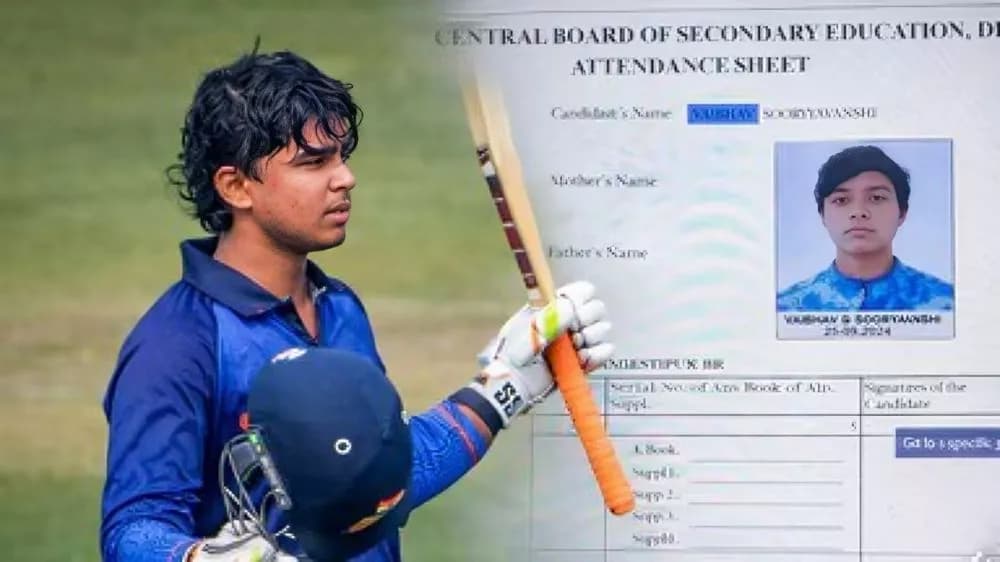
Vaibhav Suryavanshi, the 14-year-old cricket prodigy from Bihar who played a starring role in India's ICC Under-19 World Cup victory in 2026—including an explosive 175-run knock in the final against England—is now shifting focus to academics. The young left-handed opener is set to appear for his CBSE Class 10 board examinations starting February 17, 2026, marking a significant transition in his life as he balances the demands of elite-level cricket with the rigors of formal education.
Academic Milestone Amid Cricket Success
The exams will run from February 17 to March 11, 2026. Vaibhav, a resident of Tajpur in Samastipur district, Bihar, has completed all necessary formalities and received his admit card. Reports indicate he is a student associated with institutions like Podar International School (or Poddar International School) in Samastipur, where principal Neel Kishore Sinha (or Neel Kishore) has emphasized equal treatment for all students.
For many NRI families, education remains a cornerstone value regardless of a child's sporting achievements. Vaibhav's decision to prioritize his Class 10 board examinations reflects a broader cultural emphasis within Indian households—both domestic and diaspora—on completing formal qualifications. The CBSE (Central Board of Secondary Education) Class 10 examination is a critical juncture in the Indian education system, determining eligibility for higher secondary education and shaping future academic and professional pathways. That a young cricketer of international stature is treating this milestone with seriousness sends a powerful message to other young athletes navigating similar pressures.
No Special Treatment in the Examination Hall
The principal stated that Vaibhav will receive no VIP treatment or special privileges in the examination hall. "This is an academic pitch, not a cricket pitch," he reportedly told media outlets like ANI. Arrangements will ensure fairness, with the same facilities, safety, and security provided to every candidate—no shortcuts or preferential treatment amid the excitement surrounding the young star's arrival.
This stance by the school administration is noteworthy. In India, celebrity status—whether in sports, entertainment, or public life—sometimes translates into informal privileges or exceptions. The school's explicit commitment to treating Vaibhav identically to his peers underscores an institutional commitment to meritocracy and academic integrity. For NRI parents and educators watching from abroad, this approach offers a reassuring model: that even as a child achieves extraordinary success in one domain, the educational institution maintains consistent standards and refuses to compromise on fairness.
The phrase "academic pitch, not a cricket pitch" is particularly resonant. It acknowledges Vaibhav's sporting prowess while drawing a clear boundary between the cricket field and the classroom. In the examination hall, his centuries and tournament victories hold no currency; only his knowledge, preparation, and performance on the exam papers matter.
Context: Vaibhav's Rapid Rise in Cricket
Vaibhav's trajectory has been meteoric. At just 14 years old, he has already achieved milestones that many cricketers never reach in a lifetime. His 175-run innings in the ICC Under-19 World Cup 2026 final against England was not merely a match-winning performance; it was a statement of exceptional talent and composure under pressure. For a teenager to produce such a dominant display on a global stage speaks to his technical skill, mental resilience, and cricketing maturity.
Beyond the U-19 World Cup, Vaibhav has also made history as one of the youngest players to be drafted into an IPL (Indian Premier League) franchise. His association with Rajasthan Royals places him in a professional cricket ecosystem where he will encounter world-class bowlers, tactical challenges, and the intense scrutiny of the media and fans. The IPL is a high-pressure, high-reward tournament, and for a 14-year-old to navigate that environment while maintaining focus on school is a considerable undertaking.
The Dual Demands on Young Cricketers
Young cricketers in India who rise to international prominence often face a complex set of pressures. On one hand, there is the expectation—from franchises, national boards, media, and fans—that they will continue to perform at elite levels, train intensively, and prioritize their cricket development. On the other hand, Indian society and the Indian education system place enormous emphasis on academic achievement. Parents, schools, and communities expect young people to excel in their studies, secure strong board exam results, and pursue higher education.
For NRI families, these pressures can be even more acute. Many NRIs have migrated to countries like the United States, United Kingdom, Canada, Australia, and the UAE partly to access superior educational opportunities for their children. When an NRI child in India demonstrates exceptional sporting talent, the family must navigate questions about whether to prioritize cricket development (potentially at the cost of formal education) or to maintain traditional educational pathways. Vaibhav's choice to sit for his Class 10 board exams on schedule suggests that his family and support system view education as non-negotiable, even in the face of cricket opportunities.
The Broader Significance for Indian Youth
Vaibhav's situation is emblematic of a broader challenge in Indian sports: the integration of elite athletic development with formal education. Unlike some countries where sports scholarships and specialized academies allow young athletes to pursue cricket full-time while receiving accredited education, India's system often requires young players to balance school attendance, board exams, and cricket commitments independently.
The CBSE board examination system is rigorous and time-intensive. Class 10 exams typically span several weeks and cover multiple subjects—English, Hindi (or another regional language), Mathematics, Science, and Social Studies, among others. For a student who has been traveling for international cricket tournaments, training intensively, and managing the psychological demands of elite sport, finding time to prepare adequately for such comprehensive exams requires exceptional discipline and support.
Support Systems and Mentorship
The fact that Vaibhav has received his admit card and completed all necessary formalities suggests that his school, family, and cricket support system have coordinated to ensure he meets academic deadlines despite his cricket commitments. This kind of coordination is essential. It likely involves:
- Flexibility from his cricket franchise and national team coaches to allow exam preparation time
- Academic tutoring or support to help him catch up on coursework missed due to cricket travel
- Family encouragement and oversight to ensure he balances both domains
- School administration (as evidenced by the principal's comments) that takes his academic obligations seriously
For NRI families with children pursuing sports at high levels, Vaibhav's example offers a template: that elite athletic achievement and formal education are not mutually exclusive, but rather require intentional coordination and support from multiple stakeholders.
Cricket Performance and Academic Pressure
The timing of Vaibhav's exam schedule is also worth noting. The exams run from February 17 to March 11, 2026—a period that falls during the IPL season (which typically runs from March to May). This means Vaibhav will be preparing for and sitting board exams while potentially being called upon for IPL matches or training camps. Managing this overlap requires careful planning and, likely, some difficult choices about prioritization.
It is also possible that his IPL franchise, Rajasthan Royals, has made accommodations for his exam schedule—either by not selecting him for early-season matches or by providing flexibility in training requirements. Such accommodations, while not explicitly mentioned in available reports, would be consistent with responsible management of a young athlete's development.
The Message to Young Athletes and NRI Communities
Vaibhav's shift in focus to academics sends an important message to young cricketers in India and in diaspora communities worldwide. It demonstrates that even at the highest levels of sport, education remains a priority. For NRI parents who have invested in their children's sporting development—whether through coaching, travel to tournaments, or financial support—Vaibhav's example reinforces that academic credentials provide a safety net and a foundation for life beyond sport.
Cricket careers, while potentially lucrative, are inherently uncertain. Injuries, loss of form, changes in team dynamics, and the natural aging process can end or interrupt a cricket career at any point. A strong educational foundation—including a CBSE Class 10 qualification and subsequent higher education—provides alternative pathways and opportunities. This is a lesson that resonates particularly strongly in NRI communities, where education has historically been viewed as the most reliable pathway to professional success and stability.
Precedent and Inspiration
Vaibhav is not the first young cricketer to balance elite sport with formal education, but his high profile and early success make his choices visible and influential. Other young cricketers will be watching to see how he manages this dual commitment. If he performs well in both domains—scoring runs in the IPL while also excelling in his board exams—he will have demonstrated a model that others can aspire to. Conversely, if he struggles academically due to cricket pressures, it may reinforce concerns about the difficulty of balancing both.
Looking Ahead: February to March 2026
The coming weeks will be crucial for Vaibhav. The examination period from February 17 to March 11, 2026, will test not only his academic knowledge but also his ability to manage stress, maintain focus, and balance competing demands. His school's commitment to treating him fairly—with no special privileges—means he will succeed or struggle based on his own preparation and performance, just like his peers.
For NRI readers following Vaibhav's journey, his board exams represent a moment of truth. They will demonstrate whether a young athlete can sustain excellence across multiple domains simultaneously. The outcome may have implications not only for Vaibhav's own future but also for how Indian cricket development programs and schools approach the education of young sporting talent.
This comes shortly after Vaibhav's remarkable achievements on the field, where he has already made history as one of the youngest players in IPL (with Rajasthan Royals) and a key contributor to India's U-19 triumph. Balancing elite cricket with school commitments highlights his dedication to both sports and education. Best wishes to Vaibhav as he tackles this important academic milestone—may he perform as brilliantly in the exam hall as he does on the cricket pitch.
Related Resources for NRI Readers
Latest NRI News & Global Updates:
https://nriglobe.com/news/
Health, Wellness & Lifestyle for NRIs:
https://nriglobe.com/lifestyle/
Business & Finance News for NRIs:
https://nriglobe.com/business/
Investment Guides for NRIs:
https://nriglobe.com/investment/
Jobs & Career Opportunities for NRIs:
https://nriglobe.com/jobs/
Related NRI Globe Coverage
- Vaibhav Suryavanshi Turns 15, Eligible for India
- Vaibhav Suryavanshi Prioritizes Cricket Over Exams
- Virat Kohli Praises Vaibhav Suryavanshi After IPL Knock
- Sports This Week — September 17-21, 2026 (NFL, NBA, MLB, Cricket, Premier League, F1) NRI Weekend Guide
- Hero Ajith Kumar's Racing Career: Achievements, Rankings and Journey in Motorsport
- IPL 2027 Season Preview — Format, Team Retentions, Broadcast Coverage for NRIs Abroad
- India Cricket 2026-27 — Complete NRI Streaming Guide (USA, UK, Canada, Australia)
- F1 Latest Updates September 2026: Shock Gasly Pole at Monza Italian GP — Full Analysis & Race Preview
Fresh from NRI Globe
- YouTuber Nandu's World (Rama Nandana) UK Visa & Job Fraud Case: Full Details + Key Lessons for NRIs (2026)
- Dussehra / Vijayadashami 2026 Events Country-Wise — Global NRI Directory (Ram Lila, Ravana Dahan, Durga Puja Pandals, Ayudha Puja Venues + Booking)
- Diwali 2026 Events Country-Wise — Global NRI Directory (White House, Leicester, London Trafalgar, Toronto, Auckland, Sydney Parramasala, Fiji, Mauritius, Trinidad, South Africa and More)
- Diwali / Deepavali 2026 Country-Wise NRI Celebrations — Complete Global Guide (USA, UK, Canada, Australia, Fiji, Mauritius, Trinidad, South Africa, UAE and 30+ Countries)