
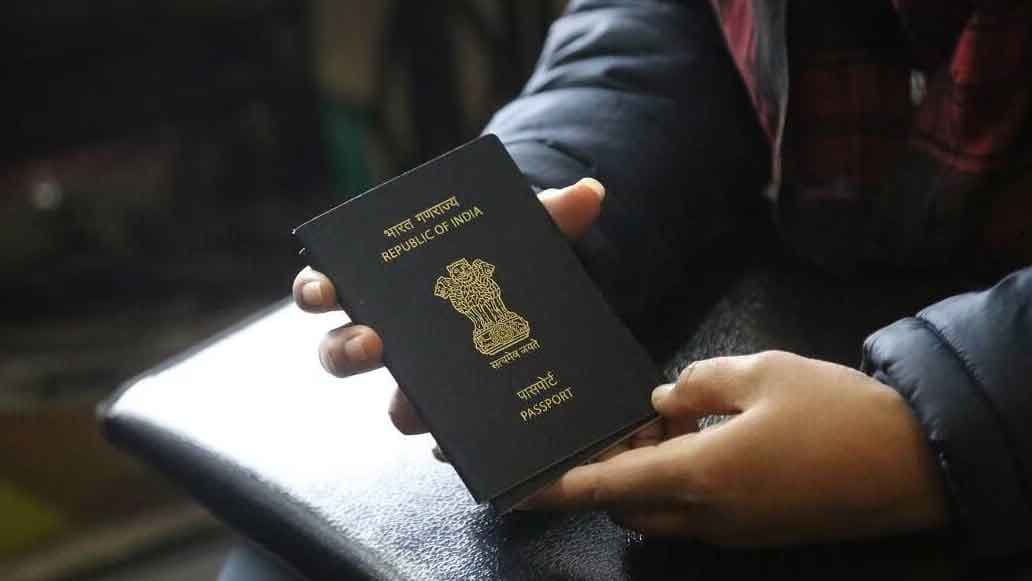
For most NRI households, renewing the Indian passport is among the most-repeated administrative tasks of diaspora life — once every ten years for adults, more frequently for minor children. The process is structured but has enough country-specific friction to catch first-time renewers off-guard. This guide walks through the 2026 workflow for the major NRI destinations (US, UK, Canada, Australia, UAE, Saudi Arabia), the full document checklist, the tatkal pathway when timing is tight, and the common rejection reasons that cause avoidable re-submission delays.
When to renew
- Validity-based: Indian passports for adults issue with 10-year validity; renewal recommended at least 6-9 months before expiry. Many destination-country immigration authorities require at least 6 months of remaining validity for travel — letting the passport run too close to expiry creates travel-restriction risk.
- Pages-based: running out of visa-and-stamp pages triggers renewal need before the 10-year mark.
- Damage: water damage, torn pages, or other physical damage requires immediate renewal.
- Address / name change: any change requiring a new passport (marriage, legal name change) triggers re-issue.
- Minors: children's passports issue with 5-year validity (or until age 18, whichever is earlier). Frequent re-issue is the norm.
- OCI re-issue triggers: per the OCI card framework, child OCI re-issue is required at each passport renewal up to age 20. Plan the OCI re-issue concurrently with passport renewal to avoid double processing rounds.
How the application workflow operates
The Indian government has outsourced most NRI passport application processing to VFS Global, which operates application centres in the major NRI destinations. The end-to-end workflow:
- Online application via passportindia.gov.in (or the country-specific VFS portal where applicable) — fill the Form Annexure / passport application form, upload supporting documents, schedule appointment.
- Fee payment — online or at VFS centre depending on country workflow.
- VFS appointment — visit the local VFS application centre for biometric capture, document verification, original-passport submission.
- Background processing at the Indian mission with police verification where applicable.
- Collection — typically by registered mail to applicant's address, or in-person pickup at VFS depending on country.
Document checklist (standard)
- Original current passport with at least one blank page.
- Completed Annexure form (varies by country — Annexure A for tatkal, Annexure E for emergency, others as applicable).
- Two recent photographs (specific size and background per VFS requirements).
- Proof of current address in the country of residence — utility bill, lease, bank statement.
- Proof of current foreign citizenship / residence status — green card, visa stamp, residence permit.
- Marriage certificate for name-change after marriage.
- Children's documents for minor renewals: birth certificate, parents' passports + signed consent from both parents.
- Application fee per the current country fee schedule (varies by country and service tier).
Country-specific workflows
United States
- VFS operates application centres in major US cities (NYC, San Francisco, Chicago, Houston, Atlanta, Washington DC, Dallas, others).
- Fees: standard renewal USD 95-120 (adult), USD 70-90 (minor), plus VFS service charge.
- Standard processing: 4-8 weeks; tatkal: 1-3 weeks (substantial premium fee).
- Police verification: typically not required for renewal cases where no significant data changes; may apply on name change.
United Kingdom
- VFS application centres in London, Manchester, Birmingham, Edinburgh.
- Fees: standard renewal GBP 80-100 (adult), GBP 60-80 (minor) plus VFS service charge.
- Standard processing: 6-10 weeks; tatkal: 1-2 weeks where available.
- UK-specific: some categories of applicants may need to file in person at the Indian High Commission directly.
Canada
- VFS centres in Toronto, Vancouver, Montreal, Calgary, Ottawa.
- Fees: standard renewal CAD 110-140 (adult), CAD 85-110 (minor) plus VFS service charge.
- Standard processing: 5-9 weeks; tatkal where available.
Australia
- VFS centres in Sydney, Melbourne, Brisbane, Perth, Canberra.
- Fees: standard renewal AUD 140-180 (adult), AUD 100-130 (minor) plus VFS service charge.
- Standard processing: 5-9 weeks.
UAE
- VFS centres across UAE — Dubai, Abu Dhabi, Sharjah.
- Fees: standard renewal AED 300-400 (adult), plus VFS service charge.
- Standard processing: 3-6 weeks — among the faster NRI corridors.
- Common for UAE residents to use the Indian Embassy services directly for select transactions.
Saudi Arabia, Qatar, Kuwait, Bahrain, Oman
- Each country has VFS or Indian-mission application infrastructure.
- Fees and processing times vary by country; check current local schedule.
- Gulf-resident NRIs typically have among the most efficient passport-renewal corridors due to mature India-Gulf migration infrastructure.
Tatkal expedited pathway
For NRIs with urgent travel needs, the tatkal expedited pathway provides accelerated processing in exchange for a substantial premium fee. Important characteristics:
- Fee structure: typically 2-4x the standard fee, varies by country and current schedule.
- Documentation: additional self-declaration form attesting to urgent need; some countries require Annexure F or similar.
- Processing window: typically 5-10 business days from VFS submission to collection, though variable by country and case complexity.
- Police verification implications: in tatkal cases, police verification often happens AFTER passport issuance rather than before — the passport is issued first, verification follows. Discrepancies discovered in subsequent verification can require additional documentation.
- Eligibility: not all renewal categories qualify for tatkal. Cases with significant data changes, criminal records, or other complications may not be eligible.
For minor children specifically
- Validity: minor passports issue with 5-year validity (or until age 18, whichever is earlier).
- Parent consent: both parents must sign the application; passport-revoking objections from either parent can affect issuance.
- Birth certificate: required for first-time minor passport AND for renewal where the application requires re-verification of parentage.
- OCI concurrence: per the OCI card framework, the child's OCI card must be re-issued at each passport renewal up to age 20. Many NRI families file passport renewal and OCI re-issue concurrently to avoid duplicated processing rounds.
- Custody complications: divorced or separated parents face additional documentation requirements; legal counsel may be needed.
Common reasons applications get returned
- Photograph specification mismatch. The strictest single requirement — VFS rejects photos that don't meet specific size, background, expression, and ear-visibility requirements.
- Incomplete address documentation. Sub-letting arrangements, recently-changed addresses, or addresses without standard utility-bill documentation get scrutinised.
- Name spelling inconsistencies across documents (passport vs marriage certificate vs visa stamp). The maiden-name / married-name transitions for women applicants are particularly friction-prone.
- Original passport damage or unclear stamps. Heavy travel use, water damage, or page-tearing can require additional verification.
- Children's documentation gaps. Birth certificates with insufficient translation, missing parent signatures, or expired prior documents.
- Visa-stamp issues. Some categories of applicants need to demonstrate continuous legal residence; gaps in visa-stamp history can trigger additional verification.
Timing and planning recommendations
- Start 9-12 months before expiry for the standard pathway — accounts for processing time + buffer for any re-submission needs.
- Coordinate with OCI re-issue for children in the same household — single round saves substantial time.
- Plan international travel around processing windows — the passport is held by VFS / Indian mission during processing; international travel during this period is not possible.
- Maintain digital copies of all documents in cloud storage as part of standard NRI document hygiene.
- Track changes in fees and procedures via passportindia.gov.in and the specific country VFS portal before each application — schedules change periodically.
Indian Embassy vs VFS — when to use which
For most renewal cases, VFS is the standard channel. The Indian Embassy / High Commission direct-application channel applies in:
- Emergency cases where travel is imminent and tatkal cannot complete in time.
- Specific document types requiring direct Embassy attention.
- UK-specific categories as noted above.
- Lost passport replacement in certain country contexts.
Check the relevant Indian mission's website before any specific transaction to confirm whether VFS or direct submission is the right channel.
Final thoughts
Indian passport renewal for NRIs is structurally workable in 2026 — the VFS infrastructure has matured significantly since 2015, and most renewals complete within predictable windows when applicants prepare documents carefully and start the process well before expiry. The most common cause of delay is photograph specification mismatches; the most common cause of escalating cost is starting too close to expiry and needing the tatkal premium.
For broader NRI document and immigration framework, NRI Globe's OCI card complete guide covers the lifelong-status framework that complements passport-side renewal, and the parent visa pathways guide covers the family-sponsorship dimension.
Informational only — passport fees, processing times, and country-specific procedures change. Verify current information at passportindia.gov.in and the relevant country's VFS portal before applying. Tatkal eligibility rules in particular change periodically.
Continue reading — NRI Globe pillar guide: UAE Golden Visa Complete Guide
Related NRI Globe Coverage
- India Passport Renewal for NRIs 2026 — Complete Guide (CGI, VFS, Application, Timeline)
- Renewing the Indian Passport Abroad: The 2026 VFS Walkthrough
- NRI Passport Renewal Guide: Step-by-Step Process, Documents, and Tips for 2025
- OCI Card Renewal + Reissue 2026 — Complete NRI Guide (MHA Rules, CGI Application, Timeline)
- US NRI Documents & Travel Hub 2026 — Passport, OCI, e-Arrival, PIO Conversion, Minor Kids
- NRI Indian Driving License and IDP 2026: Renewal, Exchange, and State-by-State Guide
- OCI Card 2026: Complete NRI Guide to Application, Renewal, Child Re-issue, Fees and Processing
- OCI Card 2026: Eligibility, Benefits, Application & Renewal Guide for NRIs
Fresh from NRI Globe
- YouTuber Nandu's World (Rama Nandana) UK Visa & Job Fraud Case: Full Details + Key Lessons for NRIs (2026)
- Dussehra / Vijayadashami 2026 Events Country-Wise — Global NRI Directory (Ram Lila, Ravana Dahan, Durga Puja Pandals, Ayudha Puja Venues + Booking)
- Diwali 2026 Events Country-Wise — Global NRI Directory (White House, Leicester, London Trafalgar, Toronto, Auckland, Sydney Parramasala, Fiji, Mauritius, Trinidad, South Africa and More)
- Diwali / Deepavali 2026 Country-Wise NRI Celebrations — Complete Global Guide (USA, UK, Canada, Australia, Fiji, Mauritius, Trinidad, South Africa, UAE and 30+ Countries)