
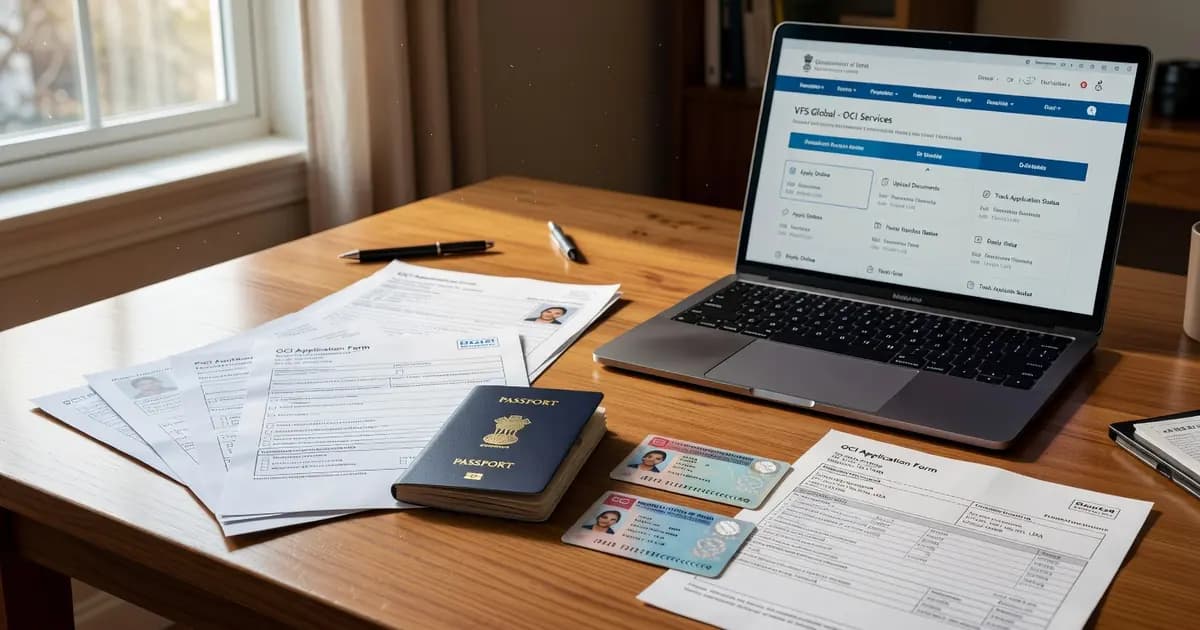
The Overseas Citizen of India (OCI) card is one of the most valuable documents for people of Indian origin living abroad. It offers lifelong, hassle-free access to India — but it is not dual citizenship, and it comes with specific rights and limitations. This 2026 guide explains eligibility, benefits, the application process and the renewal rules.
What Is an OCI Card?
An OCI card is a lifelong, multiple-entry visa to India for eligible foreign nationals of Indian origin and certain spouses. It is not citizenship — OCI holders remain foreign nationals and do not get an Indian passport or voting rights — but it removes most of the friction of visiting and living in India.
Who Is Eligible for OCI?
- A foreign national who was a citizen of India on or after 26 January 1950, or was eligible to become one on that date.
- A person whose parents, grandparents or great-grandparents were Indian citizens.
- The spouse of an Indian citizen or an existing OCI cardholder, where the marriage has been registered and subsisted for a qualifying period (typically two years).
- Minor children of eligible persons.
- Note: those who are or were citizens of certain countries (such as Pakistan and Bangladesh) are not eligible.
Key Benefits of an OCI Card
- A lifelong multiple-entry visa to visit India — no separate tourist or visa application each time.
- Exemption from registering with the FRRO/police, regardless of the length of stay.
- Parity with NRIs in most economic, financial and educational matters.
- The ability to open bank accounts, invest, and buy residential and commercial property (not agricultural or plantation land).
- The ability to pursue most professions and study in India.
Limitations: What OCI Holders Cannot Do
- Cannot vote or be a member of a legislative body.
- Cannot hold constitutional posts (President, Vice-President, Supreme/High Court judge, etc.).
- Cannot generally take up government jobs or contest elections.
- Cannot buy agricultural or plantation land.
- Need special permission for certain restricted/protected areas and for research, missionary or mountaineering activities.
OCI vs NRI vs PIO
| Status | Who they are | Citizenship |
|---|---|---|
| NRI | An Indian citizen residing abroad | Indian citizen |
| OCI | A foreign national of Indian origin holding an OCI card | Foreign citizen |
| PIO | Former scheme for persons of Indian origin | Merged into OCI in 2015 |
The PIO card scheme was merged into OCI in 2015, so today the OCI card is the single document for foreign nationals of Indian origin.
How to Apply for an OCI Card
- Apply online through the Government of India OCI services portal and upload the required documents.
- Typical documents: current passport, proof of Indian origin (e.g., an old Indian passport, a parent’s documents, or a birth/registration certificate), a recent photo and signature, and for spouse-based applications, the marriage certificate.
- Pay the prescribed fee, complete any biometric/verification step at the consulate, and track the application online.
- Processing times and fees vary by country and consulate — always check your local Indian mission.
OCI Re-issue and Renewal Rules
The OCI card itself is lifelong, but it has historically needed to be re-issued when a new passport is obtained up to the age of 20, and once after completing 50 years of age, so the photograph reflects facial changes. These rules have been clarified and relaxed at various times, so always confirm the current requirement with the Ministry of Home Affairs or your Indian consulate before travelling.
Frequently Asked Questions
Is OCI the same as dual citizenship?
No. OCI is a lifelong visa and a bundle of rights, but OCI holders remain foreign citizens and cannot vote or hold an Indian passport.
Can an OCI holder buy property in India?
Yes — residential and commercial property, but not agricultural or plantation land or farmhouses.
Do OCI holders need to register with the police in India?
No. OCI holders are exempt from FRRO/police registration regardless of how long they stay.
Disclaimer: This guide is for general information only and is not legal advice. OCI rules change; always verify current eligibility, fees and renewal requirements with official Government of India sources or your Indian consulate.
Related Reading on NRI Globe
- NRE vs NRO vs FCNR accounts — the complete guide for NRIs: /investment/nre-vs-nro-vs-fcnr-accounts-2026-complete-guide-for-nris/
- H-1B visa new guidelines 2026 — key changes for NRIs: /visa-passport-services-travel/h1b-visa-new-guidelines-2026-changes-nri-indian-professionals/
- More NRI visa, passport and immigration coverage: https://nriglobe.com/
Continue reading — NRI Globe pillar guide: H-1B Complete Guide for Indians 2026
Related NRI Globe Coverage
- OCI Card Renewal + Reissue 2026 — Complete NRI Guide (MHA Rules, CGI Application, Timeline)
- OCI Card 2026: Complete NRI Guide to Application, Renewal, Child Re-issue, Fees and Processing
- OCI Card in 2026: Eligibility, Renewal, Re-issue Rules & Common Mistakes
- Germany EU Blue Card + Opportunity Card for Indians 2026 — Complete Pillar
- OCI Card Application Complete Guide for NRIs 2026: Eligibility, Documents, Fees, Processing Timeline
- OCI Card Renewal 2026: USA NRI Step-by-Step Process Guide
- UAE Golden Visa 2026 for Indians — Complete Guide (Eligibility, Application, Investment)
- India Passport Renewal for NRIs 2026 — Complete Guide (CGI, VFS, Application, Timeline)
Fresh from NRI Globe
- YouTuber Nandu's World (Rama Nandana) UK Visa & Job Fraud Case: Full Details + Key Lessons for NRIs (2026)
- Dussehra / Vijayadashami 2026 Events Country-Wise — Global NRI Directory (Ram Lila, Ravana Dahan, Durga Puja Pandals, Ayudha Puja Venues + Booking)
- Diwali 2026 Events Country-Wise — Global NRI Directory (White House, Leicester, London Trafalgar, Toronto, Auckland, Sydney Parramasala, Fiji, Mauritius, Trinidad, South Africa and More)
- Diwali / Deepavali 2026 Country-Wise NRI Celebrations — Complete Global Guide (USA, UK, Canada, Australia, Fiji, Mauritius, Trinidad, South Africa, UAE and 30+ Countries)