
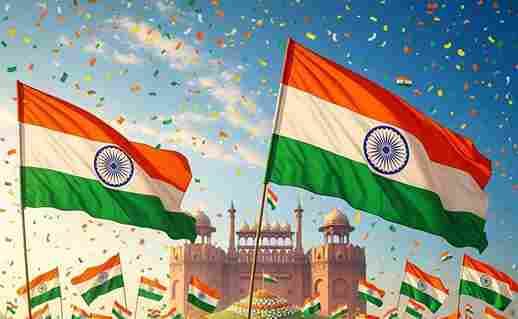
On 15 August 1947, India became an independent dominion as the Indian Independence Act 1947 came into force at midnight. In New Delhi, the Constituent Assembly held a special session where Jawaharlal Nehru delivered his "Tryst with Destiny" address, the tricolour was hoisted, and celebrations unfolded even as the trauma of Partition was already under way.
The legal moment: the Indian Independence Act 1947
The formal basis for the transfer of power was the Indian Independence Act 1947, passed by the British Parliament and given Royal Assent on 18 July 1947. The Act provided for the creation of two independent dominions, India and Pakistan, from 15 August 1947, ending British sovereignty over the territories of British India.
The plan that shaped this outcome had been announced on 3 June 1947 by the last Viceroy, Lord Mountbatten, and is commonly referred to as the 3 June Plan or the Mountbatten Plan. Under it, the provinces of Punjab and Bengal were to be divided, and the exact boundary lines were to be settled by boundary commissions. Historians note that the timetable was compressed: the date was set months, not years, in advance.
Under the Act, India remained a dominion within the Commonwealth for a transitional period, with the British monarch as head of state represented by a Governor-General. Lord Mountbatten stayed on as India's first Governor-General after independence. Full sovereign status as a republic followed later, when the Constitution of India came into force on 26 January 1950. For the fuller arc of events that led to this point, see our India freedom struggle timeline.
The midnight session of the Constituent Assembly
On the night of 14–15 August 1947, the Constituent Assembly of India met in a special session in the Constitution Hall (the Central Hall of what is now the old Parliament building) in New Delhi. The session was timed so that the transfer of power would coincide with the stroke of midnight.
The proceedings included the singing of "Vande Mataram," addresses by leading figures, and a solemn pledge taken by members. Dr Rajendra Prasad presided as President of the Constituent Assembly. It was during this session that Jawaharlal Nehru, who was to take office as India's first Prime Minister, rose to speak.
Nehru's "Tryst with Destiny" address
Nehru's speech is popularly known by its opening words. In it he said, as is widely recorded and attributed to him: "At the stroke of the midnight hour, when the world sleeps, India will awake to life and freedom." The address is frequently cited as one of the defining speeches of the twentieth century, and the phrase "tryst with destiny" has since become shorthand for the moment of independence itself.
The speech is quoted here sparingly and attributed to Jawaharlal Nehru; the full text is a matter of public record in the Constituent Assembly proceedings. Beyond the celebrated opening, the address also acknowledged the responsibilities and hardships ahead, striking a tone that was measured as well as hopeful.
The flag and the ceremonies of 15 August
The national flag adopted for independent India—the horizontal tricolour of saffron, white and green with the navy-blue Ashoka Chakra at the centre—had been approved by the Constituent Assembly on 22 July 1947. On 15 August 1947, flag ceremonies took place in New Delhi and across the country.
Public accounts describe enormous crowds gathering around India Gate and the surrounding areas of New Delhi. On the morning of 15 August, Jawaharlal Nehru hoisted the national flag at the Red Fort in Delhi, beginning a tradition that continues each year, when the Prime Minister of the day addresses the nation from the ramparts.
It is worth distinguishing the terms used for these ceremonies. On Independence Day, the flag is hoisted—pulled up from the bottom of the pole—whereas on Republic Day it is unfurled from a position already at the top. Our explainer on hoisting versus unfurling the flag sets out the distinction in detail. If you plan to display the tricolour, the Flag Code of India rules and the correct method to dispose of a national flag are useful references.
Key events and dates at a glance
| Date | Event |
|---|---|
| 3 June 1947 | Mountbatten Plan (3 June Plan) announced, outlining partition and the transfer of power |
| 18 July 1947 | Indian Independence Act 1947 receives Royal Assent |
| 22 July 1947 | Constituent Assembly adopts the national flag |
| 14–15 Aug 1947 (midnight) | Special midnight session; "Tryst with Destiny" address; transfer of power |
| 15 August 1947 | Flag hoisted at the Red Fort; India's first Independence Day |
| 26 January 1950 | Constitution comes into force; India becomes a republic |
Joy alongside the pain of Partition
The celebrations of 15 August 1947 unfolded at the same time as one of the largest and most difficult population movements in modern history. The partition of British India into India and Pakistan was accompanied by mass migration across the new borders in Punjab and Bengal, widespread displacement, and large-scale loss of life. Estimates of the numbers displaced and killed vary considerably among historians and are the subject of ongoing scholarly study; they should be treated as ranges rather than fixed figures.
Many first-hand accounts describe the atmosphere of the day as one of profound contrast: public rejoicing and hope for a new future in the capital and elsewhere, set against grief, uncertainty and violence in the border regions. Mahatma Gandhi, whose role in the freedom movement is widely recognised, did not join the festivities in Delhi; he was in Calcutta (now Kolkata), where he worked to calm communal tensions.
This account presents Partition as a documented historical event, without communal framing or editorial comment. The human dimensions of the period continue to be recorded through oral histories, archives and academic research. For a broader look at those who took part in the struggle for freedom, see our profiles of women freedom fighters of India.
A note on the Pakistan date
Pakistan observes its Independence Day on 14 August, while India observes 15 August. Both dominions came into being under the same Indian Independence Act 1947, with the transfer of power timed to midnight. The difference in the observed dates is a matter of how each country commemorates the event and does not reflect any dispute about the underlying legal timetable.
How the anniversary is counted: 80th or 79th?
A common point of confusion concerns how each anniversary is numbered. Counting the first Independence Day in 1947 as the first, 15 August 2026 is the 80th Independence Day, which marks 79 completed years since 1947. In other words, the "number" of the day and the "years completed" are not the same figure. It is inaccurate to describe 2026 as the "79th Independence Day" or to say India will complete "80 years of independence" on that date. We explain the arithmetic in full on our dedicated page: is it the 80th or 79th Independence Day in 2026?
What the day means today
Independence Day is a national holiday across India, marked by flag-hoisting ceremonies, the Prime Minister's address from the Red Fort, cultural programmes and events in schools, offices and community organisations. The observance has been carried forward by Indian communities abroad as well; our Independence Day 2026 NRI guide covers how the diaspora can participate.
Each year, official communications sometimes carry a specific theme; for 2025 the campaign was widely associated with the phrase "Naya Bharat." No official theme for 2026 is confirmed at the time of writing, and none should be assumed. For continuing coverage and planning, our Independence Day 2026 hub gathers the latest updates in one place.
Understanding what happened on 15 August 1947—the legal transfer of power, the midnight session, the words spoken, the flag raised, and the difficult reality of Partition—helps explain why the day is commemorated the way it is, and why the questions of counting and observance still generate interest nearly eight decades later.
Related reading
- Independence Day 2026: complete guide
- Is it the 80th or 79th Independence Day in 2026?
- India's freedom struggle timeline
- Flag Code of India: rules for displaying the tricolour
- Hoisting versus unfurling the flag
- Women freedom fighters of India
- Independence Day 2026: NRI guide
Related NRI Globe Coverage
- Women Accounted for 98% of US Job Gains in August 2026 — What It Means for the Economy & NRIs
- Erin Piacenti Times Square Stabbing — BofA VP Killed in Random Attack
- Why Is India's Independence Day on 15 August? The Reason Behind the Date
- India in 1947 vs India in 2026: 79 Years in Numbers
- Partition of India 1947: What Happened and Why
- What Happened in the US Today? Top Stories Explained for NRIs – January 22, 2026
- India to Suspend Postal Services to US from August 29 Amid Trump’s Tariff Moves
- NASA Busts Viral Eclipse Hoax: The Real Deal on August 2, 2027
Fresh from NRI Globe
- YouTuber Nandu's World (Rama Nandana) UK Visa & Job Fraud Case: Full Details + Key Lessons for NRIs (2026)
- Dussehra / Vijayadashami 2026 Events Country-Wise — Global NRI Directory (Ram Lila, Ravana Dahan, Durga Puja Pandals, Ayudha Puja Venues + Booking)
- Diwali 2026 Events Country-Wise — Global NRI Directory (White House, Leicester, London Trafalgar, Toronto, Auckland, Sydney Parramasala, Fiji, Mauritius, Trinidad, South Africa and More)
- Diwali / Deepavali 2026 Country-Wise NRI Celebrations — Complete Global Guide (USA, UK, Canada, Australia, Fiji, Mauritius, Trinidad, South Africa, UAE and 30+ Countries)