 Aditya Hridayam — The Battlefield Prayer That Empowers NRIs Today
Life as an NRI often feels like a battlefield. You leave home for better opportunities, face long work hours, cultural adjustments, family separation, health challenges in a new country, visa stresses, and the constant pressure to succeed while staying connected to your roots. Exhaustion sets in — not just physical, but mental and emotional.
Just like Lord Rama stood weary on the battlefield of Lanka, facing an seemingly invincible enemy, many NRIs today stand at moments of crisis: career setbacks, health concerns, family worries back home, or the quiet despair of feeling disconnected from inner strength.
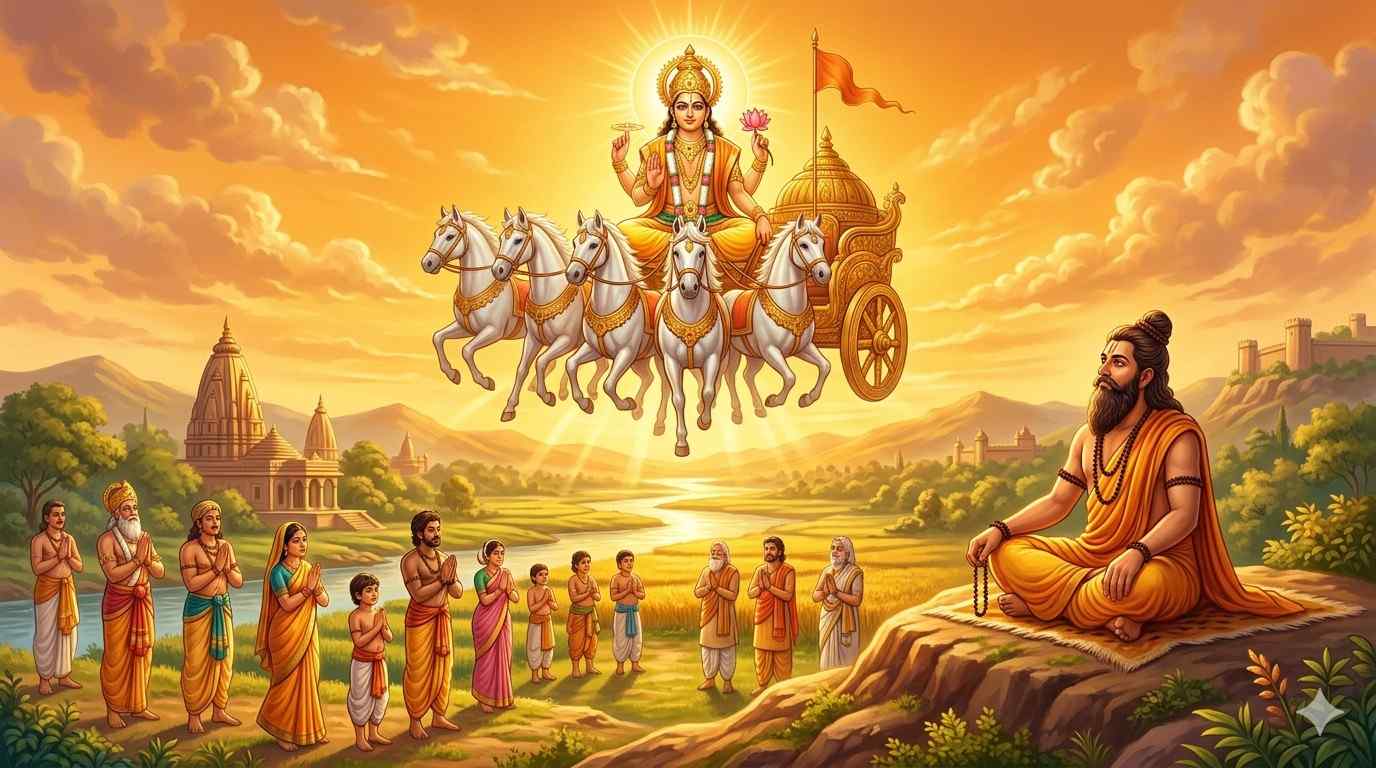
In that exact moment of Rama’s exhaustion, Sage Agastya appeared and gave him the Aditya Hridayam — the “Heart of the Sun.” This 31-verse hymn from the Valmiki Ramayana (Yuddha Kanda) is more than a prayer. It is a practical spiritual tool that connects you to the eternal solar energy — the same self-renewing, radiant force that rises every day without fail.
At HinduTone, we present this complete guide specially for the global Indian diaspora. Whether you are in the USA, UK, Canada, UAE, Australia, or anywhere abroad, the Aditya Hridayam offers renewed energy, mental clarity, protection, and victory over life’s challenges.
 Aditya Hridayam — Key Facts at a Glance
| Detail | Information |
|---|---|
| Full Name | Aditya Hridayam (आदित्यहृदयम्) — Heart of the Sun |
| Source | Valmiki Ramayana — Yuddha Kanda, Sargas 107–108 |
| Taught By | Maharishi Agastya Muni (one of the Saptarishis) |
| Taught To | Lord Rama on the battlefield of Lanka |
| Number of Verses | 31 shlokas |
| Primary Deity | Lord Surya (Aditya) — the Sun God |
| Type | Stotra (hymn) + Kavacham (protective armor) |
| Best Time to Chant | Sunrise (Brahma Muhurta) — ideal even in different time zones |
| Duration | 15–20 minutes for full recitation |
 The Battlefield Story — Relevance for NRIs
The Ramayana war had raged for months. Rama had crossed the ocean with the Vanara army, defeated Ravana’s mighty generals, but now faced Ravana himself — a demon-king whose heads and chariots regenerated endlessly. Rama, the divine warrior of the Suryavansha (Solar Dynasty), felt his strength failing for the first time.
He stood absorbed in deep thought, gazing at the Sun. At that precise moment, Agastya Muni appeared and said:
“O Rama of mighty arms, listen to this eternal secret by which you shall conquer all enemies in battle.”
Agastya taught the Aditya Hridayam. Rama chanted it three times, felt his grief dissolve, regained supreme joy and energy, and went on to victory.
For NRIs, this story resonates deeply. Your “Ravana” may be workplace stress, immigration hurdles, health issues in a foreign land, financial pressures, or emotional loneliness. The Aditya Hridayam is your battlefield tool — it reconnects you to your inner solar power, the same heritage Rama drew from as a descendant of the Sun Dynasty.
 The Complete Aditya Hridayam — All 31 Verses
Invocation Verses (1–2)
Verse 1: ततो युद्धपरिश्रान्तं समरे चिन्तया स्थितम्। रावणं चाग्रतो दृष्ट्वा युद्धाय समुपस्थितम् ॥१॥
Transliteration: Tato yuddha-parishrantam samare chintaya sthitam Ravanam chagrato drishtva yuddhaya samupasthitam
English Meaning: Then, seeing Rama exhausted from battle and standing absorbed in deep thought on the battlefield, with Ravana ready for combat before him —
Verse 2: दैवतैश्च समागम्य द्रष्टुमभ्यागतो रणम्। उपागम्याब्रवीद्रामम् अगस्त्यो भगवानृषिः ॥२॥
Transliteration: Daivataischa samagamya drashtum abhyagato ranam Upagamyabravid Ramam Agastyo Bhagavan Rishih
English Meaning: The divine sage Agastya, who had come with the gods to witness the war, approached Rama and spoke these words.
The Teaching Begins (Verses 3–5)
Verse 3: राम राम महाबाहो श्रृणु गुह्यं सनातनम्। येन सर्वानरीन् वत्स समरे विजयिष्यसि ॥३॥
Transliteration & Meaning: O Rama, O mighty-armed one, listen to this eternal secret by which you shall conquer all your enemies in battle.
Verse 4: आदित्यहृदयं पुण्यं सर्वशत्रुविनाशनम्। जयावहं जपेन्नित्यम् अक्षय्यं परमं शिवम् ॥४॥
Meaning: This holy Aditya Hridayam destroys all enemies, brings victory, and is supremely auspicious. Chant it daily — it is inexhaustible in merit.
Verse 5: सर्वमङ्गलमाङ्गल्यं सर्वपापप्रणाशनम्। चिन्ताशोकप्रशमनम् आयुर्वर्धनमुत्तमम् ॥५॥
Meaning: It is the most auspicious of all auspicious things, destroyer of all sins, dispeller of anxiety and grief, and the best enhancer of longevity.
Glorification of Surya — The Many Names & Forms (Verses 6–13)
(The hymn glorifies Surya with over 100 names and attributes across verses 6–20, describing him as the soul of all gods, creator, sustainer, transformer, and visible form of Brahman. Key highlights include: Rashmimat (rayed one), Bhaskara (light-maker), Divakara (day-maker), destroyer of darkness, lord of stars and planets, and the twelve-formed one — Dvadashatma.)
Cosmic Powers & Theology (Verses 14–24)
Surya is presented as the universal sustainer who destroys and recreates, nourishes and scorches, and remains awake even when all beings sleep. He is the Vedas, the rituals, and their fruits.
Direct Instruction to Rama (Verses 25–27)
Verse 25: Whoever glorifies this Sun in times of danger, difficulty, or fear never perishes.
Verse 26: Worship this Lord of the universe with single-pointed focus. Chant this three times and you shall be victorious in battle.
Verse 27: “At this very moment, O mighty-armed one, you shall slay Ravana.” Having spoken thus, Agastya departed.
Rama’s Transformation & Victory (Verses 28–31)
Rama’s grief vanished instantly. Filled with joy, he purified himself, took up his bow, and advanced with renewed determination. The Sun God himself urged haste as victory became imminent.
 The 108 Names of Surya in Aditya Hridayam (The hymn lists dozens of powerful names such as Aditya, Surya, Bhaskara, Divakara, Martanda, Timironmathana (destroyer of darkness), and many more — each revealing a cosmic function of solar energy.)
 Hidden Theology — Why This Matters for NRIs The hymn teaches that Surya embodies all gods and cosmic functions. For NRIs living far from traditional support systems, this means one practice connects you to the single divine source behind health, success, protection, and inner peace. The Sun rises every day regardless of time zone — a perfect reminder of resilience for those building lives abroad.
 How to Chant Aditya Hridayam — Practical Guide for NRIs
- Best Time: Sunrise in your local time zone (even if early). If impossible due to work shifts, chant during any quiet morning moment facing east or a Surya image.
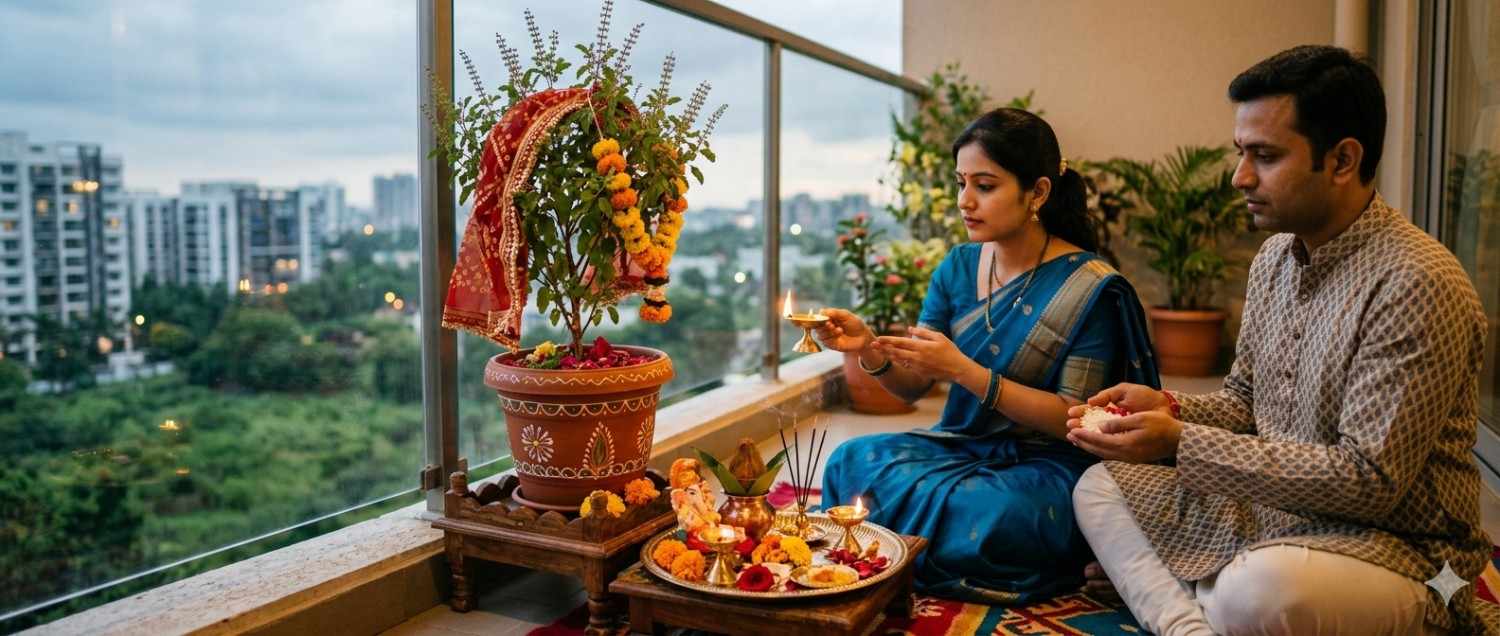
- Preparation: Simple Achamana (sip water three times), deep breaths, and a short visualization of golden sunlight entering your body.
- Method: Recite the 31 verses once or three times (as instructed for victory). Use transliteration if Sanskrit pronunciation is challenging.
- Tools: Rudraksha or copper mala; listen to authentic recordings while commuting or during breaks.
- After Chanting: Sit in silence for 5–10 minutes. This absorption phase brings the deepest benefits.
Many NRIs chant during morning walks, before starting work, or on weekends to maintain cultural and spiritual connection.
 Extraordinary Benefits of Aditya Hridayam — Especially for NRIs
- Mental & Emotional Strength: Dispels anxiety, grief, and stress — common among NRIs due to separation from family and high-pressure careers. Rama’s grief vanished instantly; regular practice brings the same relief.
- Physical Vitality & Health: Enhances immunity, longevity, and energy. Ideal for fighting fatigue, improving eyesight, and recovering from illness in foreign climates.
- Success & Victory: Helps overcome “enemies” like career obstacles, competition, legal/visa issues, or financial challenges. Chant three times before important meetings, exams, or decisions.
- Protection: Acts as a kavacham (armor) during travel, health scares, or uncertain times abroad.
- Inner Confidence & Clarity: Reconnects you to your Suryavansha heritage — reminding you that your true nature is radiant and unstoppable, no matter how dark the situation feels.
- Prosperity & Harmony: Attracts positive energy, supports family well-being back home, and balances professional success with spiritual rootedness.
Thousands of devotees across generations have experienced these benefits. For NRIs, it additionally preserves cultural identity and provides daily spiritual anchoring in a fast-paced world.
 Aditya Hridayam and the Suryavansha Heritage Rama belonged to the Solar Dynasty, whose dharma mirrored the Sun — steady, illuminating, and reliable. As Indians abroad, you carry this same heritage. The hymn reminds you: reconnect to your inner light, and no external challenge can dim it.
 When to Chant — NRI-Friendly Occasions
- Daily at local sunrise for steady energy.
- Sundays (Ravi-vara) for amplified power.
- Before job interviews, promotions, or tough projects.
- During health issues or medical procedures.
- On festivals like Ratha Saptami or Makar Sankranti (adjust for your time zone).
- During moments of homesickness or stress.
 Final Words for the Global Indian Community
The Aditya Hridayam is Agastya’s timeless gift — not just to Rama, but to every seeker facing their own Lanka. For NRIs, it is a bridge between your ambitious life abroad and your eternal spiritual roots. Chant with sincerity, absorb the solar energy, and move forward with the same invincible spirit that helped Rama triumph.
The Sun always rises. So will you.
ॐ आदित्याय नमः ॥ ॐ भास्कराय नमः ॥ ॐ सूर्याय नमः ॥
Jai Surya Deva | Jai Shri Rama | Om Adityaya Namah
Frequently Asked Questions (NRI Perspective)
Q1. Can busy NRIs with odd work hours chant Aditya Hridayam? A: Yes. Chant at your local sunrise or any quiet morning slot. Even listening with devotion while preparing for the day brings benefits.
Q2. Is it suitable for women and all family members? A: Absolutely. The hymn has no restrictions and benefits the entire family, including children facing academic pressures abroad.
Q3. How does it help with stress of living abroad? A: It dispels anxiety and grief while boosting confidence and vitality — directly addressing common NRI challenges like isolation and high expectations.
Q4. Do I need perfect Sanskrit pronunciation? A: No. Sincere devotion matters most. Start with transliteration and gradually improve.
Q5. Can it be combined with other practices? A: Yes — pair it with Surya Namaskar or Gayatri Mantra for a complete morning routine.
© HinduTone — Supporting the Global Indian Diaspora with Authentic Hindu Wisdom