A Vedic Perspective for the Global Hindu Soul
For the global Hindu community, Sunday is more than just the beginning of a new week—it is a sacred opportunity to reconnect with ancient wisdom through the worship of Surya, the Sun God. Across continents, from New Jersey to New Delhi, from London to Los Angeles, NRIs uphold the timeless tradition of offering prayers to the sun. But what if we told you that this spiritual practice is not only religious—it’s rooted in science, biology, and cosmic alignment?
In this article, we explore how Vedic rituals and modern science intersect to elevate Sunday worship from a ritual to a powerful tool for health, clarity, and consciousness—a bridge between ancient Indian spirituality and global well-being.
Solar Cycles and Their Impact on Human Biology and Consciousness
The Sun’s cycles—sunrise, sunset, and seasonal shifts—have a direct impact on human physiology, no matter where you live in the world. Modern neuroscience explains that sunlight exposure synchronizes our circadian rhythm—the biological clock that controls our sleep-wake cycles, hormones, and mood.
- Sunlight activates the brain’s suprachiasmatic nucleus (SCN), which regulates melatonin (sleep hormone) and serotonin (mood-enhancing neurotransmitter).
- Morning sunlight, in particular, boosts serotonin production, increasing focus, reducing stress, and lifting mood.
This scientific explanation resonates deeply with Vedic practices like Surya Arghya (offering water to the rising sun) and Surya Namaskar (sun salutations). These rituals, performed during Sandhi Kaal (transition time of sunrise/sunset), align the human body and mind with nature’s rhythms, enhancing both mental clarity and spiritual elevation.
Surya in the Vedas: The Cosmic Source of Prana
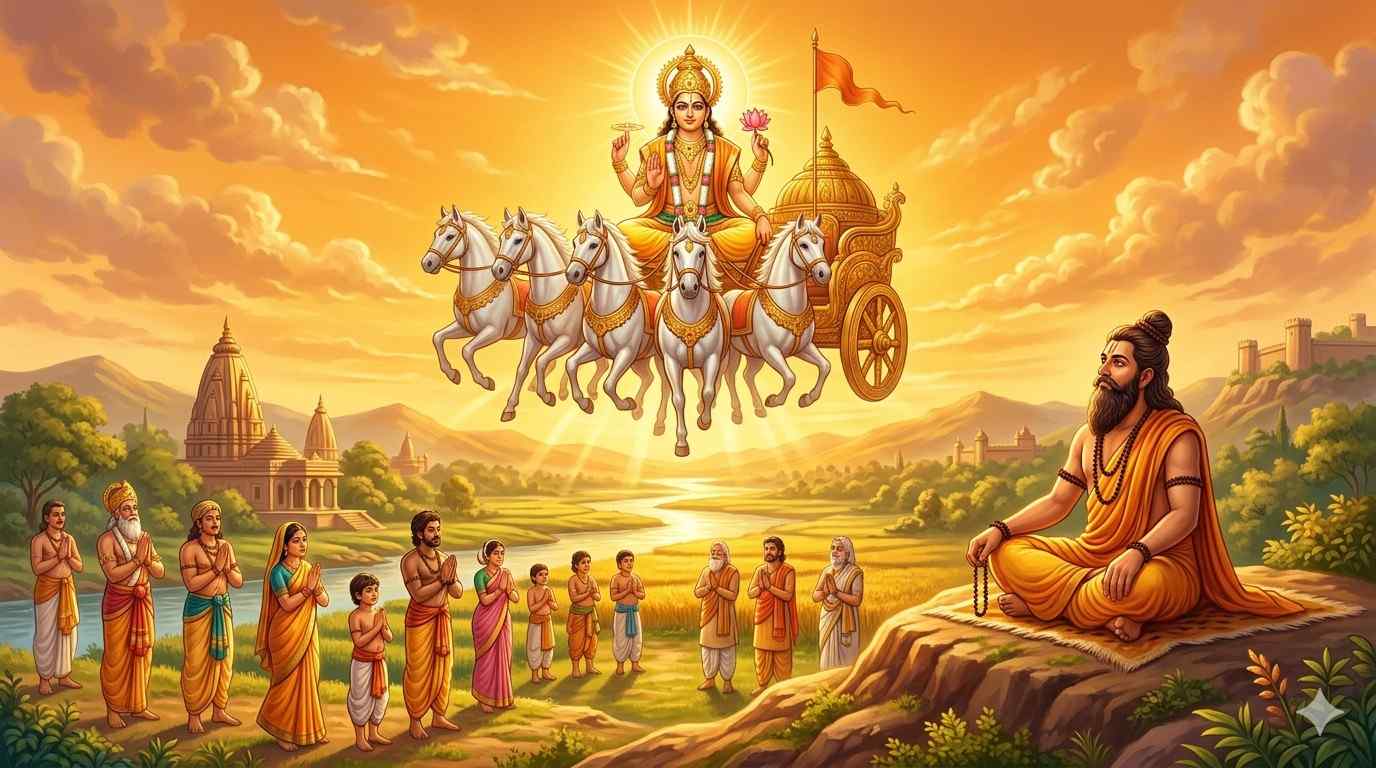
In Vedic cosmology, Surya is not merely a celestial body but the soul of the universe (Ātmā) and the ultimate source of Prana—the life force.
- The Rigveda hails Surya as the eye of the gods and the provider of sustenance.
- The Gayatri Mantra, chanted by millions daily, is dedicated to Savitṛ, a solar deity, seeking enlightenment through his divine radiance.
The energy of Surya is believed to flow through the body’s seven chakras, each aligning with one of the sun’s spectral colors. Practices like Surya Namaskar aren’t just yogic exercises—they are energetic alignments that awaken the chakras, balance pranic flow, and promote vitality.
For NRIs navigating high-stress, fast-paced lives abroad, reconnecting with these ancient rituals can ground the soul, calm the mind, and restore energetic balance.
Modern Science Supports Ancient Wisdom: Sunlight & Vitamin D
Sun worship isn’t just symbolic—it’s therapeutic. Here’s what science says:
- Sunlight, especially UVB rays, triggers the skin to produce Vitamin D, essential for:
- Bone density
- Immune system function
- Mood stabilization
- Cardiovascular health
A growing body of research links Vitamin D deficiency to depression, auto-immune conditions, and certain cancers—conditions more common among individuals living in northern latitudes, including many in the NRI community.
Sunlight also regulates melatonin, promoting restful sleep, and serotonin, elevating mood—factors that directly impact mental and emotional health.
Traditional Ayurvedic practices like Atapa Sevana (sunbathing) recommend 15-20 minutes of morning sunlight, echoing modern medical guidelines for optimal circadian health.
Why Red is the Sacred Color for Sunday
In Hinduism, each day of the week is associated with a deity and a corresponding color. Sunday is governed by Surya, and the color red is his divine hue.
- Red symbolizes strength, vitality, and transformation.
- The Atharvaveda describes red sun rays as therapeutic—effective for ailments like heart disease and skin conditions.
- Scientifically, red light at sunrise penetrates deeply into tissues, boosting cell regeneration and healing.
On Sundays, devotees often wear red, offer red flowers, or apply ashtagandha (sandalwood paste) with kumkum as a symbolic invocation of Surya’s energy. The Root Chakra (Muladhara), the seat of physical energy and security, is also associated with the color red—connecting the biological with the spiritual.
Sunday Worship: A Holistic Ritual for the Mind, Body, and Soul
Sunday worship is not just a cultural tradition—it’s a life-enhancing, consciousness-expanding experience.
Rituals for the NRI Devotee:
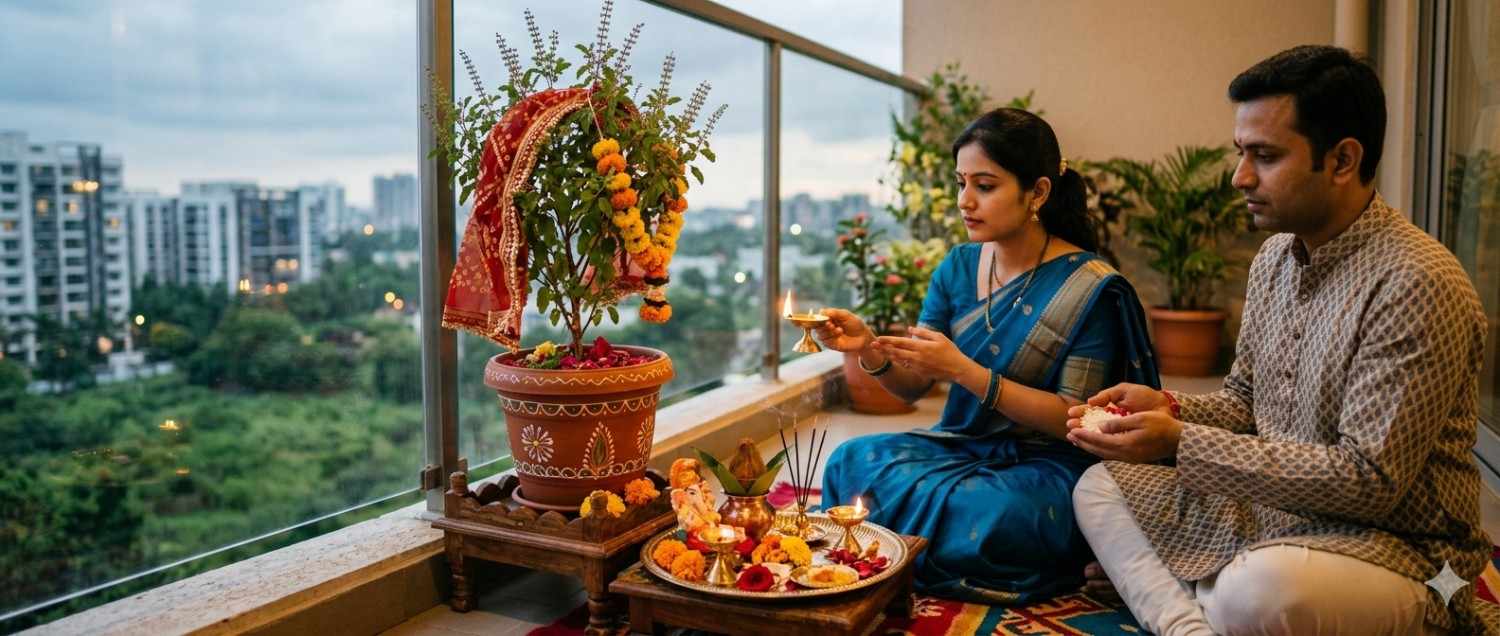
- Perform Surya Arghya at sunrise—even from your balcony or backyard.
- Practice Surya Namaskar while facing the sun to awaken your chakras.
- Wear red or offer red flowers to invoke Surya’s healing energy.
- Chant the Gayatri Mantra to purify the mind and elevate your thoughts.
- Sunbathe (Atapa Sevana) safely during morning hours for natural Vitamin D.
These practices don’t require elaborate temples—they can be performed in any part of the world, making them ideal for NRIs seeking spiritual roots while embracing modern living.
Conclusion: Illuminating Life with Vedic Science and Solar Wisdom
Sunday worship of Surya, the eternal source of light and life, beautifully blends ancient Vedic wisdom with contemporary science. Whether you’re in Silicon Valley, Sydney, or Singapore, honoring the sun through rituals like Surya Namaskar, Surya Arghya, and chanting mantras offers a path to holistic well-being.
As NRIs reconnect with their heritage, let Surya’s brilliance guide you toward a healthier body, a focused mind, and an awakened soul. Embrace the sacred red, feel the sunlight on your skin, and remember: the science of the sun is also the spiritual path to enlightenment.
Explore more insights on Hindu rituals, temple science, and cosmic consciousness at www.nriglobe.com – your spiritual guide for a global Hindu life.