
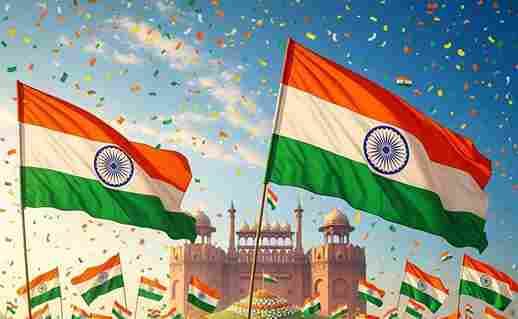
Every year around 15 August, millions of small paper and plastic national flags are distributed at events, schools, offices and street stalls. Within days, many end up on roadsides, in bins or in gutters. The core issue is single-use flag waste: how discarded flags are handled matters, because the Flag Code of India sets out that a national flag should never be treated as ordinary litter.
The scale of the single-use flag problem
There is no single official figure for how many small flags are made and handed out ahead of Independence Day. What is widely observed, and reported by civic groups and municipal bodies each August, is that the numbers run into the millions across the country. Hand-held flags on plastic or wooden sticks, paper flags, and adhesive stickers are produced in bulk for a demand that peaks sharply for one or two days and then falls away.
The visible result appears in the days after the celebrations. Volunteers and civic workers in many cities have documented flags lying on streets, near event venues and along parade routes. This is not framed here as a moral failing of any individual or group. It is a design-and-disposal problem: a large quantity of a symbolic object is produced for a very short window, and the systems to collect and dispose of it respectfully afterwards are often not in place.
Why plastic flags make it worse
Small plastic flags are inexpensive and durable, which is part of the difficulty. Unlike paper, plastic does not break down quickly. A plastic flag dropped on a street can persist in the environment for a long time and can enter drains and waterways. When a national symbol becomes long-lived litter, it raises both an environmental concern and a dignity concern at the same time.
For these reasons, many state governments and district administrations have, in recent years, issued advisories discouraging plastic flags and encouraging paper flags instead, or reusable cloth flags that are kept and stored rather than thrown away. The direction of these advisories is consistent: reduce single-use plastic, and treat the flag as something to be retained or respectfully disposed of, not discarded.
What the Flag Code says about damaged and discarded flags
The Flag Code of India governs the display and handling of the national flag, and it is explicit that the flag should not be allowed to touch the ground, be used as ordinary material, or be treated with disrespect. When a paper or plastic flag is dropped and left on the street, that is at odds with the spirit of these rules.
The Code also addresses what to do when a flag is damaged or soiled. A flag that can no longer be displayed should not simply be thrown into a general waste bin in public view. Instead, it should be disposed of privately and respectfully. This applies to small paper and plastic flags as much as to large cloth ones, even though the small flags are the ones most often forgotten.
Respectful disposal in practice
The guidance below reflects the disposal principles in the Flag Code and long-standing convention. For the full step-by-step method, see our detailed guide on how to dispose of the national flag.
- Do not discard flags in public bins or on the street. A national flag should not be left where it will be trampled or treated as litter.
- Dispose of damaged flags privately. Convention holds that a flag no longer fit for display should be disposed of in private, in a manner that preserves its dignity.
- Follow the recognised methods. The two traditionally accepted routes are complete burning in private, or burial as a whole, both done respectfully. The disposal guide explains each method and the differences between paper, plastic and cloth flags.
- Consider collection drives. In several cities, civic groups and schools run post-15-August drives that gather discarded flags for correct disposal. Handing flags to such a drive is a practical option for many people.
Paper vs plastic vs cloth: a practical comparison
Choosing which kind of flag to buy or hand out is one of the most direct ways to reduce the after-15-August waste problem. The table summarises the trade-offs.
| Flag type | Typical use | Environmental note | Disposal consideration |
|---|---|---|---|
| Cloth (reusable) | Kept and re-displayed year after year | Lowest single-use waste when reused | Store carefully; dispose respectfully only when damaged beyond use |
| Paper | Hand-held flags, stickers, decorations | Breaks down faster than plastic | Still requires respectful disposal, not general litter |
| Plastic | Cheap hand-held flags on sticks | Persists long in the environment; discouraged by many advisories | Should never be dropped as litter; dispose privately |
The consistent message from state advisories and civic campaigns is to move up this table where possible: prefer reusable cloth, then paper, and avoid single-use plastic.
What communities and NRIs can do
Reducing flag waste is a shared, constructive task rather than a matter for blame. A few practical steps make a measurable difference, whether you are organising an event in India or an Indian community abroad. NRI associations planning celebrations can find broader planning tips in our Independence Day 2026 NRI guide.
- Choose reusable flags for events. A cloth flag that is stored and reused each year removes the disposal problem entirely for that flag.
- Avoid distributing plastic flags. If hand-held flags are needed, paper is the more responsible single-use choice, in line with common advisories.
- Set up a collection point. Placing a clearly marked box at an event, so people can return flags instead of dropping them, makes respectful disposal easy.
- Teach the difference between display and disposal. Many people simply do not know the Flag Code disposal rules; a short note with any flag handout helps.
- Retain flags for next year. A flag that is kept, not thrown away, is both dignified and waste-free.
Hoisting, handling and the wider context
The disposal question sits inside a wider set of conventions for handling the flag with care. If you are organising a ceremony, it is worth understanding the difference between hoisting and unfurling the flag, since both are part of treating the flag correctly on the day. Respect at the ceremony and respect in disposal are two sides of the same principle.
15 August 2026 will be the 80th Independence Day, marking 79 completed years since 1947. As the milestone draws attention and larger celebrations, the volume of flags in circulation may be higher, which makes the case for planning disposal in advance stronger, not weaker. For the full picture of the day and its observances, see our Independence Day 2026 guide.
A constructive close
The flags thrown away after 15 August are a solvable problem. The solution is not more rules aimed at individuals, but better choices upstream: fewer single-use plastic flags, more reusable cloth ones, simple collection points, and wider awareness of the disposal method the Flag Code already sets out. Handled this way, the symbol of the day is treated with the dignity it is meant to carry, from hoisting to storage to respectful disposal.
Related reading
- Flag Code of India: rules for displaying the national flag
- How to dispose of the national flag respectfully
- Hoisting vs unfurling the flag: what is the difference?
- Is 2026 the 80th or 79th Independence Day?
- Independence Day 2026: full guide
- Independence Day 2026 NRI guide
Related NRI Globe Coverage
- Independence Day vs Republic Day: 12 Differences Explained
- Independence Day 2026 for NRIs: USA, UK, Canada, Australia, UAE, Europe and Singapore Guide
- Independence Day Speech for Kids: Simple Speeches for Ages 4 to 10
- Independence Day Fancy Dress Ideas for Kids
- Short Independence Day Speech: 1-Minute and 2-Minute Versions
- Why Is India's Independence Day on 15 August? The Reason Behind the Date
- Celebrating Independence Day 8,000 Miles From Home
- Independence Day 2026 Theme, Red Fort Ceremony and What to Expect
Fresh from NRI Globe
- YouTuber Nandu's World (Rama Nandana) UK Visa & Job Fraud Case: Full Details + Key Lessons for NRIs (2026)
- Dussehra / Vijayadashami 2026 Events Country-Wise — Global NRI Directory (Ram Lila, Ravana Dahan, Durga Puja Pandals, Ayudha Puja Venues + Booking)
- Diwali 2026 Events Country-Wise — Global NRI Directory (White House, Leicester, London Trafalgar, Toronto, Auckland, Sydney Parramasala, Fiji, Mauritius, Trinidad, South Africa and More)
- Diwali / Deepavali 2026 Country-Wise NRI Celebrations — Complete Global Guide (USA, UK, Canada, Australia, Fiji, Mauritius, Trinidad, South Africa, UAE and 30+ Countries)