
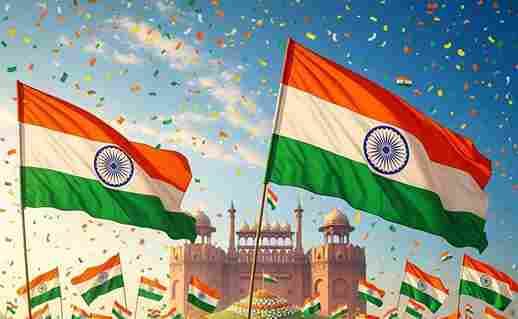
Looking for an Independence Day essay 2026 in English? This guide gives you five complete, original essays of roughly 150, 250, 400, 700 and 1000 words. Each one is ready to copy, states the correct figures, and can be adapted for school, college or an office event on 15 August 2026.
| Quick Facts | Detail |
|---|---|
| Date | Saturday, 15 August 2026 |
| Milestone | 80th Independence Day of India |
| Years completed | 79 completed years of freedom |
| Independence year | 1947 |
| Essays included | 150, 250, 400, 700 and 1000 words |
| Language | English (original text) |
The number you must get right in every essay
Before you copy any essay, fix the figures in your mind. On 15 August 2026, India celebrates its 80th Independence Day. Because the country became free on 15 August 1947, the day marks 79 completed years of freedom. Both statements are true at the same time and there is no contradiction between them.
The confusion happens because people count the number of celebrations, not the number of years passed. The first Independence Day in 1947 was the 1st celebration; 2026 is therefore the 80th. But only 79 full years have elapsed since 1947. So the correct wording is "80th Independence Day" and "79 years of freedom" — never "79th Independence Day" and never "80 years of independence." If you want the full arithmetic, read our detailed explainer on the 80th vs 79th Independence Day question.
- Correct: "We celebrate our 80th Independence Day."
- Correct: "Seventy-nine years ago, India won its freedom."
- Wrong: "This is our 79th Independence Day."
- Wrong: "We complete 80 years of independence."
Every essay below uses this phrasing so you can deliver it with confidence. For a broader overview of the day, see our main Independence Day 2026 guide.
Essay 1 — Independence Day Essay (about 150 words)
Independence Day 2026: A Short Essay (150 words)
Independence Day is one of the most important national festivals of India. It is celebrated every year on 15 August. On this day in 1947, India became free after long years of struggle under colonial rule. In 2026, we celebrate our 80th Independence Day, marking 79 completed years of freedom.
On this day, the national flag is hoisted at schools, offices and public places. People sing the national anthem, watch cultural programmes and remember the countless people who worked and sacrificed for our freedom. The main celebration takes place at the Red Fort in Delhi, where the flag is raised and a message is shared with the nation.
Independence Day reminds us that freedom is precious and must be protected. As young citizens, we can honour it by studying well, respecting others and serving our country with honesty. That is the true meaning of freedom. (Word count: about 150 words.)
Essay 2 — Independence Day Essay (about 250 words)
The Meaning of Freedom: Independence Day 2026 (250 words)
India celebrates Independence Day on 15 August every year. It marks the day in 1947 when the country became free after a long and difficult struggle. In 2026, the nation observes its 80th Independence Day, which means 79 years have passed since freedom was won. It is a day of pride, memory and gratitude.
The freedom movement was carried forward by people from every region, religion and background. Some followed the path of non-violence, others chose different methods, but all of them shared one goal — a free country. Their courage and sacrifice made the life we enjoy today possible. Independence Day is our chance to thank them.
On this day, the national flag is unfurled across the country. The Prime Minister hoists the flag at the Red Fort and addresses the nation, while schools and colleges hold their own ceremonies. Students take part in speeches, songs, marches and cultural events. Sweets are shared and the tricolour is seen everywhere.
Independence, however, is not only about remembering the past. It is also a responsibility. Freedom means the right to think, speak and grow, but it also asks us to be honest citizens who respect the law and care for others. A free country stays strong only when its people stay united.
This Independence Day, let us promise to keep learning, keep helping and keep our nation strong. That is the best tribute we can offer. (Word count: about 250 words.)
Essay 3 — Independence Day Essay (about 400 words)
Independence Day 2026: Remembering, Celebrating, Building (400 words)
Independence Day is a national festival that unites the whole of India. Observed on 15 August each year, it recalls the moment in 1947 when the nation stepped out of colonial rule and became a free country. In 2026, India marks its 80th Independence Day, completing 79 years of freedom. It is a day that blends celebration with reflection.
The road to freedom was long. For many decades, people across the country worked, protested and sacrificed to end foreign rule. Farmers, students, workers, writers and leaders all played their part. Some are remembered by name; countless others are unnamed but no less important. Independence Day is a chance to honour every one of them and to understand the value of what they achieved.
Celebrations begin early in the morning. The national flag is hoisted, the anthem is sung, and the air fills with a sense of shared pride. In Delhi, the flag is raised at the Red Fort and a message is delivered to the nation. Across the country, schools and colleges hold assemblies where students give speeches, sing patriotic songs and perform plays and dances. Offices and housing societies organise their own small ceremonies, and sweets are distributed to mark the occasion.
The tricolour itself carries meaning. Saffron stands for courage and sacrifice, white for truth and peace, green for growth and prosperity, and the blue Ashoka Chakra at the centre for the eternal wheel of law and progress. When we salute the flag, we salute these ideals.
Yet Independence Day is not only about the past. It asks us to think about the country we are building today. Freedom gives every citizen rights, but it also brings duties — to stay honest, to respect others, to protect the environment and to help those in need. A nation grows strong when its people take these duties seriously.
For students, the lesson is clear. We may not fight for freedom the way earlier generations did, but we can serve the nation in our own way: by studying sincerely, by treating everyone with respect, and by using our talents for the common good. Small acts of honesty and kindness build a great country.
This 80th Independence Day, let us celebrate with joy, remember with gratitude and act with responsibility. That is how we keep the spirit of freedom alive. (Word count: about 400 words.)
Essay 4 — Independence Day Essay (about 700 words)
Freedom and Responsibility: An Independence Day Essay for 2026 (700 words)
Every nation has days that define its identity, and for India, 15 August stands above the rest. It is the day the country became independent in 1947 after a long freedom struggle. In 2026, India celebrates its 80th Independence Day, marking 79 completed years of freedom. This essay looks at what the day means, how it is celebrated, and why it still matters to every citizen, young or old.
The long journey to freedom
The struggle for independence did not belong to any single person or place. It grew over many years and drew strength from people in every corner of the country. There were leaders who inspired millions, but there were also ordinary men and women — teachers, farmers, students and workers — who carried the movement forward through daily courage. Different people believed in different methods, from peaceful protest to other forms of resistance, but they were bound by a common dream of a free India. When we remember Independence Day, we remember all of them together.
Freedom also arrived with pain. The birth of independent India was accompanied by Partition, which caused great hardship and loss for millions of families. We remember that chapter with dignity and compassion, and we draw from it a lasting lesson about the value of peace and unity. Independence Day, therefore, is a day of joy tempered by remembrance.
How Independence Day is celebrated
Independence Day celebrations reach every part of the country. The national flag is hoisted in schools, colleges, offices, and public spaces. In New Delhi, the flag is unfurled at the Red Fort, followed by the national anthem and an address to the nation. Cultural programmes, parades and patriotic songs fill the day with energy and colour.
In schools, students prepare for weeks. They rehearse speeches, learn songs, and design charts and posters. The morning assembly becomes a stage where young voices speak about courage, unity and hope. Prizes are given, sweets are shared, and the tricolour flutters from rooftops and hands alike. For many children, it is the first time they truly feel connected to something larger than themselves — their nation.
The meaning behind the tricolour
Our national flag is more than cloth and colour. The saffron band reminds us of courage and sacrifice. The white band stands for truth and peace. The green band represents growth and prosperity. At the centre, the navy-blue Ashoka Chakra with its twenty-four spokes symbolises the wheel of law, motion and continuous progress. When the flag is raised, these values rise with it. The Flag Code of India lays down how the tricolour must be displayed with respect, and every citizen should know these rules before hoisting it.
Freedom as a responsibility
It is easy to think of freedom only as a gift handed down by earlier generations. In truth, freedom is a responsibility passed on to us. A free country stays strong only when its citizens are honest, fair and united. Every time we tell the truth, help a stranger, follow the law, or protect our surroundings, we strengthen the freedom we inherited.
For students, this responsibility takes a simple shape. We serve the nation by learning sincerely, by respecting people of every background, and by using our skills to solve real problems. The freedom fighters gave their time and effort so that we could dream freely; the least we can do is use that freedom wisely.
Conclusion
Independence Day 2026 is not just the 80th flag-hoisting or a holiday on the calendar. It is a reminder of how far the country has travelled and how much still lies ahead. Seventy-nine years after freedom, India is a young and hopeful nation, and its future rests in the hands of its citizens. As we salute the tricolour this year, let us celebrate with pride, remember with gratitude, and commit ourselves to building a nation that honours the dreams of those who won our freedom. (Word count: about 700 words.)
Essay 5 — Independence Day Essay (about 1000 words)
Eighty Years of the Tricolour: A Complete Independence Day Essay for 2026 (1000 words)
Independence Day is the day on which a nation remembers how it became free, and India remembers this on 15 August every year. On this date in 1947, the country emerged from colonial rule to chart its own future. In 2026, India celebrates its 80th Independence Day, completing 79 years of freedom. This longer essay traces the meaning of the day, the story behind it, the way it is celebrated, and the responsibilities it places on every one of us.
Getting the milestone right
Many people are unsure whether 2026 marks the 79th or the 80th Independence Day. The answer is simple once we separate two ideas. The very first Independence Day, in 1947, was the first celebration. Counting each year since then, 2026 becomes the 80th celebration and therefore the 80th Independence Day. At the same time, only 79 full years have passed since 1947, so we correctly say "79 years of freedom." "80th Independence Day" and "79 completed years" describe the same milestone from two angles, and both are accurate.
The struggle that made freedom possible
India's freedom was not won in a single day or by a single hero. It was the result of decades of effort by people of every region, religion, language and class. Some believed in peaceful, non-violent protest; others chose different paths. Historians describe a movement rich in variety, and it is fairest to view it as a wide range of efforts rather than one single story. What united these efforts was a shared belief that Indians should govern themselves.
The freedom struggle also included great sacrifice. Many people spent years away from their families, lost their livelihoods, or gave their lives so that future generations could live freely. When we celebrate Independence Day, we honour both the famous names and the countless unnamed people who made freedom possible.
Freedom came with sorrow as well. The Partition that accompanied independence uprooted millions and caused deep suffering. We recall that period with dignity and empathy, without blame or division, and we carry from it a firm respect for peace, tolerance and unity. This balance of joy and remembrance gives Independence Day its depth.
How the nation celebrates
On the morning of 15 August, the national flag is hoisted across the country — in schools, colleges, government buildings, housing societies and public squares. In New Delhi, the flag is unfurled at the historic Red Fort, followed by the national anthem and an address to the nation. Parades, cultural performances and patriotic songs give the day its energy.
Schools and colleges are at the heart of these celebrations. Students spend weeks preparing speeches, songs, dances and skits. On the day itself, the assembly ground becomes a stage for young voices to speak about courage, unity and hope. Charts and posters line the walls, prizes are awarded, and sweets are distributed. For many children, Independence Day is their first strong experience of belonging to a nation. Beyond India's borders, Indian communities around the world also gather to raise the flag and celebrate their heritage.
The tricolour and what it stands for
The national flag is the emotional centre of the day. Its three horizontal bands each carry meaning. Saffron at the top represents courage and sacrifice. White in the middle stands for truth and peace. Green at the bottom signifies growth, fertility and prosperity. At the centre of the white band lies the navy-blue Ashoka Chakra with its twenty-four spokes, symbolising the eternal wheel of law and the idea that a nation must keep moving forward. Because the flag holds such meaning, it must be treated with care. The Flag Code of India sets out how the tricolour should be hoisted, displayed and stored respectfully, and every citizen should learn these rules before raising it.
Freedom as a living responsibility
It is tempting to treat Independence Day as only a celebration of the past. But freedom is not just something we inherit; it is something we must protect and renew. A free country stays strong only when its citizens act with honesty, fairness and unity. Democracy depends on people who vote thoughtfully, follow the law, respect differences and speak the truth.
For students, this responsibility has a clear and achievable form. We serve the nation by studying sincerely and using our knowledge well. We serve it by treating people of every background with respect and kindness. We serve it by protecting our environment, avoiding waste, and helping those who are less fortunate. Freedom fighters gave their comfort and safety so that we could live with dignity; honouring them means using our own freedom responsibly.
Looking ahead
Seventy-nine years after independence, India stands as a young, diverse and hopeful nation. It has made remarkable progress in many fields, and challenges still remain. The future of the country now rests in the hands of its people, especially its youth. Every generation adds a chapter to the national story, and the next chapter is ours to write.
Conclusion
Independence Day 2026 is far more than a holiday on the calendar. It is the 80th time the nation raises its flag in freedom, a moment to remember the sacrifices of the past and to renew our commitment to the future. As the tricolour rises this 15 August, let us celebrate with joy, remember with gratitude, and act with responsibility. If each of us keeps the promise of honesty, unity and service, the freedom won in 1947 will grow stronger with every passing year. That is the truest way to say thank you to those who gave us this free nation. (Word count: about 1000 words.)
How to choose and adapt these essays
Pick the length that matches your requirement, then personalise it. Add your school or city name, adjust an example, or mention a local event so the essay feels your own. If you need short points for a card or board, our 10 lines on Independence Day guide is a quick companion. Always double-check the figures against our 80th vs 79th explainer before you submit.
Related reading
- Independence Day 2026: complete guide
- 80th or 79th Independence Day 2026? The correct answer
- Flag Code of India: rules for hoisting the tricolour
- 10 lines on Independence Day
Related NRI Globe Coverage
- Independence Day vs Republic Day: 12 Differences Explained
- Independence Day 2026 for NRIs: USA, UK, Canada, Australia, UAE, Europe and Singapore Guide
- Independence Day Speech for Kids: Simple Speeches for Ages 4 to 10
- Independence Day Fancy Dress Ideas for Kids
- Short Independence Day Speech: 1-Minute and 2-Minute Versions
- Why Is India's Independence Day on 15 August? The Reason Behind the Date
- Celebrating Independence Day 8,000 Miles From Home
- Independence Day 2026 Theme, Red Fort Ceremony and What to Expect
Fresh from NRI Globe
- YouTuber Nandu's World (Rama Nandana) UK Visa & Job Fraud Case: Full Details + Key Lessons for NRIs (2026)
- Dussehra / Vijayadashami 2026 Events Country-Wise — Global NRI Directory (Ram Lila, Ravana Dahan, Durga Puja Pandals, Ayudha Puja Venues + Booking)
- Diwali 2026 Events Country-Wise — Global NRI Directory (White House, Leicester, London Trafalgar, Toronto, Auckland, Sydney Parramasala, Fiji, Mauritius, Trinidad, South Africa and More)
- Diwali / Deepavali 2026 Country-Wise NRI Celebrations — Complete Global Guide (USA, UK, Canada, Australia, Fiji, Mauritius, Trinidad, South Africa, UAE and 30+ Countries)