In 2026, the tech industry is undergoing a seismic shift driven by massive AI training clusters like xAI’s Colossus 2 — the world’s first gigawatt-scale AI supercomputer. These enormous facilities, consuming power equivalent to entire cities and housing hundreds of thousands of advanced GPUs, are accelerating the development of frontier AI models and fundamentally reshaping how technology companies operate, hire, and innovate.
For the global Indian community — including NRIs in the US on H-1B visas, Indian IT professionals, students, and entrepreneurs — this compute revolution brings both exciting opportunities and pressing challenges, especially as India’s $300 billion outsourcing industry adapts to AI-driven disruption.
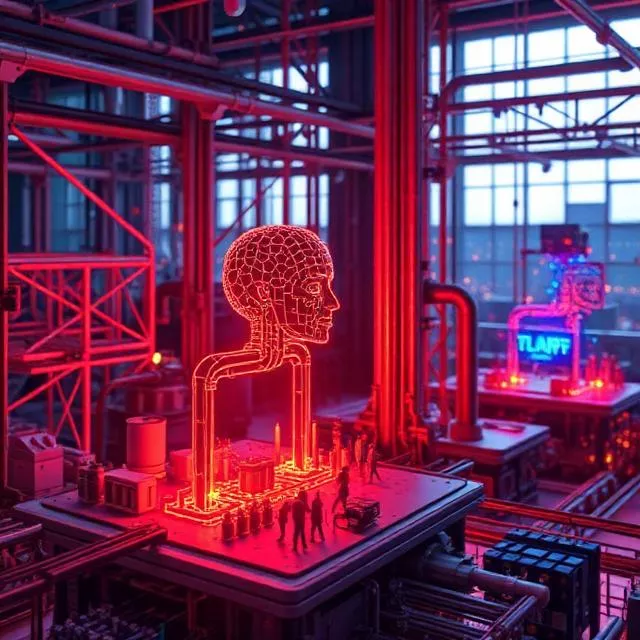
The Rise of Gigawatt-Scale AI Superclusters
xAI’s Colossus 2 in Memphis, Tennessee, stands as a landmark achievement. Operational at approximately 1 GW (with plans to scale to 1.5 GW and beyond), it features around 555,000 NVIDIA GPUs and supports simultaneous training of multiple massive models — including variants up to 10 trillion parameters and Imagine V2 for multimodal capabilities.
Built with unprecedented speed (Colossus 1 reached 200,000 GPUs in record time), these clusters mark the dawn of the “gigawatt era” of AI. Other players like Microsoft/OpenAI (Stargate project), Meta, and Google are also pouring billions into similar infrastructure, but xAI’s single-site density and rapid execution have set a new benchmark.
These superclusters enable:
- Faster training of larger, more capable AI models
- Parallel experimentation across different architectures
- Breakthroughs in reasoning, coding, multimodal understanding, and real-world applications
The result? AI is moving from experimental tools to core infrastructure that powers everything from chatbots and autonomous systems to enterprise automation.
Impact on the Global Tech Industry
Massive compute clusters are creating a “compute moat” — only organizations with access to gigawatt-scale power and hundreds of thousands of GPUs can compete at the frontier. This is shifting power dynamics:
- Hyperscalers and AI labs are vertically integrating (building their own data centers instead of relying solely on cloud providers)
- Energy, cooling, and power infrastructure have become critical bottlenecks
- Investment in AI infrastructure is skyrocketing, with hyperscalers’ combined capital expenditure approaching hundreds of billions annually
For traditional tech companies, the focus is moving from labor-intensive services to AI-powered solutions, automation, and high-value consulting.
Specific Implications for India’s Tech Sector and NRIs
India, home to one of the world’s largest tech talent pools and the global back office, is feeling the effects strongly:
- Transformation of the $300 Billion IT/Outsourcing Industry Traditional managed services, routine coding, testing, and maintenance work — the backbone of Indian IT giants like TCS, Infosys, and Wipro — face pressure from AI automation. Analysts warn of slower revenue growth in some segments and a shift toward higher-value AI integration, consulting, and specialized services. While short-term challenges exist, many experts see medium-to-long-term net positive effects through increased productivity and new demand for AI-enabled products.
- AI Hiring Surge in India Despite concerns, AI-related job openings in India are booming. Projections show a 32% growth in AI positions in 2026, reaching nearly 380,000 roles, with strong demand in Bengaluru, Hyderabad, and Tier-2 cities. Roles like AI Engineer, Prompt Engineer, Machine Learning Specialist, Data Scientist, and MLOps experts are in high demand. Global Capability Centers (GCCs) of multinational companies are also prioritizing AI skills, creating opportunities for both local and returning NRI talent.
- Upskilling and Reskilling Imperative A significant skills gap exists — India produces 1.5 million engineering graduates annually, but only a small percentage have advanced AI/ML expertise. Major IT firms are reducing bulk fresher hiring in favor of specialized talent, while government and industry initiatives (including the India AI Impact Summit 2026) emphasize reskilling. NRIs and Indian professionals who invest in AI, cloud, cybersecurity, and data engineering skills are better positioned for premium salaries (often 15–20% higher) and global opportunities.
- Opportunities for Indian Talent Abroad and at Home
- NRIs in the US: Faster AI development means more demand for skilled Indian engineers in frontier labs, research roles, and companies integrating advanced models. However, entry-level or routine coding positions may see reduced sponsorship as automation takes hold.
- Indian Startups and Innovation: India’s strength in multilingual data, local problem-solving, and cost-effective talent gives it an “unfair advantage” in building practical AI applications for sectors like healthcare, agriculture, education, and fintech.
- Entrepreneurship: With easier access to powerful AI tools (including future Grok upgrades), Indian founders can prototype and scale faster than ever.
- Broader Ecosystem Changes India is positioning itself through initiatives like tax incentives for data centers, partnerships with OpenAI, Google, and Anthropic, and focus on inclusive, multilingual AI. Events like the India AI Impact Summit highlight reskilling, data sovereignty, and using AI for social impact.
Challenges Ahead for the Indian Community
- Job Displacement Risks: Routine white-collar tasks could shrink, affecting mid-career professionals in traditional IT roles.
- Intense Competition: More applicants per role and AI-driven recruitment processes demand continuous learning.
- Infrastructure and Energy Needs: While India attracts hyperscalers, building domestic compute capacity remains a priority to reduce reliance on foreign clusters.
Strategies for NRIs and Indian Professionals in 2026
- Focus on High-Demand Skills: Prioritize AI/ML, generative AI, agentic systems, data strategy, and AI governance.
- Leverage Global Tools: Use advanced models from Grok, Claude, Gemini, and others to boost productivity and creativity.
- Consider Hybrid Careers: Combine domain expertise (e.g., healthcare, finance) with AI capabilities for differentiated roles.
- Explore Cap-Exempt or Alternative Pathways: For those eyeing the US, cap-exempt employers or roles in AI infrastructure could offer new routes.
- Stay Informed: Follow developments in compute scaling, as they directly influence job markets and visa demand.
The massive AI training clusters of 2026 are not just building smarter machines — they are redesigning the entire tech value chain. For the global Indian diaspora, this presents a pivotal moment: those who adapt quickly through upskilling and innovation will thrive in the AI-powered economy, whether in Silicon Valley, Bengaluru, Hyderabad, or remote setups.
At NRIGlobe.com, we are committed to keeping the NRI and Indian community updated on these transformative trends. The future of tech belongs to those who harness compute power effectively — and Indian talent is uniquely positioned to play a leading role.
What are your thoughts on AI’s impact on your career or industry? Have you started upskilling in AI? Share your experiences in the comments below.