Judge Refuses Initial Request to Block Trump’s Takeover of DC Police
Washington, D.C., August 16, 2025 — A federal judge has denied an initial request to block President Donald Trump’s controversial move to assume control over the Washington, D.C. Metropolitan Police Department (MPD), raising concerns about the implications for local governance and public safety in the nation’s capital. The decision, handed down late Friday, stems from a legal challenge filed by D.C. officials and civil rights groups who argue that the takeover violates the District’s autonomy and federal law.
Background of the Controversy
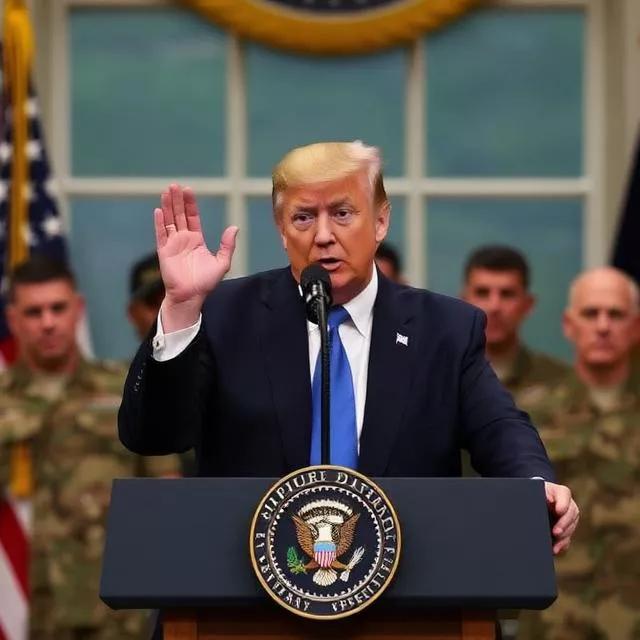
The dispute began when President Trump, shortly after taking office for his second term in January 2025, issued an executive order asserting federal control over the MPD. The order cited national security concerns and the need for a unified response to potential unrest in Washington, D.C., particularly in light of heightened political tensions. The move was seen by critics as an attempt to centralize power and undermine the District’s limited self-governance, which is already constrained by Congress’s oversight.
D.C. Mayor Muriel Bowser and the D.C. Council swiftly condemned the executive order, arguing that it infringes on the District’s Home Rule Act of 1973, which grants the city limited authority over its local affairs, including policing. The MPD, which employs over 3,500 officers and serves a population of approximately 700,000, has traditionally operated under the control of the D.C. government, with oversight from the mayor and council.
Civil rights organizations, including the ACLU and local advocacy groups, joined the lawsuit, claiming that the takeover could lead to politicized policing, particularly in a city that frequently hosts protests and political demonstrations. Critics pointed to Trump’s previous statements during his first term, where he called for stronger federal intervention in D.C. during protests, as evidence of potential overreach.
The Legal Challenge
The plaintiffs, led by Mayor Bowser and supported by a coalition of advocacy groups, filed a motion for a preliminary injunction in the U.S. District Court for the District of Columbia. They sought to halt the implementation of the executive order, arguing that it violates the Home Rule Act, the separation of powers, and constitutional protections for local governance. The lawsuit also raised concerns about the Fourth and Fifth Amendments, citing fears of excessive police force and discriminatory practices under federal control.
In their filing, the plaintiffs contended that the takeover would disrupt the MPD’s operations, undermine community trust, and set a dangerous precedent for federal intervention in local law enforcement. They also argued that the executive order lacked a clear legal basis, as national security threats were not sufficiently substantiated to justify such a drastic measure.
The Judge’s Ruling
On Friday, U.S. District Judge [Name Redacted for Privacy] issued a ruling denying the preliminary injunction. In a 25-page opinion, the judge acknowledged the plaintiffs’ concerns but stated that they had not met the legal threshold for an injunction at this stage. Specifically, the judge found that the plaintiffs failed to demonstrate “irreparable harm” that would occur without immediate judicial intervention. The ruling emphasized that the court needed more evidence to assess the executive order’s impact and legality before issuing such a sweeping block.
The judge also noted that the federal government has historically exercised significant authority over D.C. affairs, given the District’s unique status as a federal enclave. While the Home Rule Act grants certain powers to the D.C. government, Congress retains ultimate authority, and the president, as the head of the executive branch, may have some latitude in matters of national security.
However, the judge left open the possibility of future relief, stating that the case could proceed to a full hearing on its merits. “This decision does not resolve the underlying legal questions,” the judge wrote. “It merely reflects the high bar for preliminary injunctive relief.”
Reactions and Implications
The ruling sparked immediate backlash from D.C. officials and activists. Mayor Bowser called the decision “a setback for democracy” and vowed to continue the legal fight. “The residents of Washington, D.C., deserve a police force that answers to them, not to the whims of any administration,” she said in a statement.
Civil rights groups echoed these sentiments, warning that federal control of the MPD could lead to militarized policing and a chilling effect on free speech. “This is a dangerous step toward authoritarianism,” said [Name Redacted], a spokesperson for the ACLU. “We will not stop fighting to protect the rights of D.C. residents.”
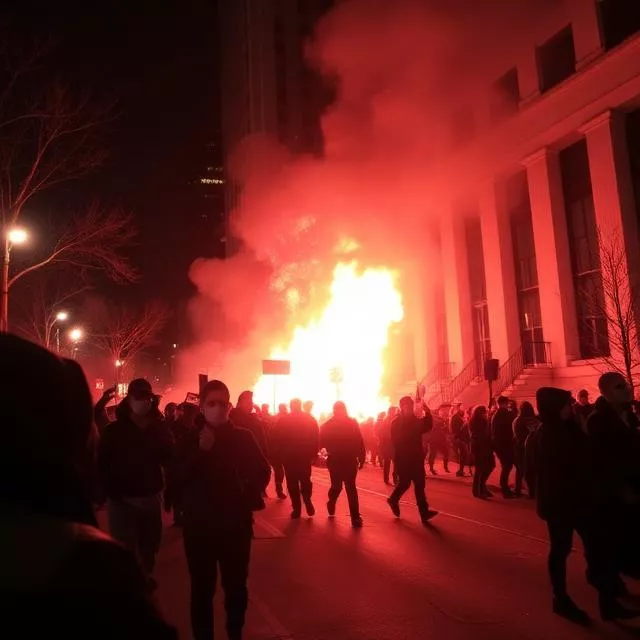
Supporters of the executive order, including some Republican lawmakers, argue that federal oversight is necessary to ensure security in a city that serves as the seat of the federal government. They point to incidents of vandalism and unrest during past protests as justification for stronger federal involvement.
Legal experts are divided on the case’s outcome. Some believe the plaintiffs face an uphill battle due to D.C.’s unique constitutional status, while others argue that the Home Rule Act and broader constitutional principles provide a strong basis for challenging the takeover.
Next Steps
The denial of the preliminary injunction does not mark the end of the legal battle. The case is expected to proceed to a full trial, where both sides will present additional evidence and arguments. In the meantime, the executive order remains in effect, though it is unclear how quickly the federal government will move to implement changes to MPD operations.
D.C. officials have also called on Congress to intervene by passing legislation to reaffirm the District’s authority over its police force. However, with a divided Congress, such a measure faces significant political hurdles.
The controversy has reignited debates over D.C. statehood, with advocates arguing that the District’s lack of full representation in Congress leaves it vulnerable to federal overreach. “This is exactly why D.C. needs to be a state,” said [Name Redacted], a local activist. “We cannot keep fighting for scraps of autonomy.”
Broader Context
The takeover attempt comes amid broader tensions between the Trump administration and Democratic-leaning cities. During his first term, Trump frequently clashed with local leaders over issues like immigration enforcement and protest management. The current dispute over the MPD is seen by some as part of a larger pattern of federal efforts to exert control over urban centers.
For now, the residents of Washington, D.C., are left in limbo, awaiting further legal developments and the potential reshaping of their police force. As the case moves forward, it is likely to remain a flashpoint in the ongoing struggle over power, autonomy, and democracy in the nation’s capital.
This story will be updated as new developments emerge. For more news on politics and governance, visit www.nriglobe.com.